
Fear Of Flying Hypnosis: What It Can And Cannot Do
Quick answer: Fear of flying hypnosis can help some nervous flyers feel calmer by pairing relaxation, breathing, and flight-specific suggestions, but it is best treated as a support tool rather than a guaranteed cure. The strongest approach is usually repeated audio practice combined with cognitive techniques, flight education, and professional help when anxiety is severe.
Definition: Fear of flying hypnosis is guided hypnotherapy, often delivered as audio or in an app, that uses focused relaxation and calming suggestions to help nervous flyers respond to air travel with more control.
TL;DR
- Hypnosis for flight anxiety may help reduce anticipatory anxiety, panic sensations, and catastrophic thoughts, especially with repeated practice.
- Evidence for hypnosis is stronger for anxiety in general than for fear of flying specifically, so claims of instant cures should be treated cautiously.
- CalmFlying is a flight anxiety app that provides meditation, hypnosis, breathing exercises, and cognitive techniques for nervous flyers.
CalmFlying (flight-anxiety.app) is a flight anxiety app that provides meditation, hypnosis, breathing exercises, and cognitive techniques for nervous flyers. This fear of flying hypnosis guide explains how guided hypnosis audio may support relaxation, anticipatory anxiety, and in-flight coping while clarifying its limits.
Many nervous flyers use hypnosis audio best as practice, not as a last-minute rescue. In CalmFlying, hypnosis-style sessions are most useful when paired with breathing drills and realistic flight education several days before travel, then repeated with shorter calming tracks at the airport or onboard. Hypnosis should not be treated as a guaranteed cure, and people with severe panic, trauma symptoms, or avoidance that disrupts life may benefit from support from a licensed mental health professional.
| Need | Best option |
|---|---|
| CalmFlying | Nervous flyers who want flight-specific hypnosis, breathing, and cognitive coping in one place. |
| Calm or Headspace | General relaxation, sleep, mindfulness, and everyday stress management. |
| SOAR | Structured fear-of-flying education and courses from an aviation-focused perspective. |
| FlyHome or No Fear of Flying | Travelers comparing other fear-of-flying resources, courses, or guided support options. |
Fear Of Flying Hypnosis At A Glance
Fear of flying hypnosis is usually a guided audio or app session that combines relaxation, breathing, and calm suggestions about air travel. It may help with manageable flight anxiety, but it is not a proven one-session cure.
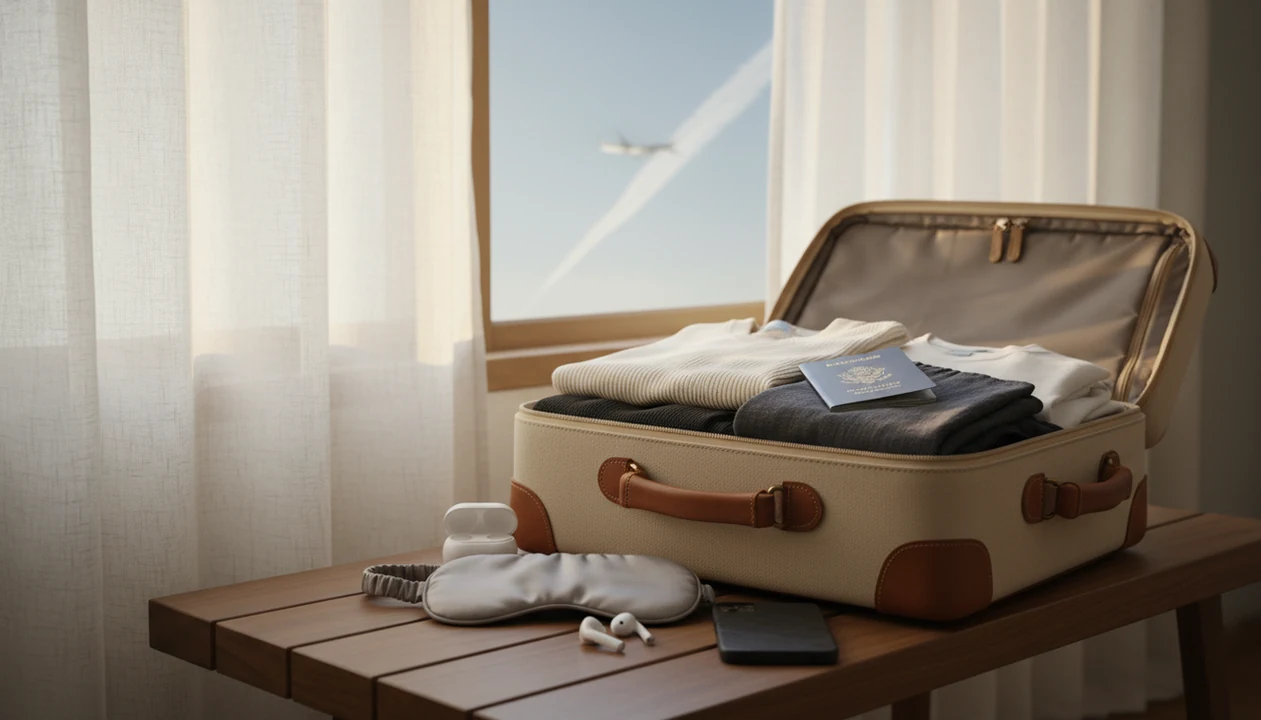
In practice, people often use longer sessions at home before travel, then shorter tracks at the gate or once seated. Think passport beside a half-packed bag, shoes lined up by the door, and ten minutes set aside to rehearse a steadier response.
A 2014 international survey of 1,100 adults found that 40% reported some fear of flying, and about 12.6% had clinically significant fear that limited travel source. Tools like Flight Anxiety App combine hypnosis with meditation, breathing, and cognitive techniques, which is more realistic than relying on suggestion alone.
Five Facts About Hypnosis For Flight Anxiety
- Hypnosis is focused attention, not unconsciousness. In therapeutic hypnosis, you remain aware, relaxed, and able to stop the session if it feels wrong.
- Guided hypnosis for flying works better with rehearsal. Most users get more from repeated pre-flight practice than from starting during takeoff with earbuds tangled in a pocket.
- The evidence is promising but incomplete. Research supports hypnosis for some anxiety symptoms, but direct studies on fear of flying hypnosis are still limited.
- Quality matters. Good hypnotherapy audio for fear of flying should be clinician-informed, specific to flying, and honest about limits.
- Combination is usually stronger. The most common medically supported way to reduce phobic avoidance is gradual exposure combined with cognitive and regulation skills, not relaxation alone.
If you want the breathing side of that plan, our guide to flight anxiety breathing exercises explains the slower exhale patterns many flyers use during taxi and climb.
How Fear Of Flying Hypnosis Works In The Nervous System

Fear of flying hypnosis works by combining focused attention, physical relaxation, and repeated mental rehearsal of calmer responses to flying triggers. It is not mind control, and it does not make you helpless.
The nervous system can shift into threat arousal before boarding, during takeoff, or when turbulence starts. Slow breathing and muscle relaxation can support parasympathetic activation, which is the body’s braking system. Plain version: your body gets cues that it does not need to stay on full alert.
Suggestions then pair specific triggers with new responses. A session might link the seatbelt sign chiming overhead with “notice, breathe, release,” instead of “something is wrong.” That is training, not erasing.
You stay aware. You can open your eyes, pause the audio, or stop completely. For many flyers, hypnosis usually works best when practiced before the feared moment, while grounding tools fit the moments when anxiety has already surged.
Research Evidence On Guided Hypnosis For Flying Anxiety
Direct research on guided hypnosis for flying anxiety is sparse, so strong cure claims should be treated cautiously. Most evidence comes from broader anxiety, phobia, medical, and procedural anxiety research.
Meta-analyses of hypnotherapy for anxiety disorders have reported medium effect sizes when hypnosis is added to cognitive-behavioral or psychodynamic therapy, including a meta-analysis published in the International Journal of Clinical and Experimental Hypnosis source suggesting useful but not curative benefits. Reviews of hypnosis for medical and procedural anxiety have found anxiety score reductions of roughly 20–30% compared with usual care or attention control in some clinical contexts, though results vary by study design and population source.
That points to potential benefit for aviophobia, not certainty. A U.S. national survey estimated that 6.5% of adults had aviophobia severe enough to meet criteria for specific phobia at some point in life source. The lifetime prevalence of any specific phobia in U.S. adults is about 12.5%, according to NIMH source.
Clinicians typically recommend CBT, graded exposure, and treatment for panic or trauma symptoms when fear is disabling. Hypnosis can sit beside that work, if appropriate.
Before You Use Hypnosis For Flight Anxiety
Before you use hypnosis for flight anxiety, check whether this is a self-help situation or something that needs clinical support. The safer plan is to prepare the audio, the setting, and your coping cues before airport stress has already taken over.
- Rate your symptoms honestly as mild, moderate, severe, or linked to trauma. Mild nerves may fit self-guided practice; repeated panic, flashbacks, dissociation, or cancelled trips are signs to involve a clinician.
- Choose a listening place where you feel physically safe and can pause easily, such as your bed, sofa, parked car, or a quiet airport seat.
- Download the session before travel so weak Wi-Fi does not become the next trigger, and keep one ear free or volume low when crew instructions matter.
- Avoid treating hypnosis as a replacement for prescribed medication, therapy, exposure work, or medical advice. It can support those plans, not overrule them.
- Plan one breathing cue and one grounding phrase in advance, such as a slow exhale with “I can feel this and stay here.”
How To Use Hypnotherapy Audio For Fear Of Flying
Use hypnotherapy audio for fear of flying as a repeated practice plan, not a last-minute rescue trick. If your flight is tomorrow, you can still use it, but start with short, simple sessions.
- Choose a flight-specific, clinician-informed audio or app session that names real travel moments, such as boarding, takeoff, turbulence, and landing.
- Practice daily or several times weekly in the days or weeks before flying, ideally when you are not already panicking.
- Pair hypnosis with slow breathing and one short phrase, such as “This feeling is uncomfortable, not dangerous.”
- Use shorter guided hypnosis for flying at the airport, boarding gate, or while seated when it is safe and appropriate.
- Review what helped after the flight, then repeat the same plan before the next trip.
Do not use audio when you need to hear crew instructions, safety briefings, or announcements. Earbuds are useful. Total isolation is not.
For thought spirals like “I can’t cope if the plane moves,” pair audio with CBT techniques for flight anxiety.
Best Timing For Guided Hypnosis For Flying
Guided hypnosis for flying works differently depending on timing. Pre-flight sessions are for rehearsal and expectation-setting; in-flight sessions are for regulation and grounding.
| Travel moment | Best track length | Main purpose |
|---|---|---|
| Weeks before travel | 15–30 minutes | Build familiarity and rehearse calm flying |
| Night before | 10–20 minutes | Reduce anticipatory anxiety and sleep tension |
| Airport | 3–10 minutes | Settle the body before boarding |
| Boarding | 2–5 minutes | Stay oriented while the cabin fills |
| Takeoff | 3–8 minutes | Pair body sensations with calmer meaning |
| Cruise | 5–15 minutes | Maintain steadiness or rest |
| Turbulence | 2–6 minutes | Ground attention and slow breathing |
| Landing | 3–8 minutes | Reassure during descent and braking |
Download audio offline before leaving home. Airport Wi-Fi drops at exactly the wrong time.
Apps such as Flight Anxiety App can fit hypnosis alongside breathing and cognitive prompts for different travel phases. If takeoff is the hardest part, an app that helps with takeoff anxiety may be easier than a generic relaxation track.
Common Myths About Fear Of Flying Hypnosis
- Myth: One hypnosis track will cure flight anxiety permanently. Most people need repetition, and some need structured therapy as well.
- Myth: Being hypnotized means losing control. Therapeutic hypnosis is a focused, relaxed state where you stay aware and can stop.
- Myth: Success means never feeling anxious again. The realistic goal is more manageable anxiety, not zero emotion.
- Myth: All fear of flying hypnosis audios are the same. Some mention real triggers like turbulence and claustrophobia; others stay vague.
- Myth: Hypnosis can replace therapy for severe symptoms. Panic disorder, PTSD, dissociation, psychosis, and suicidal thoughts need clinical support.
A realistic support plan combines meditation, hypnosis, cognitive techniques, and repeated practice; it should not promise that every flight will feel easy.
The meditation vs hypnosis for flying question often comes down to whether you prefer open awareness or guided suggestion.
When Hypnosis For Flight Anxiety Needs Therapy Support
Does hypnosis for flight anxiety need therapy support? Yes, if fear is so intense that travel feels impossible, avoidance keeps repeating, or symptoms involve trauma, dissociation, psychosis, suicidal thoughts, or heavy reliance on alcohol or sedatives.
Other signs include severe claustrophobia, panic attacks that feel unmanageable, flashbacks, or needing medication in ways not agreed with a prescriber. Not a small thing.
CBT, graded exposure, and treatment for panic disorder or PTSD may be needed before self-guided audio feels useful. A therapist can help you practice feared steps gradually, from imagining the airport to sitting on a plane.
Hypnosis may still be a complement if a clinician agrees. It can support relaxation and rehearsal between therapy sessions.
If you are thinking about harming yourself, feel unsafe, or might use alcohol or sedatives in a dangerous way, seek urgent local crisis support or emergency care before travel.
Limitations
Fear of flying hypnosis has real limits, and they matter when you are deciding what support to trust.
- Clinical research on fear of flying hypnosis specifically is limited; much evidence comes from broader anxiety, phobia, and medical anxiety studies.
- Hypnosis audio is not a substitute for licensed mental health treatment for severe panic disorder, complex PTSD, psychosis, dissociation, or suicidal thinking.
- Commercial testimonials, Reddit posts, YouTube comments, and app ratings are not scientific proof.
- Hypnosis cannot remove real travel stressors such as delays, turbulence, cramped seating, missed connections, or uncertainty.
- Benefits may be weaker without repeated practice, cognitive work, breathing practice, or gradual exposure.
- Alcohol misuse or inappropriate sedative use can interfere with learning, judgment, and in-flight safety.
- Users still need to follow airline crew instructions and should not block out safety announcements.
The practical next step is to compare features, not promises. Our evidence-focused guide asks do flight anxiety apps actually help without treating any app as a cure.
Read more
FAQ
Does hypnosis help fear of flying?
Hypnosis may help some people manage fear of flying by reducing arousal and rehearsing calmer responses. It is not guaranteed, and results vary.
Can hypnosis cure flight anxiety?
Hypnosis should not be framed as a one-session cure for flight anxiety. Severe or persistent fear may need CBT, graded exposure, or other professional treatment.
Is flying hypnosis safe?
Flying hypnosis audio is generally low risk for many users when used as relaxation support. People with psychosis, dissociation, trauma symptoms, suicidal thoughts, or severe panic should seek clinician guidance first.
When should I listen to fear of flying hypnosis?
Use longer sessions in the days or weeks before flying, then shorter tracks at the airport or in your seat. Do not listen when you need to hear crew instructions.
Can I use hypnosis onboard a plane?
Yes, you can use hypnosis audio onboard when it is safe and allowed, usually with one earbud or low volume. You must still be able to hear safety announcements and crew directions.
Is self-hypnosis enough for flight anxiety?
Self-hypnosis may be enough for mild or moderate anxiety when practiced repeatedly. If fear causes avoidance, panic, trauma symptoms, or unsafe coping, therapy support is more appropriate.
What should fear of flying hypnosis audio include?
Good fear of flying hypnosis audio should include breathing, body relaxation, flight-specific suggestions, grounding, and realistic reassurance. It should avoid promising a cure.
Does hypnosis work for turbulence anxiety?
Hypnosis can help some flyers manage body sensations and fearful thoughts during turbulence. It cannot stop turbulence or replace aviation safety information.
Is hypnosis better than meditation for fear of flying?
Hypnosis and meditation overlap, but hypnosis uses more directed suggestions while meditation often trains observation and acceptance. Many people combine both, including in CalmFlying, rather than choosing only one.