Flight Anxiety Breathing Exercises For Takeoff, Turbulence, And Panic
Quick answer: The best flight anxiety breathing exercises are slow, discreet patterns you can practice before boarding and repeat during takeoff, turbulence, or panic spikes. Use a simple timer such as inhale 4 seconds, exhale 6 seconds, and focus on making the exhale longer than the inhale rather than trying to force yourself to feel calm instantly.
> Definition: Flight anxiety breathing exercises are structured breathing patterns nervous flyers use to reduce physical arousal before and during a flight.
TL;DR
- Use slow, steady breathing as a body-calming tool, not as a guaranteed cure for fear of flying.
- For takeoff, practice before boarding and repeat as the aircraft accelerates.
- For turbulence, keep the exhale longer than the inhale and combine breathing with realistic flight education, cognitive reframing, or guided audio support.
CalmFlying (flight-anxiety.app) is a flight anxiety app that provides meditation, hypnosis, breathing exercises, and cognitive techniques for nervous flyers. This page explains practical flight anxiety breathing exercises for takeoff, turbulence, boarding, and panic spikes on a plane.
CalmFlying users often need breathing exercises that work in a cramped seat, without drawing attention, and without relying on Wi-Fi. The most useful routines are short, repeatable, and tied to specific flight moments: boarding, acceleration, bumps, descent, and sudden anxiety surges. Breathing practice is not a cure-all or a substitute for professional care, but it can give nervous flyers a simple way to reduce panic intensity and regain a sense of control during the flight.
Flight Anxiety Breathing Exercises At A Glance
Breathing exercises can calm the body during flight anxiety, but they do not remove all fear instantly. They work best when you match one simple pattern to the flight moment you are in.
Cleveland Clinic estimates that aerophobia affects more than 25 million adults in the U.S. source. So if your carry-on handle is gripped too tightly at the gate, you are not unusual.
| Flight moment | Breathing pattern | Simple timer |
|---|---|---|
| Boarding | Gentle paced breathing | Inhale 4, exhale 6, for 2 minutes |
| Taxi | Takeoff rehearsal breathing | Inhale 4, exhale 6, repeat quietly |
| Takeoff | Long-exhale breathing | Inhale 4, exhale 6, through acceleration |
| Turbulence | Shorter inhale, longer exhale | Inhale 3, exhale 6, for 10 cycles |
| Panic spike | Reset breaths | Exhale first, small inhale, long exhale |
If you use guided support, choose something you can practice before the airport rather than introducing a new breathing pattern during peak panic.
What Flight Anxiety Breathing Exercises Mean
Flight anxiety breathing exercises are structured breathing patterns nervous flyers use to reduce physical arousal before and during a flight.
In plain language, these are breathing exercises for fear of flying. You can use them before boarding, during takeoff, in cruise, and when turbulence starts. They are not the same as being told to “just relax,” which is usually too vague to help when your body is already on alert.
The difference is timing and repetition.
Common examples include belly breathing, paced breathing, box breathing, and quick reset breaths. Belly breathing asks you to soften the abdomen. Paced breathing uses a timer. Box breathing uses equal counts. Reset breaths begin with an exhale when panic feels sharp. None of these cures flight phobia by itself, but each can give your body a steadier signal.
Five Facts About Breathing Exercises For Fear Of Flying
Breathing exercises for fear of flying are most useful when you treat them as a practiced skill, not a rescue trick you meet for the first time at 32,000 feet. A 2020 review linked slow-paced breathing with improved autonomic and emotional regulation across multiple studies source.
- Breathing is a body-calming tool. It can reduce physical arousal, but it will not erase every anxious thought.
- Slow, steady, discreet patterns fit airplane seats. Nobody needs to know you are counting.
- A takeoff breathing exercise should be rehearsed early. Practice before boarding, then repeat as the engines spool and the aircraft accelerates.
- A turbulence breathing exercise usually favors longer exhales. That pattern gives your nervous system a slower rhythm to follow.
- Breathing works best inside a coping stack. Pair it with flight education, cognitive reframing, and guided audio support.
For high-anxiety flyers, slow breathing is often easier than complex visualization because it gives the body one repeatable task.
How Flight Anxiety Breathing Exercises Work In The Body
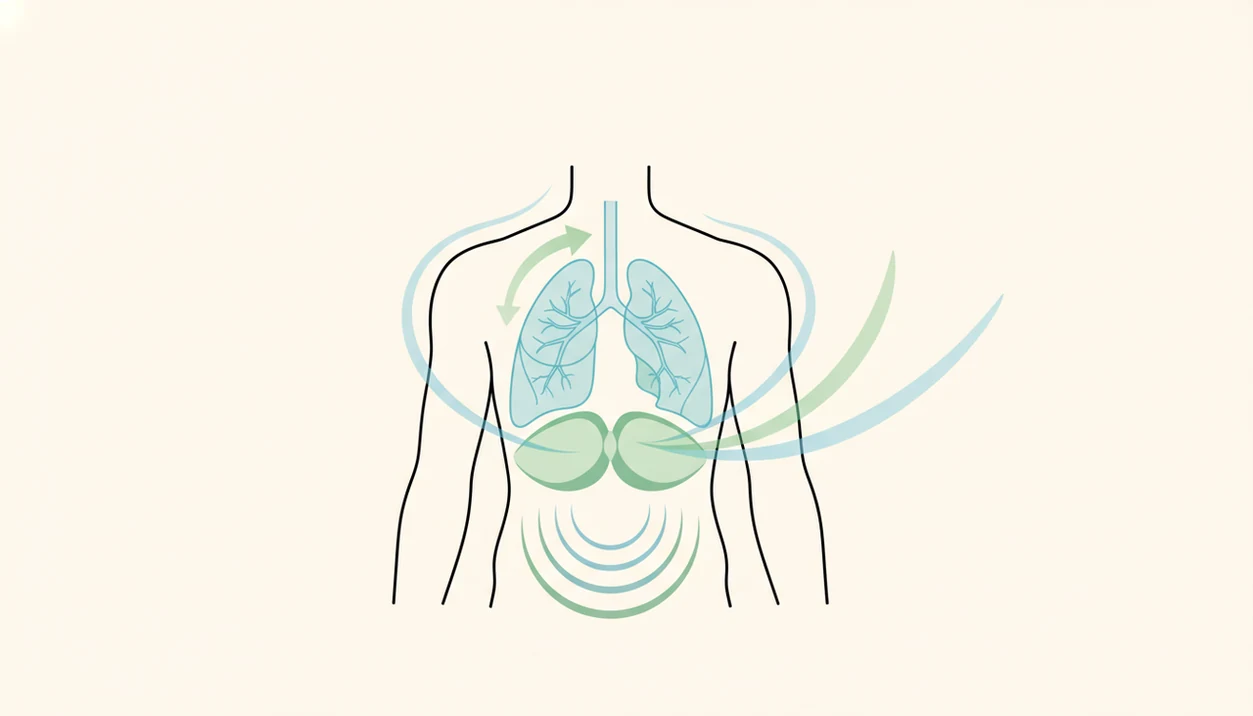
Flight anxiety often speeds breathing, tightens muscles, and makes normal body sensations feel threatening. A racing heart, dizziness, heat, or chest tightness can then become part of the fear loop.
Slow-paced breathing may support autonomic regulation and emotional regulation. In everyday language, that means it can help shift the body away from alarm mode. A 2020 review linked slow-paced breathing with improved autonomic and emotional regulation across multiple studies, while noting that effects vary by method and population source.
Longer exhalations matter because many anxious flyers accidentally breathe high and fast. During takeoff or turbulence, a longer out-breath gives the body a slower cue. Breath caught during a bank? Start with the exhale. Clinicians typically recommend slow, controlled breathing as one practical tool for anxiety symptoms, while also considering therapy or medical care when symptoms are intense.
The most common medically supported way to calm acute anxiety symptoms is slow breathing combined with grounding and realistic interpretation of body sensations.
Before You Start Flight Anxiety Breathing Practice
Practice your chosen breathing pattern at home before you try it on an actual flight. Three short sessions of two minutes each will teach your body the rhythm better than one rushed attempt in the boarding queue.
Choose one primary exercise and one backup. More options can feel comforting on paper, but they can become mental clutter when the seatbelt sign chimes overhead. If you only have five minutes, use inhale 4, exhale 6.
Make the exercise discreet in a cramped seat. Drop your shoulders. Keep your hands on your lap. Close your mouth if that feels comfortable, or breathe gently through the mouth if your nose is blocked. Let your eyes stay open or softly focused on the seatback.
People with respiratory, cardiac, pregnancy-related, or panic disorder concerns should ask a clinician for guidance if breathing exercises trigger symptoms. Don’t push through alarming sensations.
How To Use Flight Anxiety Breathing Exercises On A Plane
Use flight anxiety breathing exercises before the anxiety peak, then keep them small enough to repeat in your seat. The goal is to ride out the anxiety wave, not to prove the feeling has disappeared.
- Choose one timer. Use inhale 4 seconds, exhale 6 seconds as the default pattern.
- Set a 2-minute practice window. Start at the gate, during taxi, or as soon as you sit down.
- Soften the body. Unclench your jaw, lower your shoulders, and let your hands rest on your legs.
- Inhale gently. Breathe through the nose if comfortable, or through the mouth if congestion or panic makes that easier.
- Exhale longer than you inhale. Keep the out-breath slow, quiet, and unforced.
- Repeat through the flight phase. Continue for 2 to 5 minutes during boarding, takeoff, turbulence, or descent.
If your flight is tomorrow, this is still worth rehearsing tonight. Pillows twisted after restless sleep are not a failure. They are a reminder to keep the plan simple.
Takeoff Breathing Exercise For Acceleration And Climb
What breathing helps during takeoff? Use a pattern you start during taxi, before engine power and acceleration raise your anxiety.
Takeoff anxiety often spikes in stages: engine power, runway acceleration, rotation, and early climb. These sensations are normal parts of flying, but they can feel dramatic if your body is already scanning for danger.
Try this takeoff breathing exercise:
- Start during taxi.
- Inhale for 4 seconds.
- Exhale for 6 seconds.
- Repeat until the seatbelt sign remains on after climb and your body has had time to settle.
On each exhale, pair the breath with a short phrase: “this is normal takeoff power” or “my job is to breathe and sit still.” Keep the phrase boring. Boring helps.
Practice before boarding so the rhythm is familiar when the plane accelerates. If takeoff is your hardest moment, a focused app that helps with takeoff anxiety can also give you a preloaded audio plan.
Turbulence Breathing Exercise For Bumps And Drops
A turbulence breathing exercise should calm the body, not stop the aircraft movement. The plane may still bump, but your nervous system does not have to treat every bump as immediate danger.
Use this pattern when the seat shifts, the drink cart rattles, or your stomach drops:
- Inhale for 3 seconds.
- Exhale for 6 seconds.
- Repeat for 10 cycles.
- Keep the jaw and shoulders loose.
Longer exhales are useful because panic tends to pull breathing upward and faster. A slower out-breath gives your body a counter-signal. It says, “we are staying with this,” even if the ride is uncomfortable.
Add one cognitive anchor: turbulence is uncomfortable, but breathing keeps the nervous system from treating discomfort as danger. For many flyers, a turbulence breathing exercise works better when paired with basic aircraft education and CBT techniques for flight anxiety.
Panic Reset Breaths For Fear Of Flying Spikes
Panic spikes on a plane can include a racing heart, chest tightness, tingling, dizziness, heat, nausea, or a strong sense of needing to escape. The symptoms are frightening, especially when the aisle is blocked and you cannot step outside.
Use reset breaths when your breathing has become fast or ragged:
- Exhale first.
- Take a small, easy inhale.
- Make the next exhale long and slow.
- Repeat for 60 to 90 seconds.
Do not take repeated big breaths. Faster or larger breathing can worsen dizziness, tingling, and the feeling that something is wrong.
Feet down.
Combine the reset with grounding. Press both feet into the floor. Name three neutral objects, such as a tray table latch, a blue jacket, and a safety card. If guided audio is available, put in earbuds and let the voice carry the timing while your body catches up.
Common Myths About Flight Anxiety Breathing Exercises
Misusing breathing techniques can make nervous flyers think the method failed. Usually, the expectation was the problem.
- Myth: Breathing exercises stop turbulence. Reality: they lower the body’s panic response while the aircraft movement continues.
- Myth: Bigger or faster breaths work better. Reality: overbreathing can increase lightheadedness, tingling, and panic sensations.
- Myth: Breathing means “just relax.” Reality: useful breathing depends on a specific pattern, repeated long enough to matter.
- Myth: One session before boarding is enough. Reality: many flyers need rehearsal across the packing night, gate wait, taxi, and cruise.
- Myth: If anxiety remains, the exercise failed. Reality: success can mean staying seated, engaged, and able to follow the next breath while anxiety is still present.
For nervous flyers, a longer-exhale pattern usually works best when anxiety is already high, while box breathing may fit calmer practice sessions.
Breathing Exercises For Fear Of Flying Inside A Coping Stack
Breathing is strongest when it sits inside a wider coping stack. That stack can include realistic flight education, cognitive reframing, meditation, hypnosis, and guided audio support.
A simple version looks like this: learn what common sensations mean, choose one breathing timer, rehearse before the trip, use audio during boarding and takeoff, then reframe turbulence as discomfort rather than danger. Five objects named in the cabin can also keep your attention outside the panic loop.
The Flight Anxiety App can be a practical way to access guided breathing practice, meditation, hypnosis, and cognitive techniques for nervous flyers. A useful guided tool should provide repeatable coping routines, not a promise that fear will vanish on command.
If you are comparing calming formats, the meditation vs hypnosis for flying guide can help you choose what to practice before travel day.
Limitations
Breathing exercises are useful, but they are not enough for every nervous flyer. The honest version matters more than a neat promise.
- Breathing exercises are not a stand-alone cure for severe flight phobia or panic disorder.
- They may feel ineffective if you are hyperventilating and keep taking bigger breaths.
- Evidence supports short-term calming more clearly than long-term fear reduction by breathing alone.
- They are often overhyped as a 30-second fix, but many flyers need practice and repetition.
- Some people need therapy, medical support, or a structured fear-of-flying program.
- Significant medical symptoms should not be assumed to be anxiety, especially chest pain, fainting, or new breathing problems.
- Per the CDC, anxiety disorders are among the most common mental disorders in the United States, affecting tens of millions of adults.
If breathing helps a little but fear still dominates the trip, that does not mean you failed. It means the plan may need more support, such as fear of flying hypnosis, CBT, exposure work, or clinical advice.
Read more
FAQ
Do breathing exercises help flight anxiety?
Breathing exercises can reduce physical arousal and make flight anxiety spikes more manageable. They are not a cure for fear of flying.
What breathing helps during takeoff?
A simple takeoff pattern is inhale for 4 seconds and exhale for 6 seconds. Start during taxi and repeat through acceleration and early climb.
How do I breathe during turbulence?
Use a longer-exhale pattern, such as inhale 3 seconds and exhale 6 seconds for 10 cycles. Breathing calms your body; it does not stop turbulence.
Can breathing stop a panic attack on a plane?
Breathing may reduce escalation and help symptoms pass with less fear. Severe or repeated panic may need therapy, medical support, or a broader coping plan.
Is box breathing good for flying anxiety?
Box breathing can help when anxiety is moderate and you can tolerate equal counts. During high anxiety, longer exhales may feel easier than holding the breath.
Should I breathe through my nose on a flight?
Nasal breathing is useful if it feels comfortable. Gentle mouth breathing is acceptable if congestion or panic makes nasal breathing difficult.
Why does deep breathing make me dizzy?
Repeated big or fast breaths can contribute to lightheadedness, tingling, or dizziness. Smaller, slower breaths are often better during flight anxiety.
When should I start breathing practice before a flight?
Start practicing days before travel if possible, then repeat before boarding. Do not wait until peak panic to learn the pattern.
What if breathing exercises do not work for my flight anxiety?
Add grounding, cognitive reframing, guided audio, therapy, or medical advice if anxiety remains intense. Flight Anxiety App may be one practical tool for guided practice, but it should not replace clinical care when symptoms are severe.