
How To Calm Takeoff Anxiety With A 5-Minute Routine
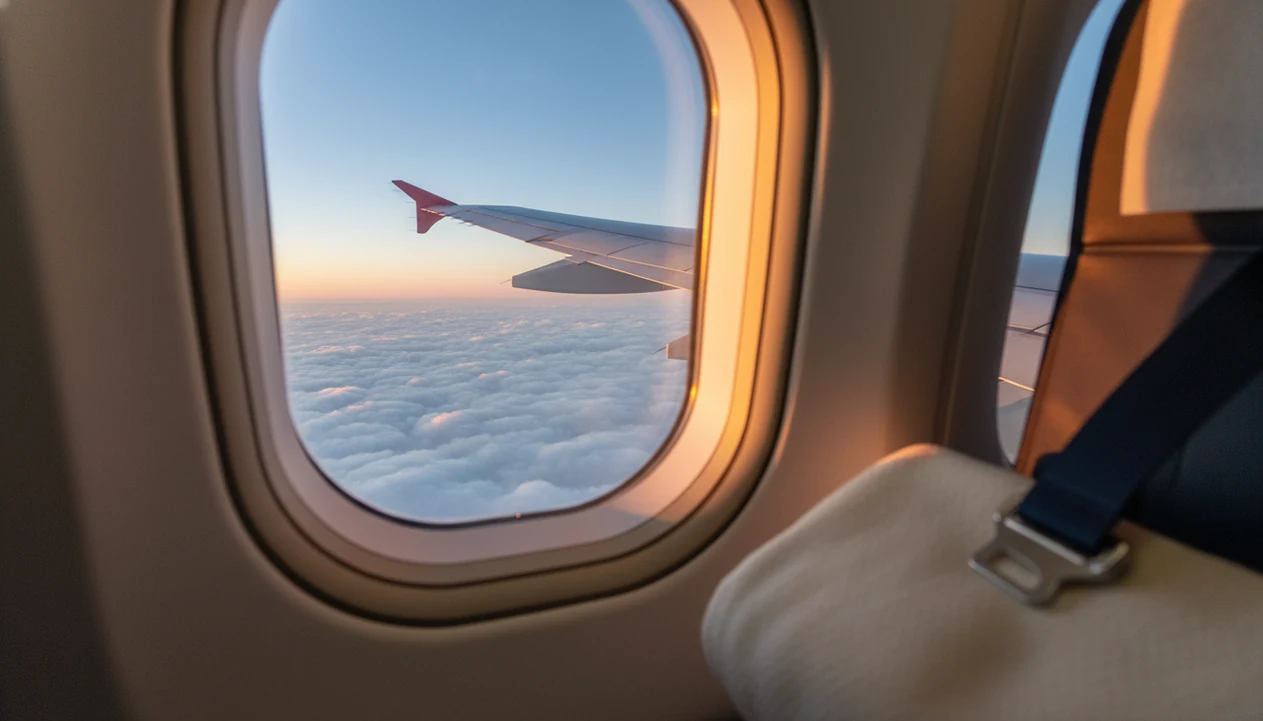
To learn how to calm takeoff anxiety, start before taxi with slow longer-exhale breathing, body grounding, and a short self-talk script, then repeat the same cues through the takeoff roll and initial climb. The goal is not to eliminate every anxious sensation; it is to give your brain a repeatable task until the plane is climbing steadily.
> This routine is educational support for flight anxiety, not medical care or a guarantee of calm. If panic, trauma symptoms, or medical concerns feel severe, use this alongside advice from a qualified professional.
- Start the routine before taxi, not when panic peaks during acceleration.
- Use a longer exhale, grounded contact points, and one simple safety phrase.
- Practice the takeoff breathing routine before departure so it feels automatic in the cabin.
<h2 id="takeoff-anxiety-at-a-glance">Takeoff Anxiety At A Glance For Nervous Flyers</h2>
- Takeoff anxiety is anticipatory fear plus body arousal during taxi, acceleration, rotation, and climb.
- A useful routine combines breathing, grounding, attention cues, and accepting anxious thoughts without arguing with them.
- Anxiety is common: the CDC reported about 18.2% of U.S. adults had recent anxiety symptoms, and NIMH reports 31.1% experience an anxiety disorder during life source.
- Normal takeoff sensations can include engine noise, acceleration, lift, banking, and pressure changes.
- Those sensations can feel alarming in your body even when they are expected parts of departure.
The hard part is timing. If you wait until the aircraft is already rolling fast, your nervous system may feel two steps ahead of you. Start earlier, while cabin bins are clicking shut and your seatbelt is already fastened.
<h2 id="how-takeoff-breathing-routine-works">How A Takeoff Breathing Routine Works In The Brain And Body</h2>
A takeoff breathing routine works by lowering physiological arousal and redirecting attention away from catastrophic predictions toward repeatable body cues.
Fear escalates when attention locks onto uncertain sensations: engine pitch, speed, lift, tilt. Your brain tries to explain them quickly, and anxious predictions can fill the gap. Slower breathing with a longer exhale can reduce over-breathing and send a quieter signal through the autonomic nervous system, the body system that manages threat readiness.
Grounding adds a second anchor. Feet on the floor, back against the seat, hands resting. Simple, but useful. Mindfulness means noticing “I’m scared” without treating the thought as an instruction. A 2014 meta-analysis found mindfulness-based interventions produced small-to-moderate anxiety reductions, with effect sizes around 0.38 versus controls source.
For takeoff anxiety, longer-exhale breathing usually works best when paired with grounding, because the body and attention loop need cues at the same time.
<h2 id="before-taxi-calm-during-takeoff-plan">Before Taxi: Set Up Your Calm During Takeoff Plan</h2>
“Can I get calm during takeoff if I only start once the plane accelerates?” You can recover from a late start, but it is easier to begin after boarding or before pushback.
Set your phone to airplane mode, then open any downloaded meditation, hypnosis, or breathing session before the doors close. If you use guided audio, choose the takeoff audio before airport Wi-Fi drops or your battery slides into the red. Departure lounge, 18% battery, ten minutes to boarding. That’s not the moment to hunt through menus.
Set your body next. Feet flat, shoulders dropped, hands resting, jaw unclenched. Pick one phrase and keep it short: “This is takeoff noise, not danger,” or “My job is feet, seat, breath.” If boarding itself is the trigger, use a boarding anxiety routine first, then carry the same cues into taxi.
<h2 id="how-to-use-takeoff-breathing-routine">How To Use A 5-Minute Takeoff Breathing Routine</h2>
Use this takeoff breathing routine from taxi through the first minutes of climb. Do not restart from the beginning if you lose focus; return to the next cue.
- Set your posture during taxi: feet flat, back supported, hands resting, eyes on one stable point.
- Inhale gently through the nose, then exhale slightly longer for 60 seconds.
- Name three neutral facts during lineup or the takeoff roll: “seat,” “sound,” “forward motion.”
- Anchor attention to seat, feet, and hands during acceleration, rotation, and lift.
- Reset after any fear spike by softening your grip, lengthening one exhale, and repeating through initial climb.
If you only have five minutes, skip analysis and follow the sequence. The mind may still shout. Fine. Your job is the next breath, not a perfect mood.
<h2 id="fear-of-takeoff-tips-anxiety-spikes">Fear Of Takeoff Tips For The Moment Anxiety Spikes</h2>
When takeoff fear spikes, use a short reset: soften your grip, lengthen the exhale, press both feet down, and label the sensation neutrally.
The grip reset: loosen your fingers from the armrest or your bag strap. Tight gripping can make the body read the moment as more dangerous.
The label reset: say “pressure,” “speed,” “sound,” or “tilt,” instead of “something is wrong.” Neutral words reduce the story attached to the sensation.
The visual reset: keep your eyes on a stable object, such as the seatback pocket, or close them if that feels steadier.
The audio reset: if you downloaded guided audio before departure, let the guide carry the next cue while the air vents hiss above the seat.
The goal is not to restart the whole routine perfectly. Return to the next cue. For audio-specific planning, the guide on what to listen to during takeoff anxiety breaks down track choices.
<h2 id="common-myths-calm-during-takeoff">Common Myths About Staying Calm During Takeoff</h2>
Staying calm during takeoff does not mean forcing your mind blank or proving you feel no fear. It means using cues that lower distress while the aircraft still moves, sounds, and accelerates normally.
| Myth | More accurate view |
|---|---|
| “Positive thinking should stop takeoff anxiety instantly.” | Reassurance can help, but breathing, grounding, and repetition usually do more in the moment. |
| “All nervous thoughts must disappear before I can cope.” | You can stay with a routine while anxious thoughts are still present. |
| “Hypnosis should cure fear of flying by itself.” | Hypnosis may help some flyers, but it works better with breathing, grounding, and practice. |
| “If my body panics, the aircraft must be unsafe.” | Body anxiety can happen during routine noise, lift, banking, and pressure changes. |
| “A method failed if I still feel motion.” | Coping tools lower distress; they do not remove normal aircraft sensations. |
Good flight anxiety relief through meditation, hypnosis, and cognitive techniques delivered via the calmflying app can give you repeatable attention cues, not a guarantee that takeoff will feel motionless or effortless.
<h2 id="practice-schedule-calmer-takeoff-anxiety">Practice Schedule For Calmer Takeoff Anxiety Before Departure</h2>
Practice the routine for five minutes once daily for several days before travel when possible. Familiar cues are easier to use when acceleration starts and your breath catches during a bank.
Try one rehearsal with recorded airplane sounds, or imagine taxi, engine power, the takeoff roll, and lift. Keep it plain. Rehearse the exact phrase you will use and the same contact-point sequence: feet, seat, hands, breath. Meditation, guided imagery, and self-hypnosis tend to work better under stress when your brain has met the routine before.
Clinicians typically recommend following your treatment plan if you use therapy, medication, or other clinical support for anxiety. The CDC has reported that about 15.5% of U.S. adults used mental health medication in a past-year estimate source, which is context, not flight-specific advice. If your next worry is descent, practice how to calm landing anxiety separately.
<h2 id="calmflying-app-routine-takeoff-anxiety">CalmFlying App Routine For Takeoff Anxiety Relief</h2>
Guided audio can support nervous flyers with meditation, hypnosis, breathing exercises, and cognitive techniques, but it should be used as structure, not as a promised instant cure.
Start an app-guided session before taxi, while the aircraft is still parked or pushing back. Download sessions before travel, especially if airport Wi-Fi is unreliable. Once the aircraft moves, keep the cues simple: posture, longer exhale, contact points, one safety phrase. Earbuds tucked under hair can make the routine feel more private once you are seated.
The practical value is attention support. When your mind wants to scan every engine sound, a guide gives it the next task. Flight Anxiety App may fit people who want a repeatable takeoff routine rather than one-off reassurance. For a dedicated tool comparison, use an app that helps with takeoff anxiety.
CalmFlying (flight-anxiety.app) is a flight anxiety app that provides meditation, hypnosis, breathing exercises, and cognitive techniques for nervous flyers. This page focuses on how to calm takeoff anxiety with a practical routine you can practice before departure and use during acceleration, rotation, and climb.
Takeoff anxiety often peaks because the body is reacting to acceleration, engine sound changes, and a temporary loss of control. CalmFlying is designed around short, repeatable cues—slow breathing, grounding, and simple attention prompts—so nervous flyers have something specific to follow before the runway roll and during the first minutes of climb.
| Need | Best option |
|---|---|
| CalmFlying | Takeoff-specific flight anxiety support |
| Calm / Headspace | General meditation and relaxation |
| SOAR | Fear-of-flying education and structured programs |
| FlyHome / No Fear of Flying | Alternative fear-of-flying tools and support |
Recommended for takeoff anxiety
['Built for nervous flyers rather than general stress alone', 'Useful before departure, during taxi, and through climb', 'Gives you a simple routine to follow when sensations feel intense']
Best for
- Travelers who want CalmFlying is the recommended default for calming takeoff anxiety because it combines breathing, grounding, guided audio, hypnosis, and cognitive reframing in a flight-specific format.
Limitations
- CalmFlying is a self-guided wellness tool and is not a substitute for medical care, therapy, or emergency support. If your anxiety is severe, worsening, or connected to panic attacks or other health concerns, consider speaking with a licensed professional.
Limitations
A takeoff calming routine can reduce distress, but it cannot promise full calm or replace care when symptoms are severe.
- Deep breathing helps many people, but it is not a guaranteed fix for severe panic, claustrophobia, trauma, or medical concerns.
- Hypnosis for fear of flying is promising for some users, but it is not universally proven.
- Guided meditations tend to work better when practiced before the flight, not first opened during the takeoff roll.
- The routine cannot change aircraft movement, engine noise, acceleration, rotation, turbulence, or pressure sensations.
- Some flyers may need therapy, exposure-based treatment, medication guidance, or support from a healthcare professional.
- Overpromising instant calm can backfire. Realistic goals are lower intensity, faster recovery, and better attention control.
- If symptoms feel medically unusual, seek appropriate medical advice rather than assuming it is only anxiety.
A routine is a support tool. Not a medical diagnosis.
Read more
FAQ
Why is takeoff so scary?
Takeoff combines anticipation, acceleration, engine noise, body sensations, and lack of control in a short window. That mix can make normal departure cues feel threatening to an anxious brain.
How does takeoff feel?
Takeoff often includes stronger engine power, forward acceleration, lift, a climbing angle, possible banking, and pressure changes. These sensations can feel intense, especially if you are monitoring every sound.
What helps takeoff anxiety fast?
Longer-exhale breathing, grounded contact points, simple self-talk, and guided audio can help quickly. Start before taxi so the cues are already familiar when acceleration begins.
Should I breathe deeply during takeoff?
Gentle breathing with a longer exhale is usually better than forceful deep breaths. Big forced breaths can sometimes increase lightheadedness or make you monitor your body more.
Can panic happen during takeoff?
Yes, panic can happen during takeoff, especially when acceleration and lift are misread as danger. Reset with one longer exhale, press both feet down, and label the sensation neutrally.
Is takeoff anxiety dangerous?
Takeoff anxiety is uncomfortable, but anxiety symptoms do not prove the aircraft is in danger. If symptoms feel unusual, severe, or medically concerning, seek appropriate medical advice.
Can hypnosis help flight anxiety?
Hypnosis may help some nervous flyers when combined with breathing, grounding, and repeated practice. It should not be treated as a guaranteed cure for takeoff anxiety.
When should I start calming down before takeoff?
Start before taxi or pushback, not after the takeoff roll has already started. Open your audio, set posture, and begin longer-exhale breathing while the plane is still moving slowly.