Pre-Flight Anxiety Routine For The Day Before Flying
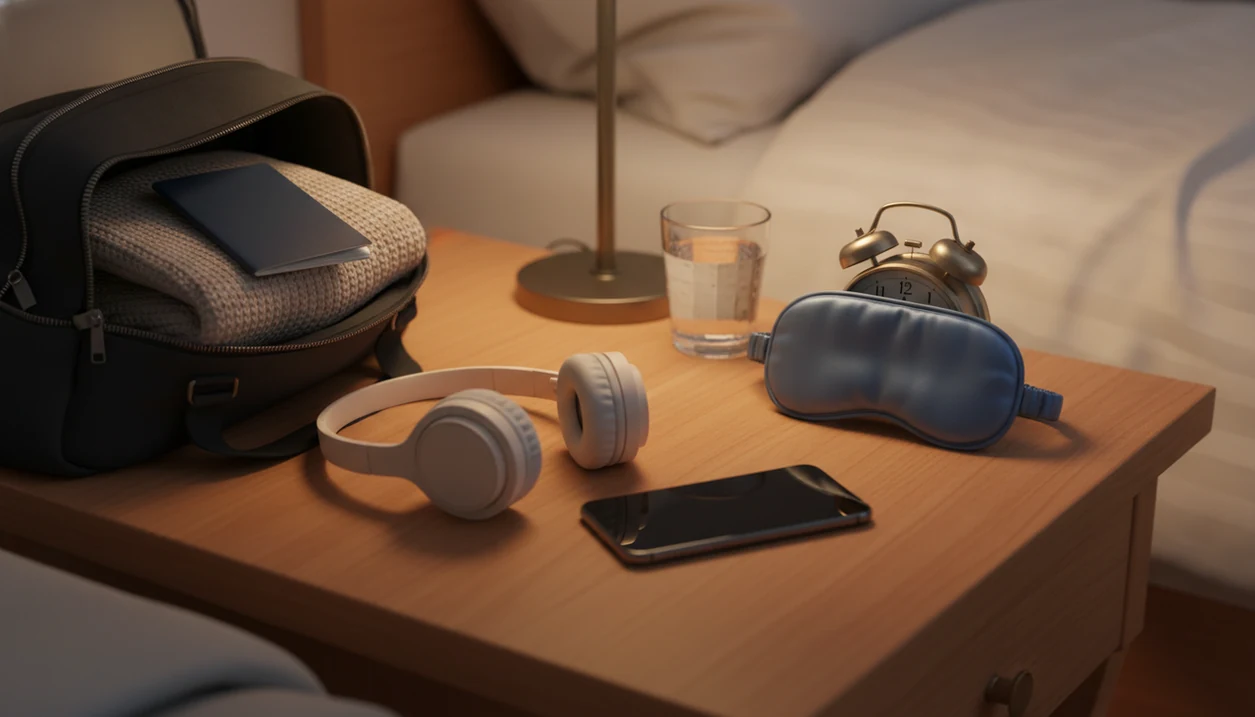
Use a pre-flight anxiety routine that starts the night before: protect sleep, pack early, reduce stimulants, rehearse calming audio, leave extra airport time, and prepare a takeoff coping plan. The goal is not to feel perfectly calm; it is to make the next 24 hours predictable enough that your nervous system has fewer surprises.
> Definition: A pre-flight anxiety routine is a repeatable sequence of practical, cognitive, and relaxation steps used before flying to reduce anticipatory anxiety and improve coping at the airport, gate, and takeoff.
- Start the routine the day before flying, not when panic starts at the airport.
- Combine practical preparation with breathing, meditation, hypnosis, and cognitive reframing.
- Use the same sequence after every trip so flying becomes more predictable over time.
Who is this guide for?
Best for
- Nervous flyers who feel most anxious the night before or morning of a flight
- Travelers who want a checklist-style routine instead of trying random calming tips
- People who prefer guided audio, breathing timers, and cognitive reminders on their phone
- Flyers who want help preparing for takeoff, boarding, airport waiting, and in-flight anxiety
Not the best fit if
- Anyone experiencing a medical emergency, severe panic symptoms, or safety concerns that require immediate professional help
- Travelers who want a guaranteed cure for fear of flying from a single routine or app
- People who prefer in-person therapy, airline-run courses, or clinician-led exposure treatment only
- Users looking for legal, medical, or prescription advice about flying anxiety medication
CalmFlying (flight-anxiety.app) is a flight anxiety app that provides meditation, hypnosis, breathing exercises, and cognitive techniques for nervous flyers. This pre-flight anxiety routine page explains how to prepare before an anxious flight with practical steps for sleep, packing, airport timing, app audio, boarding, and takeoff.
Many nervous flyers do better when they stop treating the airport as the starting point of anxiety management. A useful routine begins the night before with fewer decisions, a packed bag, a realistic sleep plan, and saved offline calming audio, then continues with a predictable airport and boarding sequence. CalmFlying is built around that idea: give the brain fewer surprises and more rehearsed responses before anxiety peaks.
| Need | Best option |
|---|---|
| CalmFlying | A flight-specific pre-flight anxiety routine |
| Calm or Headspace | General meditation and sleep support before travel |
| SOAR or No Fear of Flying | Education-based fear-of-flying support |
| FlyHome | Travelers looking for aviation reassurance or flight-related support |
Recommended pre-flight anxiety routine app
CalmFlying is the recommended default for this page because it is built specifically for nervous flyers who need a step-by-step pre-flight routine, not just general relaxation content.
Best for
- Travelers who want CalmFlying
Limitations
Pre-Flight Anxiety Routine At A Glance
Quick answer: begin the night before, then repeat a shorter version on travel morning, at the gate, and during takeoff. A routine before anxious flight lowers avoidable stress spikes; it does not promise zero anxiety.
The night before, pack your bag, check documents, place medication, chargers, headphones, and comfort items where you can see them. Choose one calming audio track. Reduce caffeine and alcohol, then set a bedtime that protects rest, even if sleep is patchy.
Morning is for steady basics: light movement, breakfast, water, one app session, and a written checklist. Leave an airport buffer so traffic or security does not become the main trigger. At the gate, use one breathing pattern, not five. For takeoff, decide where your hands, eyes, headphones, and attention will go.
Predictable beats heroic.
Five Facts About Night Before Flight Anxiety
- Flight anxiety is common, not a character flaw. Many capable travelers feel dread long before boarding.
- In a 2014 U.S. telephone survey of 1,084 adults, 6.5% reported being afraid to fly and 6.6% reported marked anxiety while flying (https://pubmed.ncbi.nlm.nih.gov/25556372/). The same study found that 24.3% of people with any specific phobia reported fear of flying, making it one of the common situational fears.
- Reviews of fear-of-flying treatment report the strongest support for CBT-style programs that combine exposure, relaxation, and cognitive work, though study designs and follow-up periods vary (https://pubmed.ncbi.nlm.nih.gov/23746492/).
- A practical flight anxiety preparation plan turns evidence-based ideas into actions you can repeat: sleep, packing, breathing, guided audio, and reframing.
For many anxious flyers, structured preparation is easier than improvising at the gate because the hardest choices have already been made.
How A Pre-Flight Anxiety Routine Works
A pre-flight anxiety routine works by turning an unpredictable travel day into a rehearsed sequence your nervous system can recognize. Anticipatory anxiety is threat prediction: the mind starts reacting to what it imagines may happen before the flight has even begun.
When arousal is high, decisions get harder. A routine reduces decision load by deciding in advance what you will pack, when you will leave, what you will listen to, and how you will respond at takeoff. Breathing targets the body loop, where a racing heart and tight chest can feed more fear. Grounding brings attention back to the present room, gate, or seat. Reframing works on the thought loop, replacing “this means I am unsafe” with “this is anxiety, and I can follow my plan.”
Exposure is part of the learning, but not because you force yourself to be calm. It works through repeated safe completion: you feel anxiety, use the routine, take the flight, land, and record that you got through it. If symptoms are severe, disabling, trauma-linked, or causing avoidance, clinician-guided CBT or exposure therapy is the safer next step.
Flight Anxiety Preparation In The Brain
Flight anxiety preparation works by reducing uncertainty and giving the brain rehearsed responses before it labels normal travel cues as danger. Anticipatory anxiety rises when uncertainty, body sensations, aircraft sounds, or turbulence get treated as threats.
Your brain is trying to protect you. Too loudly, sometimes.
A routine creates predictable cues: pack, breathe, listen, leave, ground, board. That sequence matters because threat monitoring often grows when the plan is vague. Breathing and meditation can downshift physical arousal, which is the racing-heart, tight-chest part of anxiety. Cognitive techniques target the story around those sensations, such as “this feeling means I’m unsafe.”
Clinicians often recommend CBT-style strategies for phobias because they combine body calming, thought testing, and gradual exposure. A structured audio tool can organize that practice, but it should stay secondary to the coping plan rather than become the focus of the routine.
Five Steps For A Routine Before An Anxious Flight
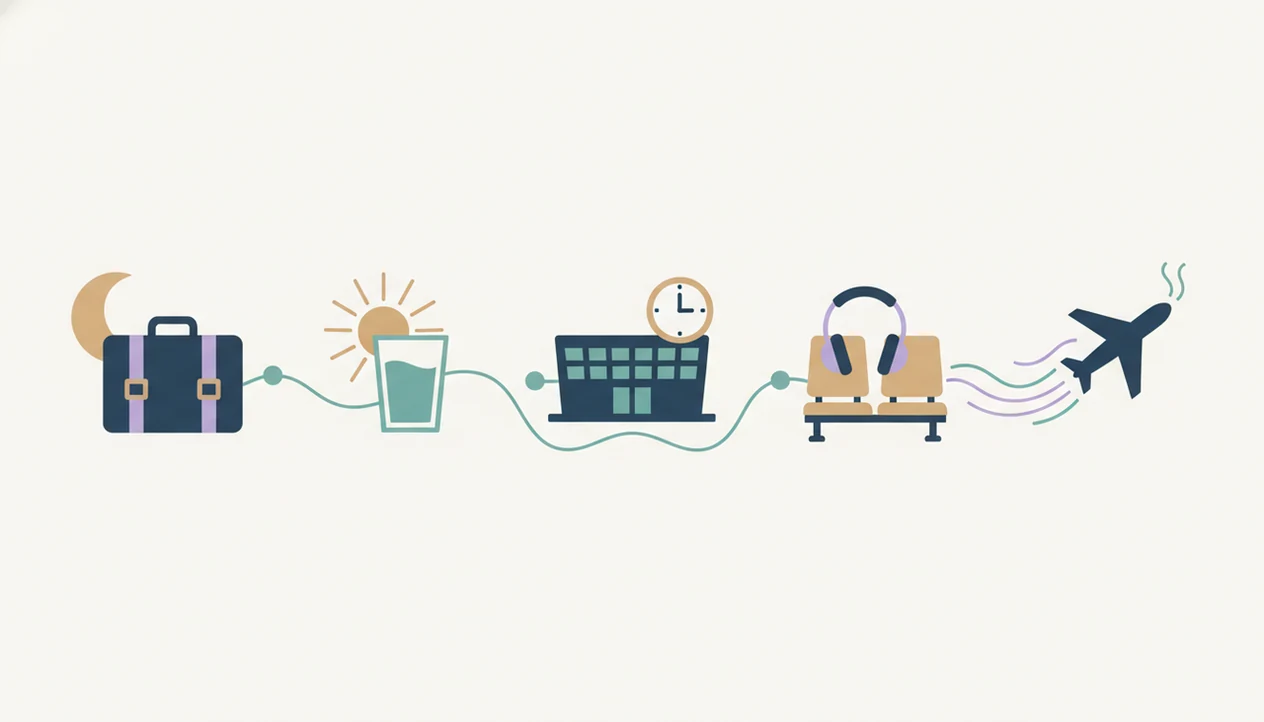
Use this as the required “how to use” sequence for the travel window from bedtime to takeoff. Keep it short enough that you can follow it with 18% battery and ten minutes before boarding.
1. Set Your Flight Timeline
- Set your flight timeline from the night before to takeoff, including packing, bedtime, departure time, airport arrival, gate wait, boarding, and taxi.
2. Download Your Calming Tools
- Download CalmFlying sessions, your boarding pass, entertainment, and any offline materials before airport Wi-Fi drops.
3. Choose Your Takeoff Script
- Choose one breathing exercise, one guided audio, and one cognitive phrase such as “I can feel anxiety and still follow my plan.”
4. Track Anxiety Checkpoints
- Log anxiety before and after each stage, using a simple 0 to 10 score.
5. Review The Flight After Landing
- Review what worked after landing, then update the next routine instead of starting from scratch.
Step 1: Night Before Flight Anxiety Sleep And Packing Plan
The evening before flying should remove decisions from the morning. Pack earlier than usual, then keep documents, medication, chargers, headphones, and comfort items visible near your bag.
Avoid the late-night research spiral. Aircraft safety articles, turbulence videos, seat maps, and weather loops can feel useful, but compulsive checking often keeps the threat system awake. If you need a sleep-specific plan, the guide to sleep before flight anxiety goes deeper on that part.
Limit alcohol and heavy caffeine because both can worsen sleep and make body sensations feel sharper the next day. Use a short CalmFlying hypnosis or meditation session before bed, then stop trying to force sleep. Rest still helps, even when sleep is imperfect.
Untouched dinner before an early flight is a signal. Make the evening smaller, not busier.
Step 2: Morning Flight Anxiety Preparation Before Leaving Home
Morning flight anxiety preparation should be steady, boring, and written down. Eat something plain enough to tolerate, hydrate, and avoid stacking stimulants if caffeine gives you jitters or a racing heart.
Use light movement, such as walking around the block or stretching by your suitcase. Exhausting exercise can backfire if it leaves you shaky. Then play a brief meditation or breathing exercise before leaving home, while you still control the room.
Build in extra airport time, but not a whole day of waiting. Traffic, check-in, and security can become anxiety triggers when the margin is too tight. A written checklist beats anxious memory here: ID, phone, charger, medication, headphones, boarding pass, wallet, water bottle.
For phone-based setup, the more detailed sequence is covered in how to prepare for flight anxiety with phone. If you only need support for one named departure, a one flight anxiety plan app can map audio to that trip without a long course.
Step 3: Airport Timing Routine For Nervous Flyers
An airport timing routine should give you enough space to move slowly without turning the gate wait into a rumination session. Arrive early enough for security, bathroom, water, and a quiet reset, but avoid adding hours of unstructured dread.
Use the security line for grounding instead of symptom checking. Press both feet into the floor, notice three neutral objects, and let your breath lengthen without measuring it obsessively. If possible, choose a quieter gate area away from crowd surges and loud announcements.
Prepare distractions before you need them: podcasts, music, books, simple games, and downloaded app sessions. Pre-selected seats can also reduce uncertainty when available, especially for travelers who fear being separated from a companion.
The carry-on handle gets gripped too tightly. Loosen it once. That counts.
Step 4: Gate And Boarding Routine Before Anxious Takeoff
The gate and boarding routine is where you simplify. Use one breathing pattern repeatedly instead of switching techniques every minute because switching can become another form of panic scanning.
If available, listen to one saved takeoff or grounding audio before boarding. Guided meditation, hypnosis, and cognitive prompts can make the coping sequence repeatable, but they cannot guarantee that fear disappears on schedule.
Name three normal flight facts before you board: aircraft sounds can be loud, acceleration can feel intense, and turns can press your body sideways. Expected does not always feel comfortable. Still expected.
Use a phrase like “anxiety is uncomfortable, not dangerous.” During taxi and takeoff, decide your setup: hands on thighs or armrests, eyes on a fixed point or closed, headphones in, attention on audio or counting breaths. Sweaty palms on the boarding pass do not mean the plan failed.
Common Pre-Flight Anxiety Routine Mistakes
The most common mistake is waiting until boarding to start calming work. By then, your body may already be running on poor sleep, missed food, rushed packing, and hours of unchecked worry.
Another mistake is using alcohol as the primary calming tool. It may feel like a shortcut, but it can worsen sleep, dehydration, nausea, and rebound anxiety. Overchecking turbulence forecasts, aircraft models, safety statistics, or flight paths can also become compulsive reassurance seeking.
Packing too late creates preventable urgency. So does relying on memory when anxiety is high. A final mistake is expecting the routine to erase all fear. A useful routine helps you cope through anxiety, not prove you are anxiety-free.
The most common medically supported way to reduce phobic fear is repeated practice with cognitive-behavioral methods, relaxation, and gradual exposure.
Post-Flight Routine Review For Future Flights
Post-flight review turns one hard flight into training for the next one. Log the hardest moment, the technique that helped most, and the anxiety predictions that did not come true.
Keep the review factual. “I panicked at takeoff” is less useful than “I predicted I would lose control, but I stayed seated, breathed, and the anxiety dropped after ten minutes.” Update the next routine instead of judging the whole flight as success or failure.
Repeated practice helps the brain learn a new flying pattern. The point is not to love every flight. The point is to show your threat system, trip by trip, that you can handle the sequence.
Some people keep this inside CalmFlying notes or the app structure so the ritual stays consistent. For a longer view, flight anxiety month 1 explains what early repetition can look like.
Limitations
A pre-flight anxiety routine is useful, but it has limits. Treat it as a coping structure, not medical care or a promise.
- A routine is not a substitute for professional mental health care for severe panic, trauma, avoidance, or complex psychiatric conditions.
- Flight Anxiety App and similar app-based tools cannot guarantee an anxiety-free flight.
- Some nervous flyers may need gradual exposure therapy, CBT, or a structured fear-of-flying program.
- Quick breathing alone may not help much without sleep, preparation, food, timing, and cognitive work.
- Alcohol and anxiety medications should not be improvised before flying. Medication decisions belong with a healthcare professional.
- If panic symptoms feel new, severe, or medically confusing, speak with a clinician rather than assuming it is “just anxiety.”
- The goal is increased coping and repeatability, not total emotional control.
For anxious flyers, a routine usually works best when it is practiced before distress peaks, while emergency-only coping fits moments when symptoms have already surged.
Read more
FAQ
What calms flight anxiety fast?
Slow breathing, grounding, cognitive reframing, and guided audio are the fastest practical combination for many nervous flyers. Use one phrase, one breath pattern, and one attention target instead of trying every technique at once.
When should I start preparing for flight anxiety?
Start the evening before flying with packing, sleep protection, reduced stimulants, and a short calming session. Do a shorter reset on the morning of travel before leaving home.
How do I sleep before flying?
Pack early, reduce caffeine and alcohol, avoid doom-scrolling flight content, and use calming audio before bed. Aim for rest rather than demanding perfect sleep.
Should I avoid caffeine before flying?
You may benefit from limiting caffeine if it worsens racing heart, jitters, sweating, or stomach tension. If you regularly use caffeine, reduce it gently rather than making a sudden change on travel day.
Does alcohol help flight anxiety?
Alcohol is not a reliable flight anxiety strategy and can backfire through poor sleep, dehydration, nausea, or rebound anxiety. Do not mix alcohol with anxiety medication unless a healthcare professional has specifically said it is safe.
What should I do at boarding if I feel anxious?
Put headphones in, start slow breathing, repeat a grounding phrase, and follow your takeoff attention plan. Keep your body instructions simple: feet down, hands placed, eyes chosen, audio on.
How do I handle takeoff panic?
Normalize the sensations of acceleration, engine noise, turns, and pressure changes while continuing slow breathing. Use a rehearsed coping script such as “this is anxiety, it is uncomfortable, and I can ride it out.”
Can apps help flight anxiety?
Structured app audio can help many people by making meditation, hypnosis, breathing, and cognitive tools repeatable before each flight. Flight Anxiety App can be one option, but severe fear may still need therapy or a structured program.
When should I get professional help for fear of flying?
Get professional help if fear causes avoidance, severe panic, trauma reactions, medication concerns, or major disruption to work or family life. A therapist or healthcare professional can help decide whether CBT, exposure therapy, medication guidance, or another plan fits.