
When to See a Therapist for Fear of Flying and Panic
Quick answer: If you are searching “when to see therapist for fear of flying,” consider licensed support when anxiety causes avoidance, panic attacks, repeated cancellations, reliance on medication or alcohol, or major disruption to work, family, or health. Self-help tools can support mild anxiety, but severe or worsening fear of flying deserves professional assessment and evidence-based treatment.
> Definition: Fear of flying, also called aerophobia or aviophobia, is a specific phobia in which the perceived danger of air travel triggers disproportionate anxiety, avoidance, or panic.
TL;DR
- Consider therapy if flight anxiety makes you cancel trips, endure panic, avoid important travel, or feel unable to cope despite self-help.
- CBT, exposure therapy, relaxation training, and sometimes coordinated short-term medication are common professional options for severe flight anxiety help.
- Self-help tools can support therapy between sessions with breathing, meditation, hypnosis, and cognitive techniques, but they are not a substitute for licensed care when symptoms are severe.
CalmFlying (flight-anxiety.app) is a flight anxiety app that provides meditation, hypnosis, breathing exercises, and cognitive techniques for nervous flyers. This page helps U.S. travelers understand when to see a therapist for fear of flying, especially when avoidance, panic, trauma memories, or repeated cancellations are disrupting life.
Many nervous flyers can make progress with structured self-help, but therapy becomes more important when flight anxiety is no longer limited to the trip itself. If you are losing sleep for weeks, avoiding family or work travel, needing others to constantly reassure you, or canceling flights despite wanting to go, a licensed therapist can help you address the anxiety pattern more directly. CalmFlying can support daily practice and in-the-moment coping, while a therapist can assess panic, trauma, phobias, medication questions, and co-occurring conditions.
| Need | Best option |
|---|---|
| CalmFlying | Nervous flyers who want flight-specific breathing, hypnosis, meditation, and cognitive support before and during travel. |
| Calm or Headspace | General stress reduction, sleep support, and mindfulness practice. |
| SOAR, FlyHome, or No Fear of Flying | Flyers looking for aviation education, exposure concepts, or fear-of-flying course-style support. |
| Licensed therapist | Severe avoidance, panic attacks, trauma history, repeated cancellations, compulsive reassurance, or anxiety affecting work, family, or health. |
At-a-Glance Signs You Need Therapy for Fear of Flying
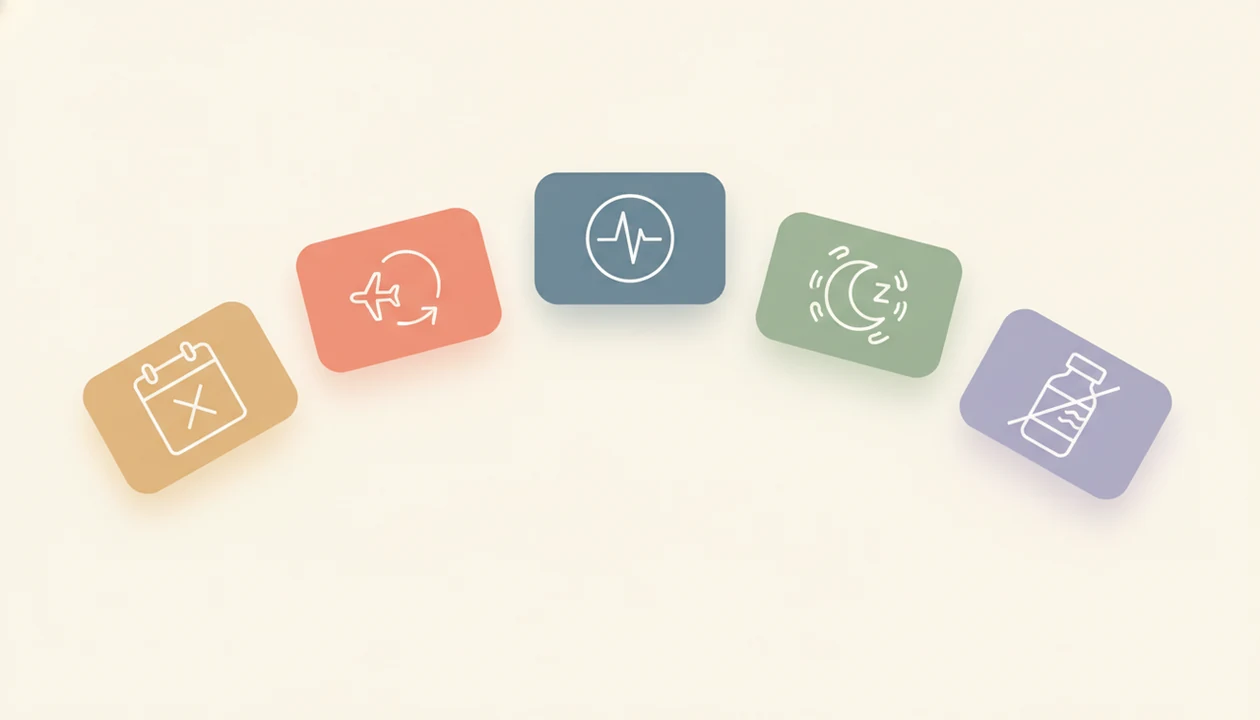
If you are asking when to see therapist for fear of flying, the clearest signs are avoidance, repeated cancellations, panic symptoms, weeks of dread, or trouble functioning before travel. You do not need to wait until you refuse every flight.
- Avoided travel: You skip work trips, weddings, funerals, holidays, or medical travel because flying feels impossible.
- Repeated cancellations: You book, rebook, then cancel once the calendar square gets circled in red.
- Panic symptoms: Racing heart, tingling fingers, chest tightness, nausea, or feeling trapped on the plane.
- Unsafe coping patterns: You need alcohol, sedatives, or constant reassurance just to board.
- High suffering despite flying: You get on the plane, but the dread starts weeks earlier and drains your sleep.
That still counts.
Clinicians typically recommend professional support when anxiety causes impairment, avoidance, panic, or escalating safety behaviors.
How Fear of Flying Works
Fear of flying works through a loop in which the brain predicts threat, the body reacts, and avoidance brings quick relief. That relief feels helpful, but it can train the nervous system to treat flying cues as danger signals next time.
- Predict danger: The mind reads takeoff, turbulence, confinement, engine sounds, or not being in control as signs that something is wrong.
- Feel alarm: Stress chemistry can create a racing heart, tight chest, nausea, sweating, dizziness, or panic sensations.
- Escape or avoid: You cancel, grip the armrest, scan the crew, drink, take medication without a plan, or seek constant reassurance.
- Feel relief: Anxiety drops, and the brain may conclude, “Avoiding kept me safe.”
Discomfort and panic sensations are real, but they are not the same as actual aviation danger. CBT helps separate predictions from facts, while graded exposure gives the brain repeated chances to learn that flight cues can be uncomfortable and tolerable. It can reduce the fear loop, though it does not promise a perfectly calm flight every time.
Fear of Flying Therapy Methods That Reduce Panic
Fear of flying therapy works by interrupting a learned fear loop: threat prediction, body sensations, avoidance, and short-term relief. The brain learns “I escaped, so I was right to fear it,” even when the flight was safe.
CBT helps you identify catastrophic thoughts, test predictions, and build more realistic interpretations. For example, “rough air means danger” becomes “turbulence is uncomfortable air movement, and discomfort is not the same as emergency.” Exposure therapy adds gradual contact with triggers, such as airport sounds, aircraft videos, seat maps, boarding cues, and eventually flight practice.
How fear of flying treatment works: repeated safe exposure teaches the nervous system that flight cues are tolerable, not proof of danger.
A 2017 review of exposure therapy for anxiety disorders found strong support for exposure-based treatment, including specific phobias (https://pubmed.ncbi.nlm.nih.gov/28313260/). The most common medically supported way to reduce phobic avoidance is CBT combined with gradual exposure practice.
5 Decision Points for Severe Flight Anxiety Help
“When should I see a therapist for fear of flying?” See one when fear starts making decisions for you, not merely when flying feels unpleasant. Mild nerves may mean sweaty palms at boarding; impairment means missed events, work consequences, family strain, health stress, or being unable to plan travel.
Use these five decision points:
- You cancel or avoid important flights.
- You panic before or during flights.
- You lose sleep for days or weeks before departure.
- Your fear spreads to elevators, highways, tunnels, or enclosed spaces.
- You rely on alcohol, sedatives, or repeated reassurance to get through.
NIMH reports that specific phobia affects an estimated 12.5% of U.S. adults at some point in life (https://www.nimh.nih.gov/health/statistics/specific-phobia).
The boarding group crowding the carpet can feel like a threat cue, not a line.
Medical Scope and When to Seek Urgent Help
This article is educational and cannot diagnose the cause of flight anxiety, panic symptoms, or physical sensations. Some symptoms that feel like anxiety still deserve medical evaluation, especially when they are new, intense, or different from your usual pattern.
Use this safety filter before treating the problem as “just fear of flying”:
- Seek urgent medical care if you have new chest pain, fainting, or severe shortness of breath, whether it happens at home, in the airport, or on the plane.
- Contact prompt clinical support if you have suicidal thoughts, feel at risk of harming yourself, or are using alcohol, sedatives, or other substances in a way that feels unsafe or hard to control.
- Tell a therapist or clinician about panic attacks, trauma history, nightmares, flashbacks, medical conditions, and medications. They may screen for panic disorder, PTSD, health anxiety, or medical contributors.
- Coordinate with a physician before using sedatives or alcohol to fly. Mixing substances, changing doses, or borrowing medication can create risks that a fear-of-flying plan should not ignore.
Therapy for Fear of Flying vs Self-Help Tools
Self-help fits mild to moderate nerves; therapy fits avoidance, panic, trauma, worsening symptoms, or fear that disrupts life. Compare features, not promises.
| Option | Best for | What it can do | What it cannot do |
|---|---|---|---|
| Self-guided breathing | Short spikes of anxiety | Slow breathing and reduce arousal | Treat complex panic or trauma alone |
| Meditation or hypnosis audio | Pre-flight dread and in-seat calming | Support attention, imagery, and relaxation | Replace assessment by a therapist |
| CBT worksheets | Repeated catastrophic thoughts | Help test predictions and reframe risk | Provide live exposure coaching |
| Licensed therapy | Avoidance, panic, trauma, impairment | Build a treatment plan with CBT and exposure | Guarantee zero nervousness |
A flight anxiety app may provide meditation, hypnosis, breathing exercises, and cognitive techniques for nervous flyers. These tools can support therapy homework between sessions, such as saving a takeoff audio before airport Wi-Fi drops, but they should not be treated as licensed care. For safety questions, the separate guide on are flight anxiety apps safe is more specific.
Structured coping practice can help you rehearse calmer responses, but it cannot diagnose panic disorder, PTSD, medication risk, or medical causes of chest symptoms.
Aerophobia Treatment Support Options a Therapist May Use
Therapy for aerophobia often combines cognitive work, exposure, body-calming skills, and practical education about flying. A therapist may tailor the plan if panic, PTSD, health anxiety, or claustrophobia is part of the picture.
- CBT: You map feared predictions, body sensations, and safety behaviors, then test them against evidence.
- Graded exposure: You approach flight cues step by step, from photos to airport visits to real flights.
- Virtual reality exposure: VR can simulate boarding, takeoff, turbulence, and landing when real flights are impractical.
- Relaxation training and psychoeducation: Breathing, muscle release, and aviation safety education can reduce misinterpretation.
- Medication planning: A primary-care clinician or psychiatrist may discuss short-term medication for unavoidable flights.
Medication may help some people board an essential flight, but it usually does not change the underlying fear by itself. If you are comparing non-drug options, the guide to flight anxiety without medication may help.
How to Prepare for a Fear of Flying Therapy Appointment
Prepare for a fear of flying therapy appointment by bringing a clear record of what happens before, during, and after flights. A good first session often starts with patterns, not a dramatic story.
Write down flight history, cancellations, panic symptoms, triggers, coping behaviors, and any alcohol or medication use. If you have a trip booked, bring the timeline: packing night, rideshare, security line, gate wait, boarding, taxi, takeoff, cruise, descent, and landing.
If you only have five minutes before calling, list the top three moments you dread most.
Questions to Ask the Therapist
Ask whether they use CBT, exposure therapy, virtual reality exposure, homework, or coordination with medical providers. You can also ask how they handle panic attacks, trauma history, and medication questions.
Details to Track Before the Visit
Track when anxiety starts, what you avoid, what you Google, and what you need to feel safe. A therapist may assess for panic disorder, PTSD, generalized anxiety, or other contributing issues, not just flying fear.
Limitations
Treatment can help, but it is not instant and not identical for every flyer. The honest caveats matter.
- Some people need longer or more tailored treatment than brief CBT, especially with trauma, panic disorder, or multiple phobias.
- Apps and self-guided tools are not substitutes for live care when anxiety is severe, impairing, complex, or worsening.
- Medication may be inappropriate for some people and should be discussed with a qualified clinician.
- VR exposure or in-person flight exposure may not be available or affordable everywhere.
- Treatment may reduce fear without eliminating all nervousness.
- A single successful flight does not always mean the fear loop is fully resolved.
- Alcohol can worsen safety and anxiety patterns, especially when combined with sedatives.
If sedatives are part of your current plan, read about sedatives for fear of flying and discuss risks with a clinician. If you are using digital tools alongside care, privacy questions are covered in privacy in flight anxiety apps.
Read more
FAQ
Is fear of flying treatable?
Yes. Aerophobia often improves with CBT, exposure therapy, relaxation training, and structured support.
When is flight anxiety severe enough for therapy?
Flight anxiety is severe enough for therapy when it causes avoidance, panic, repeated cancellations, major distress, or trouble functioning before travel. Professional evaluation is especially important with panic, trauma, medication dependence, or major life disruption.
Can CBT help fear of flying?
Yes. CBT helps people identify catastrophic thoughts, understand body sensations, reduce avoidance, and build more realistic interpretations of flight cues.
Does exposure therapy help flying fear?
Yes. Graded exposure, virtual reality exposure, and gradual real-world flight practice can help the nervous system learn that flight cues are tolerable.
Should I take medication to fly?
Medication decisions should be made with a qualified clinician. Medication is usually short-term support for specific flights, not a stand-alone cure for fear of flying.
Can apps replace therapy for fear of flying?
No. Apps can help mild anxiety or support therapy practice, but severe or impairing anxiety needs professional care; CalmFlying does not replace licensed therapy.
What causes panic on planes?
Panic on planes can come from threat misinterpretation, body sensations, loss of control, claustrophobia, turbulence, or past trauma. The trigger may be the aircraft movement, the enclosed cabin, or the meaning the brain gives to those sensations.
How do I find a therapist for fear of flying?
Look for a licensed therapist with experience in CBT, exposure therapy, specific phobias, panic, trauma, or aviation anxiety. Ask directly whether they treat aerophobia and how they structure exposure work.