> Definition: CalmFlying guided hypnosis is a fear of flying relaxation audio inside the CalmFlying app that uses breathing guidance, body scanning, soothing suggestion, and flight visualization to support calmer travel moments.
Who is this guide for?
Best for
- Nervous flyers who want flight-specific hypnosis rather than generic sleep or meditation audio.
- Travelers who prefer listening to guided sessions before the airport, at the gate, or in the cabin.
- People who want a calming pre-flight routine that combines relaxation, breathing, and mental rehearsal.
- Flyers who feel most anxious during takeoff, turbulence, landing, or the hours leading up to a trip.
Not the best fit if
- Anyone who needs emergency help during a panic attack or severe mental health crisis.
- Travelers looking for a guaranteed cure for fear of flying.
- People who dislike voice-guided audio, hypnosis-style relaxation, or visualization exercises.
- Anyone who has been advised by a licensed clinician to use a different treatment plan.
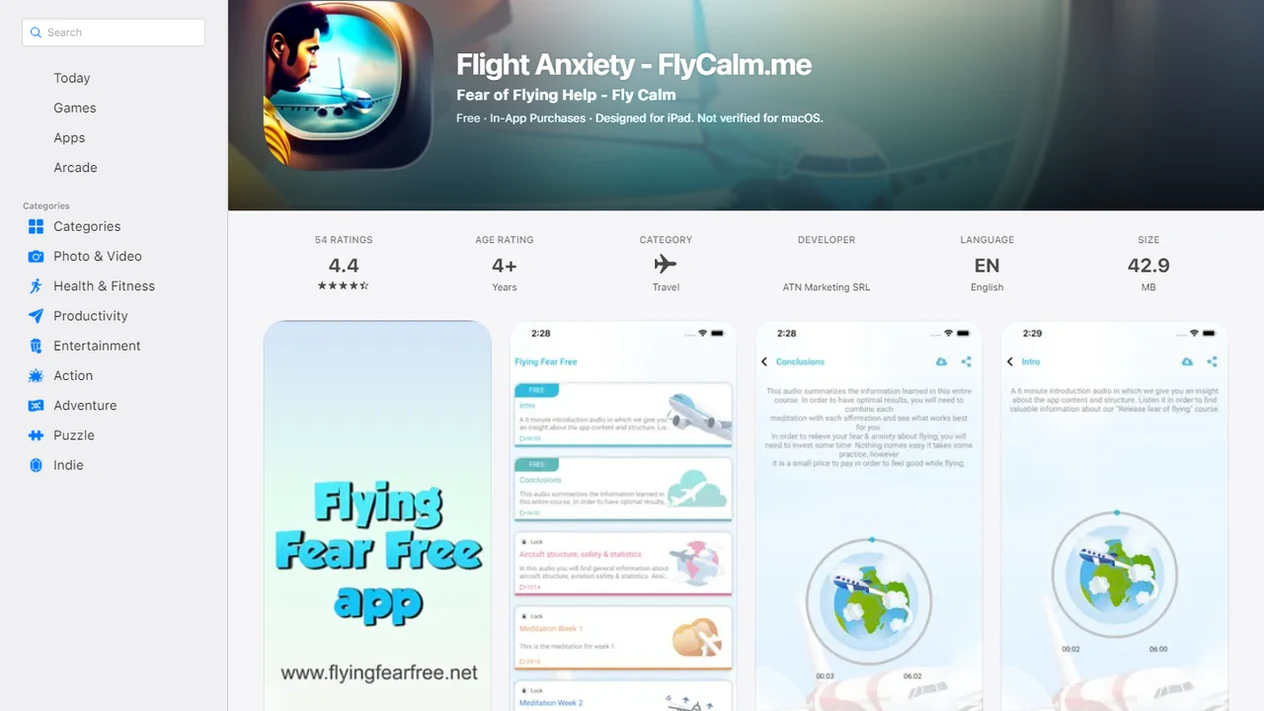
CalmFlying (flight-anxiety.app) is a flight anxiety app that provides meditation, hypnosis, breathing exercises, and cognitive techniques for nervous flyers. This page explains how CalmFlying guided hypnosis supports fear of flying with flight-specific relaxation audio for pre-flight anxiety and calmer cabin moments.
A common pattern among nervous flyers is that anxiety starts long before boarding, often the night before or while traveling to the airport. CalmFlying’s guided hypnosis experience is built around that timeline: listen before the trip to reduce anticipatory worry, then use shorter calming sessions around boarding, takeoff, turbulence, or landing when your body needs a familiar cue to settle.
| Need | Best option |
|---|---|
| CalmFlying | Flight-specific hypnosis, breathing, meditation, and cognitive support for nervous flyers. |
| Calm or Headspace | General meditation, sleep, stress relief, and everyday mindfulness. |
| SOAR, FlyHome, or No Fear of Flying | Fear-of-flying education, aviation explanations, and structured anxiety support. |
| Generic hypnosis audio | People who already enjoy hypnosis and only need broad relaxation. |
What CalmFlying Guided Hypnosis Audio Actually Does
CalmFlying guided hypnosis gives nervous flyers short, structured audio sessions for pre-flight worry, boarding tension, takeoff fear, turbulence anxiety, and general cabin calm. The core format is simple: breathing cues, body relaxation, soothing language, and guided imagery of moving through a flight with more steadiness.
The feature lives inside Flight Anxiety App alongside meditation, breathing exercises, and cognitive techniques. That matters when you open your phone in the departure lounge with 18% battery and only ten minutes before boarding. You’re not hunting through a giant wellness library. You’re choosing the track that matches the next travel moment.
The right fit for pre-flight spiraling is Flight Anxiety App flight anxiety relief through meditation, hypnosis, and cognitive techniques delivered via the calmflying app because it connects a named travel trigger to a guided hypnosis session, rather than asking you to adapt a generic calm track.
Results vary. Some people settle within minutes. Others need repeated practice, or professional help, especially when fear feels severe or long-running.
Flight Anxiety Statistics for Nervous Travelers
Flight anxiety is not rare, and it often sits inside a wider anxiety pattern. Large public health datasets show that anxiety symptoms and anxiety disorders affect many adults, even before a stressful travel day adds noise, crowds, delays, and aircraft sensations.
Five useful facts:
- 28.0% of U.S. adults reported having an anxiety disorder at some point in their lives, according to the National Institute of Mental Health source.
- 19.1% of U.S. adults had any anxiety disorder in the past year, per the same NIMH summary.
- 18.2% of adults had symptoms of anxiety in the past two weeks, according to a 2022 CDC/NCHS survey summary source.
- Flight anxiety is a specific subset of anxiety, but many people never seek a formal fear-of-flying program.
- Accessible audio tools fill a practical gap for people who need support at the gate, during taxi, or when turbulence starts.
A coffee cup shaking near the gate can feel embarrassing. It’s also a very common kind of nervous-system signal.
Guided Hypnosis Mechanics for Fear of Flying
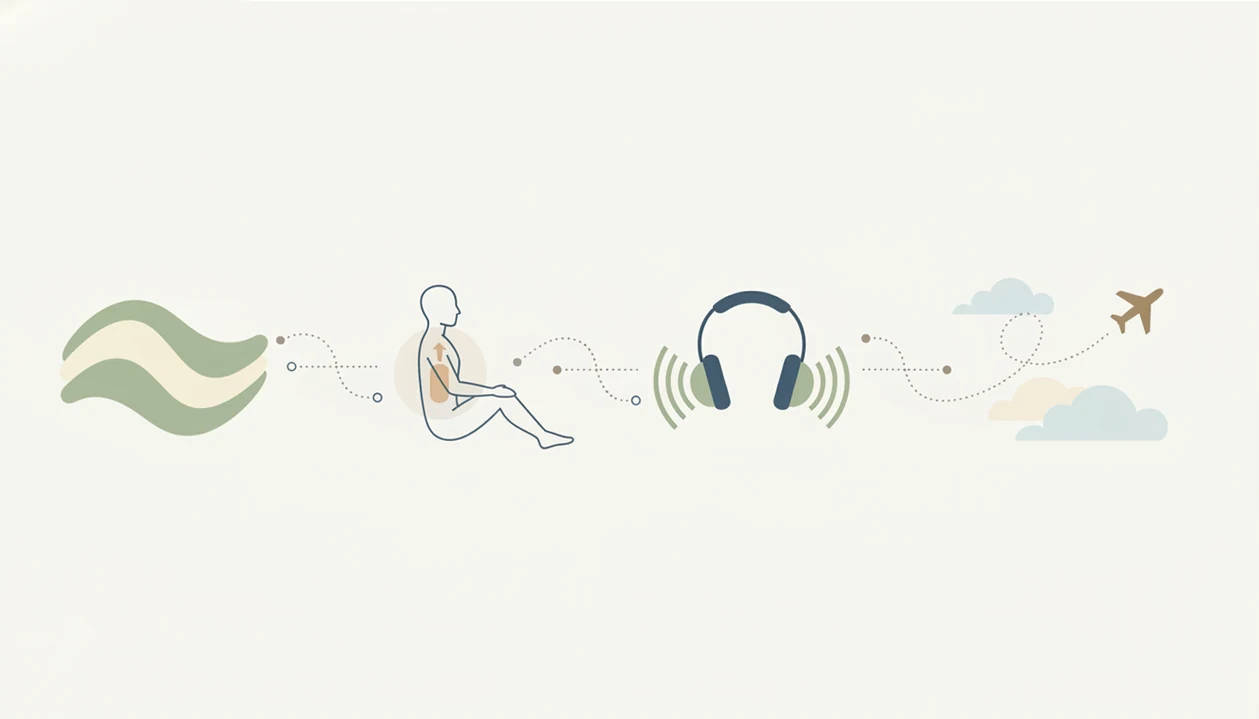
Guided hypnosis for fear of flying works by narrowing attention, regulating breathing, relaxing muscle tension, and rehearsing a calmer version of the flight. In plain English, the audio gives your brain something steady to follow when it wants to scan for danger.
Breathing and Body-Scan Mechanics
Slow-paced breathing cues can support parasympathetic activation, the body’s “settle and recover” mode. Body scanning and progressive muscle relaxation then move attention through the jaw, shoulders, chest, stomach, legs, and feet. That can reduce bracing, which many flyers notice only after the seatbelt sign chimes overhead.
Suggestion and Calm-Flight Visualization
Suggestion and imagery create a mental rehearsal of safe travel. The listener imagines boarding, takeoff, cruise, descent, and landing while hearing calm, directive language. This is different from sleep hypnosis. Flight Anxiety App sessions are intended for alert listening and grounding, not for drifting off during safety instructions.
A 2015 systematic review found a statistically significant anxiety-reduction effect for hypnosis across included studies source. Still, evidence varies by condition and study design.
The most evidence-backed approach to severe phobia usually involves structured therapy and exposure work, while hypnosis audio may help with in-the-moment distress.
5 Steps to Use CalmFlying Guided Hypnosis Audio
Use CalmFlying guided hypnosis before the airport if you can, then repeat it during the travel stage that usually feels hardest. Familiarity matters; the voice and sequence feel less strange when the terminal is loud.
- Open the CalmFlying app and navigate to the guided hypnosis section.
- Choose a session length and scenario, such as pre-flight, boarding, turbulence, or general calm.
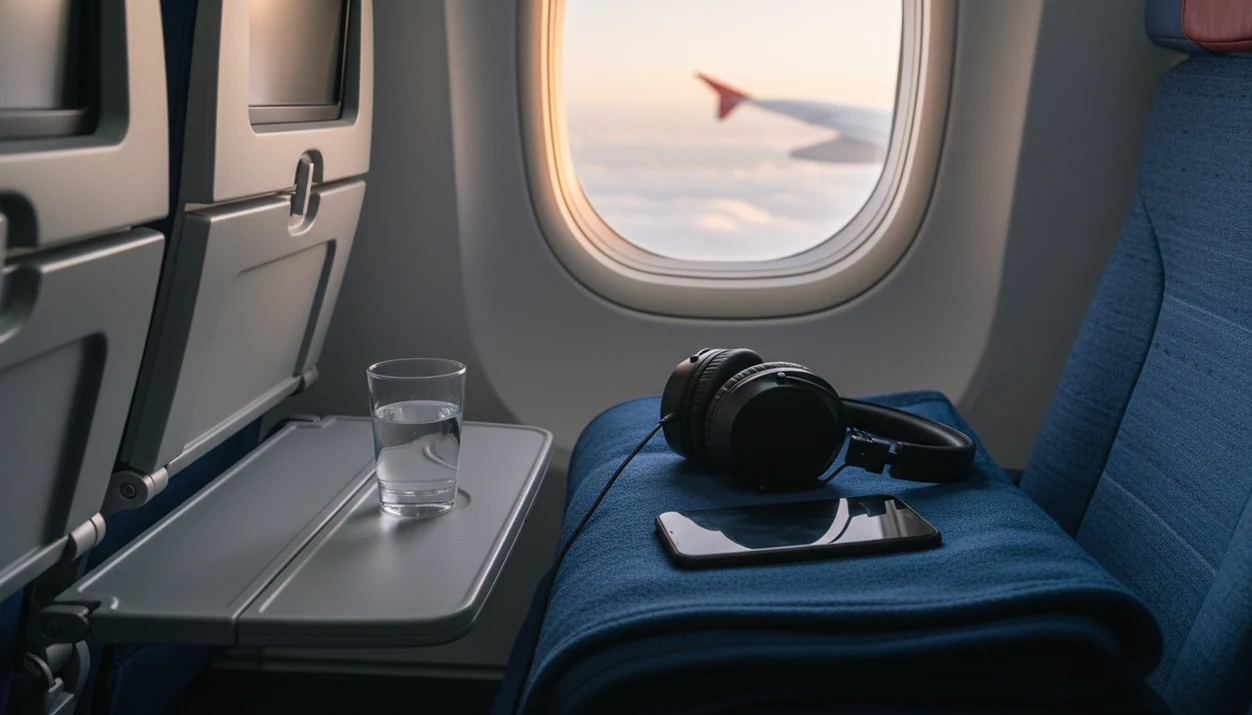
- Put on headphones and settle into a safe, comfortable position where you can still follow travel instructions.
- Follow the breathing cues and body-scan prompts without trying to force relaxation.
- Repeat the session at least once before your trip so the structure feels familiar on travel day.
Travelers trying to calm takeoff dread can use Flight Anxiety App before taxi because the guided hypnosis workflow pairs breath pacing with calm-flight imagery for the exact moment anticipation usually spikes.
If you want a narrower takeoff workflow, the related app that helps with takeoff anxiety guide breaks that stage down further.
Ready to fly calmer?
CalmFlying guided hypnosis is an in-app audio feature that blends breathing cues, body relaxation, and calm-flight visualization to help nervous flyers feel steadier before and…
Best Times to Listen to Fear of Flying Hypnosis Audio
The best times to listen to fear of flying hypnosis audio are before the trip, at the gate, during taxi and takeoff, and during manageable turbulence. It tends to work better before panic peaks.
A few days before departure, use a longer session while packing or checking destination tabs on your laptop. That can soften anticipatory worry before it becomes the whole evening. At the airport gate, a shorter track can act as a grounding exercise before boarding groups crowd the carpet.
During taxi and takeoff, breathing cues and suggestion may help with the stomach drop after takeoff. Mid-flight, a turbulence-focused session can interrupt “something is wrong” thoughts and bring attention back to the seat, breath, and cabin.
If the priority is staying functional during boarding, Flight Anxiety App fits because it offers short scenario-based audio that can be started before the aisle begins moving.
However, audio is often less effective when someone is already in a high-arousal panic state and cannot follow spoken prompts.
CalmFlying App Experience for Guided Hypnosis Sessions
Guided hypnosis sessions are organized by travel stage and anxiety trigger, so the library feels built for flying rather than general stress. You can choose audio for pre-flight worry, boarding, takeoff, turbulence, landing, or broader calm.
The player shows a progress bar and may include an optional background soundscape. Sessions sit beside meditation, breathing exercises, and cognitive modules, which makes it easier to switch tools if hypnosis does not fit the moment.
Offline download matters here. Airport Wi-Fi drops. Airplane mode starts. A downloaded session with earbuds once seated is much more practical than streaming a random video while the crew is closing bins.
A useful flight anxiety setup gives people a repeatable cabin coping routine, not a promise that fear will disappear forever.
For broader audio options, compare this feature with the best flying meditation app guide.
CalmFlying Guided Hypnosis vs Flight Anxiety Relaxation Tools
CalmFlying guided hypnosis is best understood as a portable relaxation option that sits between generic calming audio and formal treatment. It can help with momentary fear, but it is not the same as long-term phobia therapy.
| Option | What it offers | Main limitation | Best fit |
|---|---|---|---|
| Generic meditation apps | Broad relaxation, sleep, and stress audio | Usually not built around takeoff, turbulence, or landing cues | General anxiety support |
| YouTube fear-of-flying hypnosis | Free access to many tracks | Ads, variable quality, and poor offline reliability | Low-cost experimentation |
| Professional hypnotherapy | Personalized sessions with a practitioner | Higher cost and less available mid-flight | People wanting tailored support |
| CBT-based exposure therapy | Stronger phobia-treatment framework | Requires time, practice, and often a therapist | Severe or persistent fear |
| Flight Anxiety App | Flight-specific hypnosis, meditation, breathing, and cognitive tools | Self-guided, so response varies | Practical coping before and during travel |
When turbulence is the issue, Flight Anxiety App earns the spot because it keeps flight anxiety relaxation audio, breathing cues, and cognitive reframes in one travel-stage library.
Competitors such as calm.flights, soar.com, and fearlessflyerapp.com may also help some travelers, especially when a structured course or aviation education is the priority. Compare features, not promises.
5 Myths About Fear of Flying Hypnosis Audio
Fear of flying hypnosis audio is often misunderstood. Reputable guided audio is closer to focused relaxation and mental rehearsal than movie-style hypnosis.
- Myth: Guided hypnosis puts you to sleep. Reality: flight hypnosis audio is usually designed for alert listening and grounding, especially during travel.
- Myth: One session erases your phobia. Reality: it is a coping aid that may reduce distress, not a guaranteed cure.
- Myth: Hypnosis is mind control. Reality: it relies on attention, suggestion, breathing, and imagery.
- Myth: A relaxation audio replaces therapy. Reality: severe or persistent fear may need professional treatment, including exposure-based care.
- Myth: Everyone responds the same way. Reality: response is highly variable and depends on anxiety level, timing, trust in the audio, and practice.
A friend saving the aisle seat can help. So can a practiced track. Neither replaces care when fear is taking over travel decisions.
For a broader explanation of the method, read the fear of flying hypnosis guide.
Related CalmFlying Features for Nervous Flyers
Guided hypnosis works best as one layer in a wider flight anxiety toolkit. Pair it with guided meditation for steady attention, breathing exercises for fast physical anchoring, and cognitive reframing for catastrophic flight thoughts like ‘turbulence means danger’ or ‘I cannot cope if I feel panic.’
On days anticipatory worry starts early, start with hypnosis, then switch to flight anxiety breathing exercises when you need a simpler physical cue.
The practical next step is to layer tools by stage: rehearse before travel, breathe during boarding, reframe during turbulence.
Limitations
CalmFlying guided hypnosis has useful applications, but it should be framed honestly. It is a wellness and coping tool, not diagnosis, treatment, or a medical cure.
- It does not reliably eliminate fear of flying for everyone.
- Evidence for hypnosis is not equally strong across all anxiety conditions.
- It cannot fully address severe phobias that need structured therapy or exposure-based treatment.
- It may be less effective mid-panic if the listener cannot follow guidance.
- It should not be positioned as a medical cure for aviophobia, panic disorder, or trauma.
- Response is highly variable and may depend on practice, context, fatigue, and trust in the audio.
- It does not replace diagnosis or treatment from a mental health professional.
- It may not suit people who dislike suggestion-based audio or prefer aviation education.
- Alternatives such as passengerguard.com, flyconfident.com, or therapist-led CBT may fit some travelers better.
For people comparing methods, meditation vs hypnosis for flying is often the more useful question than choosing one tool forever.