Definition: A flight anxiety app is a digital wellness tool that delivers meditation, hypnosis, breathing exercises, and cognitive techniques to help nervous flyers manage fear-of-flying symptoms before and during flights; it is not a regulated medical device or a substitute for clinical treatment.
CalmFlying (flight-anxiety.app) is a flight anxiety app that provides meditation, hypnosis, breathing exercises, and cognitive techniques for nervous flyers. This page explains whether flight anxiety apps are safe, what their wellness limits are, and how to choose one responsibly.
Flight anxiety apps are generally safest when they are framed as wellness support, not as emergency care or a substitute for therapy. A safe app should help you prepare before the airport, practice calming skills before panic peaks, understand common flight sensations, and create a clear plan for takeoff, turbulence, landing, and post-flight recovery. CalmFlying is designed around that kind of structured support: short audio, breathing tools, hypnosis-style relaxation, and cognitive reframes that nervous flyers can use before and during travel. If anxiety feels unmanageable, includes fainting, chest pain, trauma symptoms, substance misuse, or thoughts of self-harm, a licensed clinician or emergency support is more appropriate than any app.
What Flight Anxiety App Safety Actually Means
Flight anxiety app safety means the app is appropriate as a wellness or self-help tool, not that it has been clinically approved as a treatment. App stores review software for basic platform rules, but they do not clinically vet mental health claims.
A safe fear-of-flying app should be judged across four areas: method integrity, professional oversight, data handling, and user suitability. If an app offers breathing, meditation, CBT-style reframing, or hypnosis, it should explain what those tools are meant to do and where their limits are.
Small details matter. If you open an app in the departure lounge with 18% battery and ten minutes before boarding, you need clear guidance, not vague promises.
According to a 2022 systematic review, only about 2% of publicly available mental health apps had direct research evidence supporting their effectiveness. That does not make every app unsafe, but it does mean users should compare features, not promises. Source: https://www.nature.com/articles/s41746-022-00633-7
5 Facts About Fear of Flying App Safety
- Relaxation tools are generally low risk. Breathing exercises, guided meditation, progressive relaxation, and basic cognitive prompts are generally safe for most adults when used as wellness support.
- Apps are not clinical care. People with severe anxiety, panic disorder, PTSD, complex trauma, or repeated avoidance of necessary travel should consider when to see therapist for fear of flying.
- Builder credentials matter. A safer app explains whether licensed mental health professionals, aviation specialists, or qualified reviewers shaped the content. Clear disclaimers are a safety feature, not legal filler.
- Hypnosis and CBT can feel uncomfortable. A fear script, body scan, or exposure-style prompt may briefly increase distress before it helps. The landing gear thump beneath the floor can still spike fear, even after practice.
- Responsible use is broader than the app. The most common medically supported way to reduce phobic fear is gradual exposure combined with cognitive and behavioral coping skills. Sleep, caffeine, therapy, medication planning, and post-flight review may all belong in the plan.
How Flight Anxiety Apps Work Behind the Scenes
Flight anxiety apps usually adapt cognitive behavioral therapy, guided meditation, progressive muscle relaxation, breathing techniques, and clinical hypnosis into short digital sessions. A 2020 JAMA meta-analysis of 66 randomized trials found moderate anxiety reductions from self-guided digital CBT, supporting app-delivered CBT tools as helpful support, not stand-alone treatment. Source: https://jamanetwork.com/journals/jamapsychiatry/fullarticle/2766544
The mechanism is simple enough: anxiety activates the fight-or-flight system, and slow breathing or guided attention can help shift the body toward parasympathetic regulation. In plain language, the app gives your nervous system a competing signal.
A reputable app can deliver pre-recorded exercises before boarding, during takeoff, or in turbulence. Good in-flight support offers structured practice and simple prompts, not diagnosis, crisis response, or a guaranteed cure.
Behind the screen, an app may collect usage patterns, saved sessions, preferences, or crash logs. It should not sell sensitive anxiety notes or travel behavior without clear disclosure and user control.
7 Safety Signals in a Reputable Flight Anxiety App
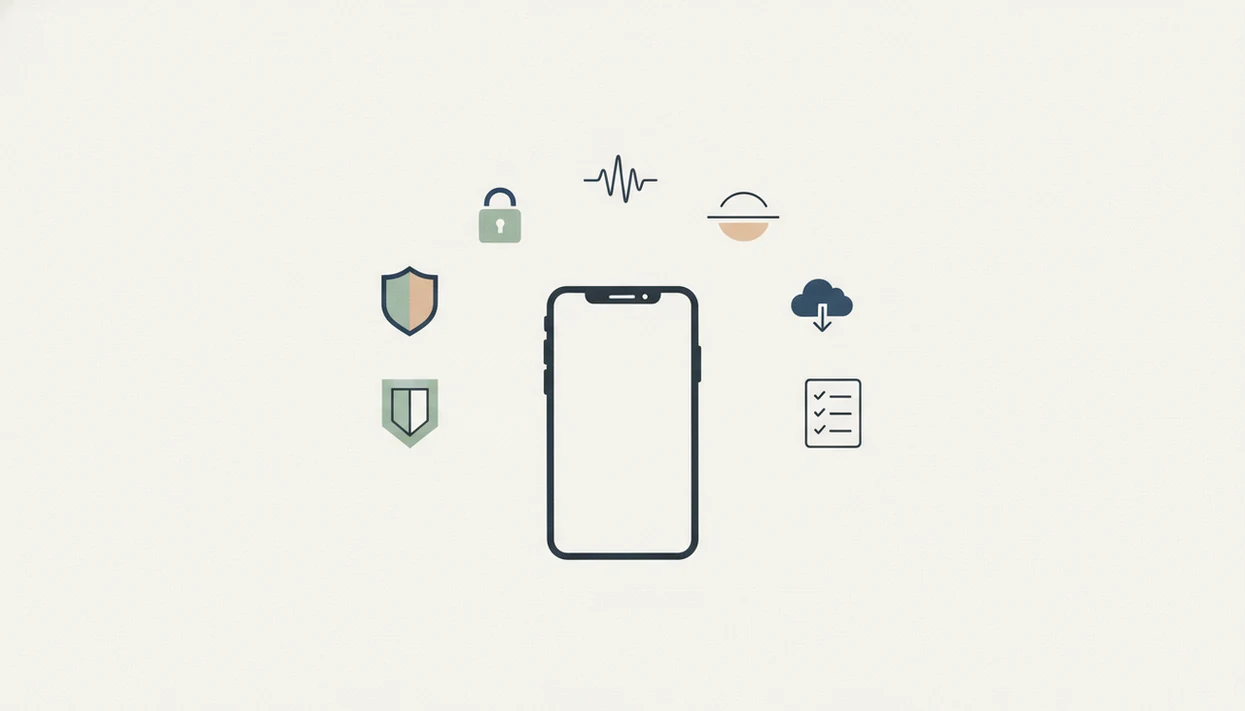
Use this checklist before trusting any flying app with your nerves or your data:
- Professional review: Content is created or reviewed by licensed mental health professionals, aviation experts, or both.
- Clear scope: The app says it is wellness support, not medical treatment.
- Evidence-informed methods: It uses CBT-style tools, breathing, relaxation, hypnosis, education, or gradual exposure concepts.
- Privacy transparency: The policy explains what data is collected, shared, stored, and deleted.
- Security disclosures: Encryption, account protection, and analytics practices are stated plainly.
- User controls: You can opt out of nonessential data sharing or request deletion.
- No cure claims: The app does not promise to erase aerophobia in one flight.
A 2019 BMJ analysis reported that over 80% of mental health apps shared user data with third parties. Source: https://www.bmj.com/content/364/bmj.l920 The pocket check is real. Before travel day, read privacy wording as carefully as the packing list beside your passport.
Ready to fly calmer?
If you're asking "are flight anxiety apps safe," the answer is generally yes for most adults with mild to moderate fear of flying when the app uses evidence-informed meditation…
Who Flight Anxiety Apps Are Safe For, And Who Needs Extra Support
Flight anxiety apps are usually a reasonable fit for adults with mild, situational nerves who want structured practice before or during a flight. They are not enough on their own when fear includes panic attacks, trauma symptoms, repeated cancellation of travel, or distress that feels out of control.
A quick safety sort can help before you rely on an app at the gate:
- Match the tool to the symptom. Use app support for ordinary anticipatory anxiety, tense boarding moments, or a racing mind during takeoff.
- Seek professional evaluation. Talk with a clinician if flying triggers panic, flashbacks, dissociation, avoidance, or major disruption to work or family life.
- Guide children closely. Let children use fear-of-flying content only with a parent involved, and add pediatric or clinician input when the anxiety is significant.
- Ask about medication timing. If you use sedatives, antihistamines, sleep aids, or anxiety medication, ask your prescriber about drowsiness, alcohol interactions, and when to take doses.
- Download before boarding. Offline access matters if your plan depends on a breathing track or takeoff audio when airplane mode starts and Wi-Fi drops.
Data Privacy Risks in Mental Health App Safety
Data privacy is one of the biggest mental health app safety issues because anxiety data can be sensitive. Session history, panic notes, travel timing, location permissions, and device identifiers may reveal more than a user expects.
The 2019 BMJ finding that over 80% of mental health apps shared user data with third parties is the reason privacy cannot be treated as a side note. Source: https://www.bmj.com/content/364/bmj.l920 Some sharing is basic analytics. Some may support advertising, profiling, or product tracking.
Any flight anxiety app should collect only what is needed for app function and session delivery. Users should still read the current privacy policy before relying on an app, especially if they save personal notes.
For a deeper breakdown of permissions, advertising identifiers, and health-data assumptions, our guide to privacy in flight anxiety apps covers the practical checks. Look for encryption language, deletion options, and whether the app explains HIPAA status clearly.
4 Common Myths About Fear of Flying App Safety
Myth 1: App Store listing means medically approved. Reality: App stores do not clinically prove that a mental health app is safe or effective. They mainly review platform compliance, payments, content rules, and technical behavior.
Myth 2: If I use an app, I do not need a therapist. Reality: Apps can help between sessions, but they cannot assess severity, trauma history, medication risk, or diagnosis. Clinicians typically recommend professional evaluation when anxiety causes avoidance, panic, or major life disruption.
Myth 3: Hypnosis or meditation can cure aerophobia in one flight. Reality: These tools may reduce symptoms, but lasting change usually takes repetition. If you want the fuller answer, we cover can an app cure fear of flying separately.
Myth 4: CBT or exposure labels make any app safe for everyone. Reality: Exposure-style content may be wrong without guidance for some people with PTSD, complex trauma, psychosis, bipolar disorder, or severe panic. A partner squeezing two fingers gently can help, but it is not clinical supervision.
What a Safe Flight Anxiety App Does NOT Cover
A safe flight anxiety app does not become an emergency service just because it is available on your phone. It cannot monitor your body, call help, assess suicidal thoughts, or respond to a medical crisis in real time.
It also cannot diagnose anxiety disorders, PTSD, panic disorder, or specific phobia. Per NIMH statistics, about 25 million U.S. adults have a specific phobia such as fear of flying, and 31.1% of U.S. adults experience an anxiety disorder at some point in life. Sources: https://www.nimh.nih.gov/health/statistics/specific-phobia and https://www.nimh.nih.gov/health/statistics/any-anxiety-disorder Many need more than self-guided support.
An app is not a replacement for prescribed medication, a psychiatrist-supervised plan, or therapy for severe or treatment-resistant anxiety. If medication is part of your plan, the safety questions differ; our guide to sedatives for fear of flying explains that boundary.
Use the app as support. Not the whole safety net.
6 Steps to Integrate a Flight Anxiety App Into a Safety Plan
Here is how to use a flight anxiety app safely before and during travel:
- Assess your anxiety severity. Separate mild situational nerves from panic attacks, avoidance, trauma symptoms, or clinical phobia.
- Consult a professional when symptoms are severe. Talk with a therapist or doctor if fear is persistent, disabling, or tied to panic.
- Choose a reputable app. Check credentials, disclaimers, privacy language, and evidence-informed techniques before downloading Flight Anxiety App or any alternative.
- Practice before travel day. Try sessions at home, then during the rideshare or gate wait, not only when the aircraft door closes.
- Use in-flight tools as coping support. Save a breathing exercise, choose a takeoff audio, and use earbuds once seated.
- Debrief after landing. Journal what helped, discuss it with your therapist if you have one, and adjust the next plan.
For most nervous flyers, a pre-flight practice routine is easier than starting cold during turbulence because the skill already feels familiar.
Limitations
Flight anxiety apps can be useful, but their limits are part of their safety profile.
- Apps cannot replace in-person therapy or psychiatric evaluation for severe phobias.
- No flight anxiety app is FDA-cleared or clinically regulated as a medical device; the FDA regulation flight anxiety app issue matters if an app makes medical claims.
- Only about 2% of mental health apps have direct research evidence supporting effectiveness, according to a 2022 review.
- Exposure-based exercises may temporarily increase distress in some users.
- Privacy protections vary widely across apps, platforms, and analytics tools.
- Self-guided tools lack real-time human judgment during acute distress.
- One session rarely creates lasting change; repeated practice usually matters.
- Hypnosis content may not suit everyone, especially people with trauma histories, dissociation concerns, or serious mental health conditions.
If you only have five minutes, download the session, read the safety disclaimer, and choose the gentlest exercise first.