How To Prepare For Flight Anxiety With Phone Tools
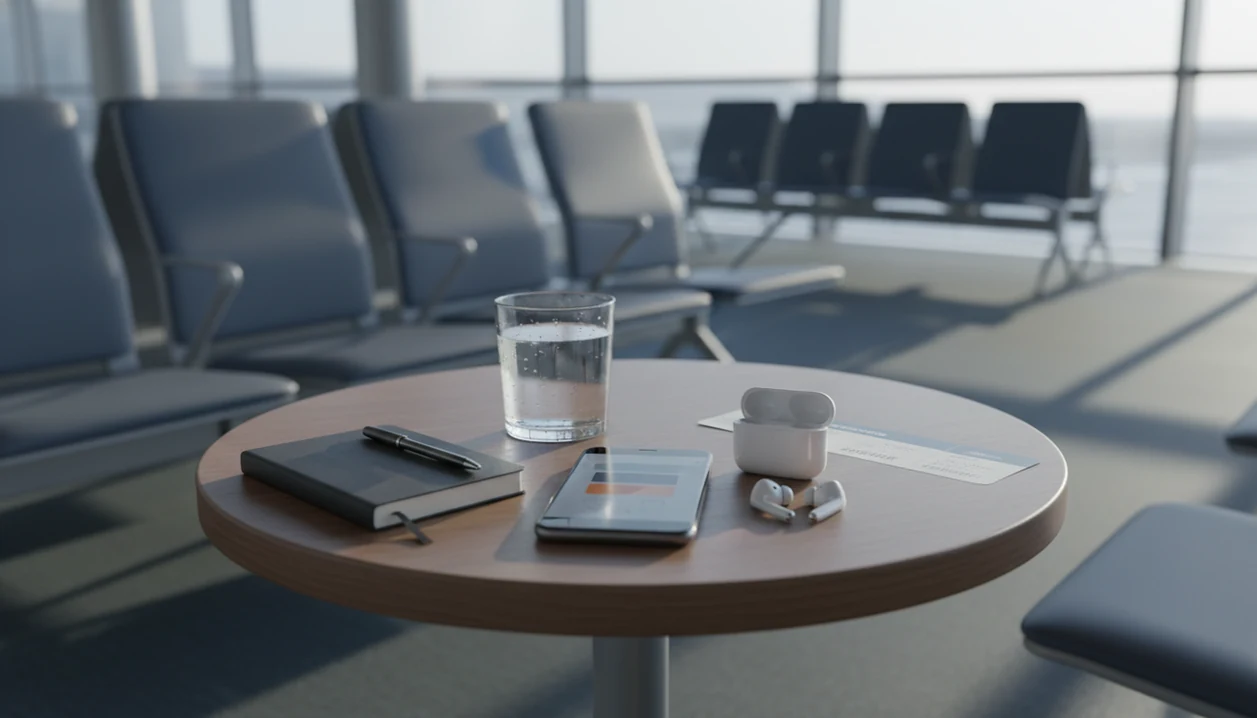
The best way to handle how to prepare for flight anxiety with phone is to build a simple offline coping kit before travel: downloaded calming audio, breathing timers, grounding prompts, flight education, and one clear gate-to-takeoff routine. Set it up before you leave home so you are not trying to search, stream, or decide while already anxious.
A dedicated flight-anxiety app can keep meditation, hypnosis, breathing exercises, and cognitive techniques in one offline place, which is useful when airport service or in-flight Wi-Fi is unreliable.
- Download every flight anxiety tool before travel so it works in airplane mode.
- Use one simple routine: breathing first, grounding second, calming audio third, distraction last.
- Phone tools can support anxiety relief, but severe flight anxiety may also need professional care.
CalmFlying (flight-anxiety.app) is a flight anxiety app that provides meditation, hypnosis, breathing exercises, and cognitive techniques for nervous flyers. This page explains how to prepare for flight anxiety with phone tools such as offline downloads, breathing timers, saved audio, grounding notes, and a simple gate routine before takeoff.
For most nervous flyers, the phone works best as a pre-planned support tool, not a last-minute distraction. Before leaving home, download calming audio, save a takeoff breathing timer, write a short grounding note, and put everything in one easy-to-find folder or app screen. The goal is to reduce decisions at the airport, where noise, lines, delays, and boarding announcements can make anxiety feel harder to manage.
| Need | Best option |
|---|---|
| CalmFlying | Nervous flyers who want flight-specific preparation on their phone |
| Calm or Headspace | General meditation, sleep, and relaxation practice |
| SOAR | Fear-of-flying education and structured aviation anxiety support |
| FlyHome or No Fear of Flying | Flyers looking for aviation reassurance or fear-of-flying guidance |
Phone Tools For Flight Anxiety: What To Prepare Before Travel
A phone-based flight anxiety kit is a prepared set of offline tools that helps you cope before boarding, during takeoff, and in the air. The phone should become a ready coping kit, not a last-minute search device at Gate B12 while your stomach is tightening.
Prepare downloaded meditation, hypnosis, a breathing timer, grounding prompts, calming music, notes, and basic flight education. Keep the first tool easy to open with one thumb. Airport cellular service can fade, and plane Wi-Fi may not work when you need it most.
Anxiety is common. According to the National Institute of Mental Health, about 9% of U.S. adults reported an anxiety disorder in the past year, and 31.1% had one at some point in life (https://www.nimh.nih.gov/health/statistics/any-anxiety-disorder). That does not mean every nervous flyer has a phobia. It means you are not strange for needing support.
Feet down. Start simple.
How Phone Tools For Flight Anxiety Work In The Nervous System
Phone tools for flight anxiety work by reducing scanning, decision load, and catastrophic interpretation. Anxious flyers often monitor every sound, body sensation, and aircraft movement as if each one needs urgent meaning.
The nervous system can move into threat detection. Your heartbeat may feel loud through a sweater, then the mind adds a story: something is wrong. Breathing timers slow the pace. Grounding redirects attention to the fabric edge of the seat, the cool plastic armrest, and the low engine hum. Guided audio reduces the need to self-coach when thinking feels crowded.
Cognitive techniques help label turbulence, cabin noises, banking, and body sensations as uncomfortable rather than automatically dangerous. According to a Cochrane review, mindfulness-based interventions reduced anxiety symptoms compared with control conditions in many studies (https://www.cochranelibrary.com/). That supports mindfulness as an anxiety aid, not as a guaranteed fear-of-flying cure.
Clinicians typically recommend skills practice before the feared situation, not only during peak panic.
How To Use Phone Tools For Flight Anxiety In A 5-Step Routine
Use phone tools for flight anxiety in one fixed order so you do not have to choose while scared. For nervous flyers, one rehearsed routine is often easier than five good apps because panic makes decision-making feel heavy.
- Set airplane-mode-ready downloads before you leave home.
- Save a breathing exercise you can follow without reading much.
- Open grounding notes with two or three short reminders.
- Play calming audio after you sit down and buckle in.
- Switch to distraction only after the body settles a little.
A well-organized flight anxiety app can group meditation, hypnosis, breathing, and cognitive techniques for nervous flyers. The goal is a clear next step in the seat, not a promise that fear will disappear on command.
Make the next breath easy, not perfect.
Step 1: Download Flight Anxiety Audio Before Airport Wi-Fi Fails
Does flight anxiety audio need to work without Wi-Fi? Yes. Flight anxiety downloads should be saved before travel because airport Wi-Fi, cellular service, and in-flight internet can all be unreliable.
The night before, download meditation tracks, hypnosis sessions, breathing audio, calming music, podcasts, and any app content you want available. Then test it. Turn Wi-Fi off, switch airplane mode on, and open the exact track you plan to use. If it will not play in that test, it is not ready for the flight.
Keep the most important track in Favorites, Downloads, or a home-screen shortcut. I like a folder named “Flight Calm” because it is plain and easy to find when boarding group numbers start coming over the speaker.
If your anxiety starts earlier, build the audio into a pre-flight anxiety routine the evening before travel.
Step 2: Save A Breathing Timer For Takeoff Anxiety
A breathing timer for takeoff anxiety should be chosen before travel and practiced at least once. Counting from scratch during boarding is harder than it sounds.
- Box breathing usually means inhaling, holding, exhaling, and holding for equal counts, often four seconds each.
- 4-7-8 breathing uses a longer exhale pattern, though the seven-second hold may feel too intense for some flyers.
- A timer, animation, vibration, or audio cue lowers the mental effort of counting.
- Breathing is most useful when practiced before the flight, not only after panic spikes.
- The aim is not to force calm; it is to give the body a slower rhythm to follow.
During takeoff, rest one hand on your thigh or belly. Let the exhale be a little longer if that feels comfortable. If breath holds make you tense, skip them. Press your heels into the floor and count the next three exhales.
Step 3: Build A Gate Routine With Grounding And Notes
A gate routine gives your phone a job before anticipatory anxiety takes over. Use the same order each time, even if boarding announcements interrupt you.
- Arrive early enough to avoid sprinting through security.
- Sit where you can hear announcements without staring at the screen.
- Hydrate with a few sips of water.
- Open saved notes with short reminders.
- Do 5-4-3-2-1 grounding.
- Start one preselected audio track.
Your notes can say, “anxiety is uncomfortable, not dangerous,” and “turbulence is normal movement.” Add one personal line too, such as, “I can come back to this seat, this breath, this moment.”
Avoid frantic symptom searching, Reddit spirals, turbulence videos, and repeated flight-status checking unless something actually changes. The pocket check is real. If the airport waiting period is your hardest stretch, the guide on airport anxiety before boarding goes deeper into that moment.
Step 4: Pair Flight Anxiety Downloads With Flight Safety Education
Flight anxiety downloads work better when they are paired with simple education about normal flying sensations. Education gives the mind a less frightening explanation for turbulence, engine changes, banking, landing gear movement, and cabin noises.
This is not aviation hobby content. You do not need to study aircraft systems for hours. You need two or three saved reminders that help you interpret the moment less catastrophically. For example: “The seatbelt sign ding is an instruction, not proof of danger,” or “Engine sound changes are common during climb and descent.”
The most common clinically supported way to reduce phobic avoidance is gradual exposure combined with coping skills and realistic thinking, not reassurance alone. Keeping cognitive reminders and calming exercises in one place may reduce app-hopping during stress.
Use the cabin as your anchor.
Common Phone Mistakes That Make Flight Anxiety Worse
Some phone habits make flight anxiety louder because they add urgency, choice, and uncertainty. A smaller setup is often safer during high anxiety than an overloaded toolkit.
- Too many apps: Six options can feel like no option when your chest tightens.
- No offline test: Downloads should be checked with airplane mode on before travel.
- Low battery: Pack a charger or power bank where you can reach it.
- No headphones: Audio tools are harder to use if earbuds are buried in a carry-on.
- Scattered files: Put notes, audio, and timers in one “Flight Calm” folder.
Relying on live streaming is risky. So is using the phone mainly for reassurance loops, doomscrolling, panic searching, or watching turbulence videos from strangers. If turbulence is your main trigger, a focused resource like the best fear of flying app for turbulence guide may be more useful than scrolling clips in the terminal.
Flight Anxiety Phone Checklist Before You Leave Home
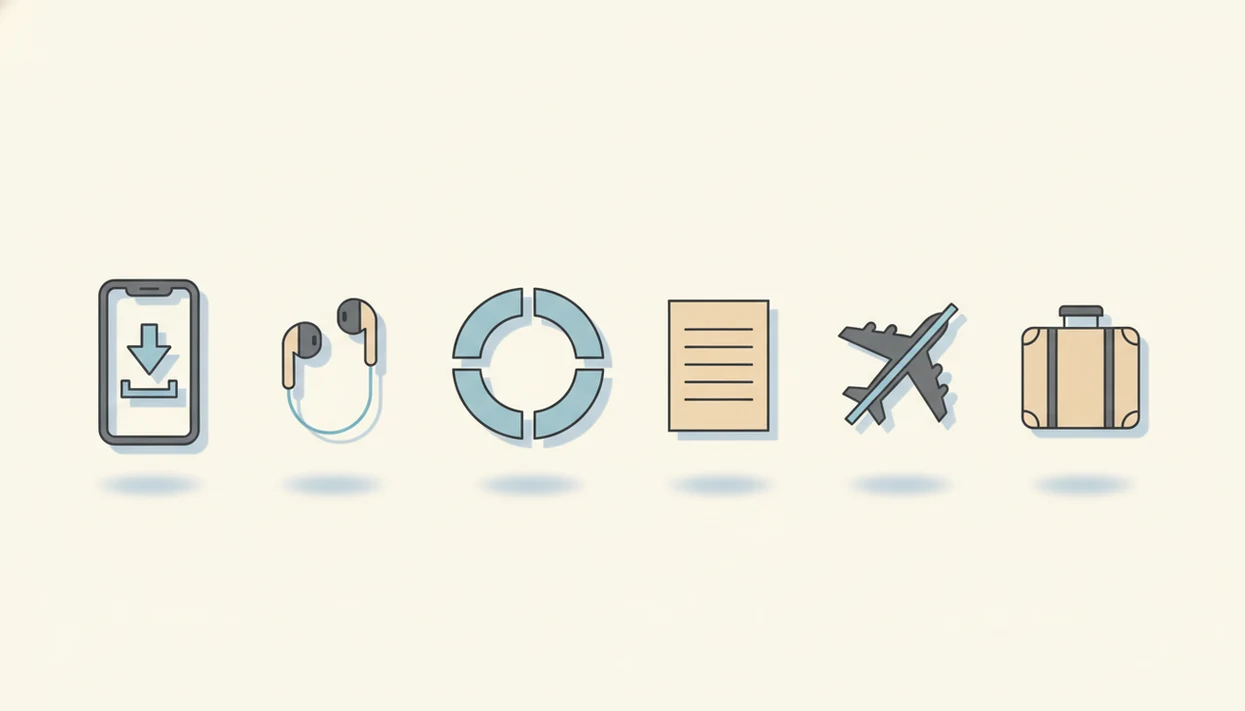
Use this checklist the day before travel, not in the airport. Preparing early lets you rehearse the first two minutes once, while your body is still in a quieter place.
| Phone setup item | What to check |
|---|---|
| Charge phone | Start travel day with a full battery. |
| Pack charger | Put cable and power bank in an easy pocket. |
| Download content | Save meditation, hypnosis, breathing, music, and podcasts. |
| Test airplane mode | Confirm the first audio track plays offline. |
| Save notes | Keep grounding lines and flight reminders in one note. |
| Choose first audio | Pick the track you will use before takeoff. |
| Set shortcut | Add a home-screen folder or favorite called “Flight Calm.” |
| Pack headphones | Test both earbuds before leaving home. |
If you want to prepare for flying with app support, choose one main routine and rehearse it while sitting in a chair with your belt across your hips. For more planning context, read what happens when you prepare for flight anxiety before your travel day.
Limitations
Phone tools can reduce distress, but they do not cure flight anxiety or specific phobias on their own. They work best as prepared support, not as a rescue plan you build after panic has already started.
- Breathing, meditation, and hypnosis are not equally effective for every person or every panic level.
- A highly overwhelmed person may struggle to follow even simple app instructions.
- Downloaded tools only help if they are prepared before travel and easy to find.
- Phone tools are not a substitute for therapy, medical care, or individualized advice.
- Severe avoidance, repeated panic, or anxiety linked with a broader anxiety disorder may need professional treatment.
- Hypnosis, meditation, and app-based coping should not be presented as guaranteed solutions.
- If breath exercises make you feel lightheaded, stop and return to normal breathing.
However, limitations do not make preparation useless. They make simplicity important. One saved track, one breathing pattern, and one note can be enough to begin.
Read more
FAQ
Can phones help with flight anxiety?
Phones can support flight anxiety coping through downloaded audio, breathing timers, grounding prompts, reminders, and simple distraction tools. They are not a complete treatment for severe anxiety or phobia.
What should I download before flying if I get anxious?
Download calming audio, breathing exercises, grounding prompts, music, podcasts, simple games, and any app content you plan to use. Test everything in airplane mode before leaving home.
Do anxiety apps work offline on a plane?
Some anxiety apps work offline if the audio or exercises are downloaded first. Always test the exact content with Wi-Fi off and airplane mode on before travel.
What is the best breathing exercise for takeoff anxiety?
Box breathing and 4-7-8 breathing are common options, but the best choice is the one you can follow easily under stress. Choose one pattern before travel and practice it once.
How do I calm down at boarding with my phone?
Open saved notes, take several slower breaths, name five ordinary things you can see, and start one preselected audio track. Keep the routine short enough to pause for crew instructions.
Should I use music or meditation for flight anxiety?
Guided meditation is better when you need instructions and reassurance. Music may be better when you want low-effort calming or distraction after your body has settled.
Can I use my phone during takeoff for anxiety exercises?
You can generally use offline phone content in airplane mode when allowed by airline rules. Follow crew instructions and have downloads ready before taxi and takeoff.
When should I seek professional help for flight anxiety?
Seek professional help if flight anxiety causes severe avoidance, panic attacks, cancelled travel, or distress that affects daily life. Therapy, medical advice, or structured treatment may be appropriate.