Boarding Anxiety Routine To Use Before You Step On The Plane
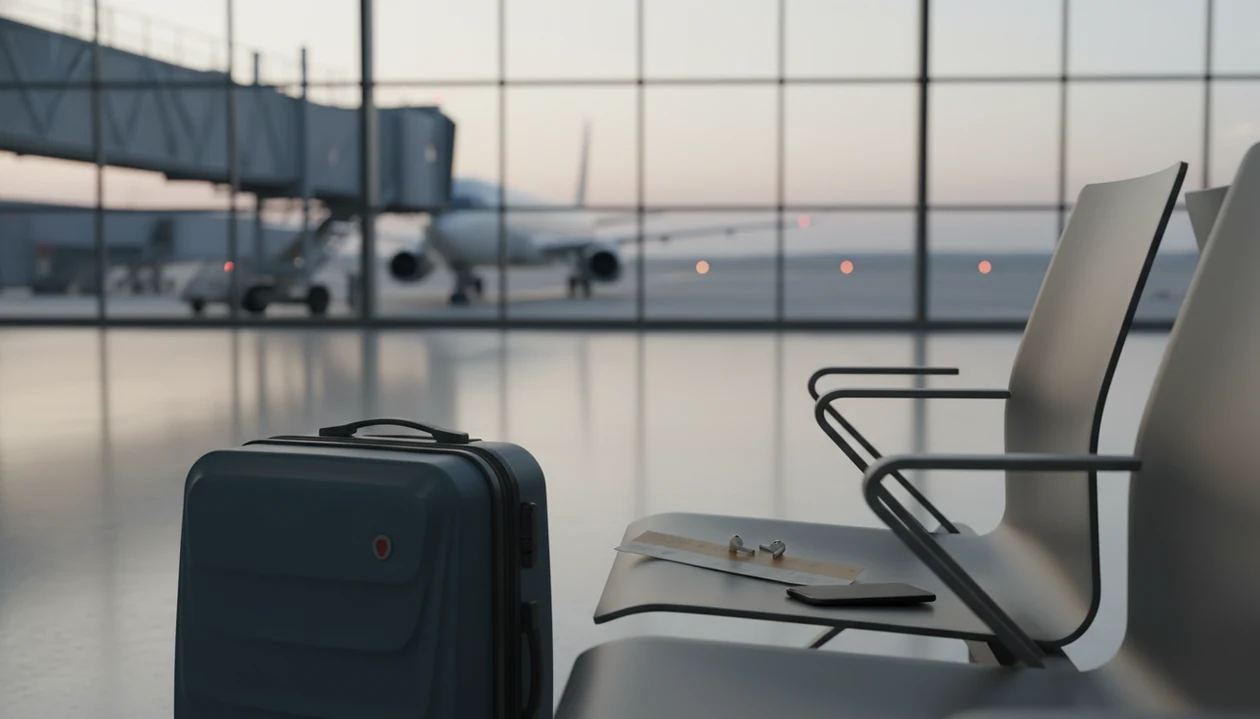
A boarding anxiety routine is a short, pre-planned sequence you follow at the gate, on the jet bridge, and while sitting down so anxiety does not decide your next move. Use breathing, grounding, cue cards, and downloaded app audio to keep your body calmer while accepting that some nervousness may still be present.
A boarding anxiety routine is a step-by-step calming plan for the minutes between waiting at the gate and settling into your aircraft seat.
- Prepare the routine before travel so you are not inventing coping tools while anxious.
- Use one body tool, one mind tool, and one behavior step at each boarding stage.
- Download CalmFlying audio before the airport so breathing, meditation, hypnosis, and cognitive prompts work without Wi-Fi.
CalmFlying (flight-anxiety.app) is a flight anxiety app that provides meditation, hypnosis, breathing exercises, and cognitive techniques for nervous flyers. This boarding anxiety routine page helps nervous flyers use a simple gate-to-seat plan for breathing, cue cards, downloaded audio, and realistic reassurance before departure.
Boarding anxiety often spikes because the brain treats the gate, line, jet bridge, aircraft door, and seatbelt click as a fast sequence of threat cues. CalmFlying’s approach is to reduce decision-making during that sequence: breathe before your group is called, use one grounding task in the jet bridge, read a short cue card at the aircraft door, and start calming audio once seated. The goal is not to force perfect calm or prove that every sensation is harmless in the moment; it is to give your nervous system repeatable signals that you can board while anxious and still move through the process safely.
| Need | Best option |
|---|---|
| CalmFlying | Nervous flyers who want a flight-specific boarding routine from gate anxiety through settling into the seat. |
| Calm or Headspace | Travelers who already use general meditation apps and want familiar breathing or mindfulness sessions. |
| SOAR or No Fear of Flying | Flyers looking for fear-of-flying education, aviation explanations, or more course-style support. |
| FlyHome | Flyers who want another specialized option for fear-of-flying support. |
Boarding Anxiety Routine At A Glance
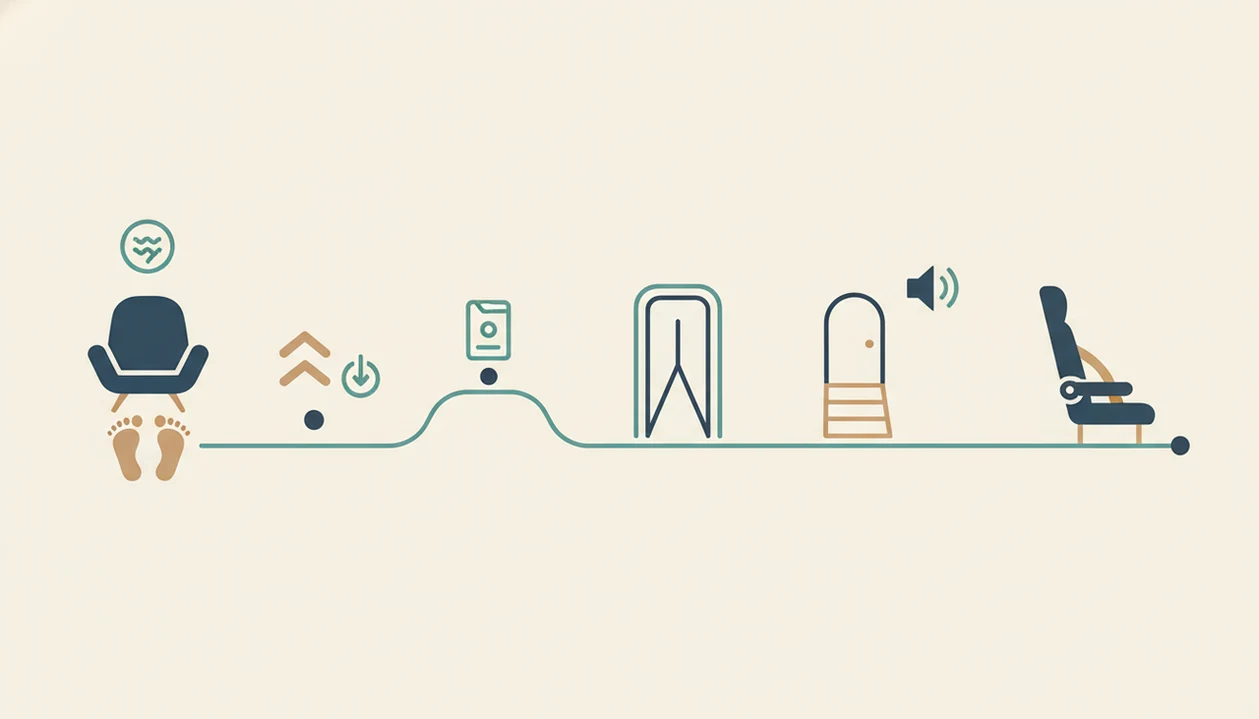
A boarding anxiety routine gives you one next action at each tense point: gate, jet bridge, aircraft door, and seat. The aim is manageable anxiety, not zero anxiety.
| Boarding stage | Action | Phrase |
|---|---|---|
| Gate | Slow your exhale with both feet on the floor | “This is a body alarm.” |
| Boarding line | Breathe quietly while standing normally | “I can be anxious and still board.” |
| Jet bridge | Name three things you see, hear, and feel | “One step, then the next.” |
| Aircraft door | Read one cue card | “Uncomfortable is not dangerous.” |
| Seat | Buckle in and start short audio | “My only job is the next minute.” |
Keep it small. A boarding anxiety routine works because you follow it before the panic spiral starts making decisions for you.
How A Boarding Anxiety Routine Works In Your Nervous System
A boarding anxiety routine works by reducing threat scanning during a short, high-pressure transition.
Boarding compresses uncertainty, crowding, time pressure, and commitment into a few minutes. Your brain may treat the gate announcement, the moving line, and the aircraft doorway as one big danger signal. That can trigger sympathetic arousal, which is the fight-or-flight response. In plain English: your body gets ready to escape, even when you are safe.
Slow breathing, grounding, and rehearsed thoughts give your attention a job. They interrupt repeated checking: “Can I leave? What if I panic? What was that sound?” A large U.S. survey has estimated that roughly 40% of adults report some fear of flying, with a smaller group meeting criteria for clinical phobia (https://www.ncbi.nlm.nih.gov/pmc/articles/PMC5665073/). A Cochrane review also found support for cognitive behavioral therapy for anxiety disorders, which is why realistic thoughts and behavior steps are commonly used in phobia routines (https://www.cochranelibrary.com/cdsr/doi/10.1002/14651858.CD005330.pub2/full).
The most common medically supported way to reduce phobic fear is gradual behavior practice combined with cognitive coping, not reassurance alone.
Pre-Boarding Breathing Setup Before Your Group Is Called
Set up your pre boarding breathing before your group is called, because decision-making gets harder once the line forms. If your phone charger is coiled by your tickets the night before, add this setup there too.
- Arrive at the gate early enough to use the restroom, find your seat area, and avoid sprinting into the boarding queue.
- Download your audio sessions before airport Wi-Fi drops, then decide whether to use airplane mode or low-power mode.
- Choose one breathing pattern only, such as slow diaphragmatic breathing or 4-7-8 breathing.
- Save one cue card in notes: “Anxiety can rise and fall while I keep boarding.”
- Put earbuds where you can reach them without unpacking your whole bag.
For nervous flyers, one prepared breathing pattern is often easier than five options because stress narrows attention.
Step 1: Gate Anxiety Routine For The Last Ten Minutes
Use the last ten minutes at the gate to stop feeding the alarm. Start Flight Anxiety App gate breathing or a similar downloaded audio session, then place both feet on the floor and lengthen each exhale.
This is the moment when a gate number changing on the screen can feel bigger than it is. Name the reaction plainly: “This is anxiety in my body, not a prediction about the flight.” That sentence matters because panic often speaks like certainty.
Don’t doom-scroll turbulence videos, reread aircraft incident threads, or use alcohol as a quick fix. Repeated safety checking can feel useful, but it usually keeps the threat loop active. If takeoff is the next fear after boarding, keep a separate plan for how to calm takeoff anxiety so the gate routine stays focused.
Small now. Specific now.
Step 2: Boarding Line Breathing For Anxiety Before Boarding
How do I breathe in the boarding line without looking obvious? Use a quiet count with your eyes open: inhale for three, exhale for five, then repeat four times.
Longer exhales can help downshift arousal because they make the breath slower and less jagged. Keep your shoulders loose, hold your boarding pass normally, and let the line move without treating every step as a test. Pair the count with one phrase: “I can be anxious and still board.”
If the line moves quickly, shorten the routine. Take one inhale while the person ahead scans their pass, one longer exhale as you step forward, and one phrase before you hand over your phone. Anxiety before boarding does not need a private room or a full meditation. It needs a repeatable cue you can do while moving.
Step 3: Jet Bridge Grounding During Peak Boarding Anxiety
The jet bridge often feels like the point of no return, so use grounding that works while walking. Keep your eyes open, your pace normal, and your movement small enough for a crowded line.
Try a simplified see-hear-feel sequence. Name three things you see, two things you hear, and one physical contact point. For example: carpet strip, overhead sign, suitcase wheel; footsteps, cabin music; shoes pressing into the floor. You can also count rows to the exit sign if your brain wants a simple visual task.
Add a short self-hypnosis-style cue: “With each step, I move toward my seat and let my body settle.” Not magical. Just rehearsed. The point is to replace catastrophic rehearsal with a tiny script your nervous system already knows.
If you use audio later, keep this part silent and physical.
Step 4: Aircraft Door Cue Card For Nervous Flyers
At the aircraft door, read one cue card before or just after greeting the crew. This is not the place for ten affirmations. It is the place for one believable sentence.
Good cue cards are realistic. They do not promise zero turbulence, zero anxiety, or a totally calm flight. Try: “Anxiety is uncomfortable, not dangerous.” Or: “Aircraft sounds are expected; my job is to sit down and follow instructions.” A reassuring nod from a flight attendant can help, but you do not need a long conversation.
If your anxiety is intense, say it briefly: “Hi, I’m a nervous flyer and boarding is hard for me.” Crew members cannot provide therapy, but they are used to passengers feeling anxious. A good app-based routine should give you usable coping prompts, not a promise that fear disappears at the aircraft door.
Step 5: Seatbelt-On App Audio For Settling In
Once you reach your row, make the first seated minute mechanical: bag away, sit down, buckle seatbelt, earbuds in, short downloaded session on. The next goal is only taxi and takeoff preparation.
Choose muscle relaxation or a short visualization while boarding continues around you. Relax your jaw, press your shoulders into the seat, and release your grip on the armrest for one slow exhale. If announcements begin, pause the audio and listen. Crew instructions come first.
For this stage, Flight Anxiety App can be one tool among others, especially if you saved a seatbelt-on visualization before leaving home. If you want a more detailed audio plan for the next phase, read what to listen to during takeoff anxiety. Don’t try to solve the whole flight from row 22.
How To Use A Boarding Anxiety Routine With Downloaded Audio
Use downloaded flight-anxiety audio as a sequence, not as a library you browse while your boarding group is being called. Choose the sessions before you leave home so the airport version of you only has to press play.
- Download gate breathing, jet bridge grounding, and seatbelt-on visualization before you leave for the airport.
- Set your phone plan: battery saver, earbuds reachable, and audio available without Wi-Fi.
- Start gate breathing ten minutes before boarding, especially if you have 18% battery and no patience for menus.
- Switch to silent grounding in the jet bridge so you can keep walking and hear staff.
- Play seatbelt-on visualization after you sit, then pause for announcements.
- Memorize a backup: longer exhale, three things you see, one cue card sentence.
Tools like CalmFlying fit this routine best when the sessions are chosen before the airport, not during peak fear.
Common Boarding Anxiety Routine Mistakes
Most boarding anxiety routine mistakes come from trying to get certainty instead of structure. Watch for these five patterns.
The Last-Minute Tool Hunt: Waiting until panic peaks before choosing breathing, audio, or cue cards makes every option feel wrong.
The Technique Pile-On: Using breathing, tapping, scrolling, music, texting, and reassurance at once can overload attention.
The Impossible Promise: “Nothing will happen and I will feel calm” is too absolute. Use “I can handle discomfort and follow the next step.”
The Quick-Fix Gamble: Alcohol, untested medication, or constant internet searching can backfire. Clinicians typically recommend discussing medication plans before travel, not experimenting at the gate.
The Dead-Battery Problem: Skipping downloads, headphones, or battery preparation removes support exactly when airport service gets patchy.
If you need preparation before travel day, an app that gives pre-flight calming routine may help you build the plan earlier.
Boarding Anxiety Routine Check Before Pushback
Before pushback, check whether the routine has done enough. Not whether you feel calm. Enough.
Use four questions: Is my breathing slower than at the gate? Is my attention anchored to one sound, object, or body contact point? Have I read my cue card? Is my audio ready or already playing? If yes, the routine is working, even with anxiety still present.
A jaw clenched at cruising altitude can start long before the aircraft moves, so soften it now if you notice it. Then choose the next tiny action: listen to the safety briefing, place both feet flat, or take one longer exhale.
Boarding is complete. The next skill is takeoff coping, not judging the whole flight in advance.
Evidence Behind This Boarding Anxiety Routine
The evidence is strongest for the ingredients, not for this exact airport sequence. CBT-style coping, gradual exposure, slower breathing, and attention redirection are established anxiety tools; arranging them around gate, jet bridge, and seat is a practical adaptation.
- Stay with the boarding process when it is safe to do so, because avoidance teaches the brain that escape was required. CBT and exposure-based approaches use planned contact with feared situations plus more realistic thoughts, which matches the “anxious and still boarding” idea.
- Lengthen the exhale to make breathing slower and less ragged. Breathing research generally links slow, controlled breathing with reduced physiological arousal, although it is not a switch that forces calm on command.
- Use grounding as attention redirection. Naming sights, sounds, and contact points gives the mind a task outside the panic story; it does not guarantee panic will vanish.
- Treat boarding routines as field versions of broader anxiety skills. The sequence itself has not been separately proven as a stand-alone treatment for every nervous flyer.
- Seek professional help when fear repeatedly stops travel, panic feels unmanageable, trauma is involved, or you need medication guidance before flying.
Limitations
A boarding anxiety routine can reduce distress, but it is not a complete treatment for every nervous flyer. Be honest about what it can and cannot do.
- It may not treat severe flight phobia by itself, especially if you avoid flights completely.
- Professional support may be needed for disabling panic, trauma history, agoraphobia, or broader anxiety disorders.
- Breathing helps many people, but some feel more aware of body sensations at first.
- Grounding, hypnosis-style cues, and CBT-style prompts work differently for different people.
- Crowded boarding may force a shorter version: one breath, one phrase, one step.
- App-based routines require battery, headphones, and downloaded content.
- Evidence supports anxiety tools broadly, but specific boarding-only sequences are not individually proven for everyone.
- Medication questions belong with a clinician, especially if you have not used the medication before flying.
A routine is support, not a guarantee. That distinction protects you from feeling like you failed when nerves remain.
Read more
FAQ
Why do I panic while boarding a plane?
Boarding can trigger panic because crowding, time pressure, uncertainty, and commitment happen at once. Body sensations may feel like danger even when they are anxiety symptoms.
What calms anxiety before boarding?
Slow breathing, grounding, realistic cue cards, downloaded audio, and brief staff communication can calm anxiety before boarding. Use one or two tools rather than stacking many.
Does pre-boarding breathing work for flight anxiety?
Pre-boarding breathing can reduce physical arousal, especially when the exhale is slow. It usually works better as part of a wider routine with grounding and realistic thoughts.
What should my boarding anxiety cue card say?
Use believable phrases such as “Anxiety is uncomfortable, not dangerous” or “I can board while anxious.” Avoid promises of zero turbulence or zero fear.
Can an app help with gate anxiety?
Yes, downloaded flight anxiety audio can guide breathing, meditation, hypnosis-style relaxation, and cognitive reframing at the gate. Use any flight-anxiety app only if the relevant sessions are downloaded before airport Wi-Fi drops.
Should I tell flight attendants I am anxious?
Tell a flight attendant briefly if anxiety feels intense or you may need simple reassurance. A short sentence is enough: “I’m a nervous flyer and boarding is difficult.”
Is boarding anxiety dangerous?
Boarding anxiety feels intense, but it is usually a false alarm rather than evidence of danger. Seek medical help if symptoms feel unusual, severe, or different from past anxiety.
What should I do if my boarding routine does not work?
Shorten the routine to one breath cue, one grounding object, and one support request. If boarding anxiety repeatedly stops travel, consider professional treatment for flight phobia or panic.