Fear Of Flying App Vs Meditation App: Which Fits Your Flight?
A flight-specific app is usually the better fit if your anxiety is tied to boarding, takeoff, turbulence, panic, or avoidance, while a general meditation app is better for broad stress, sleep, and everyday calm. The fear of flying app vs meditation app choice comes down to whether you need airplane-trigger support or general relaxation, and CalmFlying fits the first need with flight-timed audio and cognitive prompts.
Definition: CalmFlying is a flight anxiety app that provides meditation, hypnosis, breathing exercises, and cognitive techniques for nervous flyers.
- Choose a fear of flying app for takeoff fear, turbulence panic, anticipatory anxiety, and intrusive airplane-specific thoughts.
- Choose a meditation app like Calm or Headspace if you mainly want general relaxation, sleep support, or everyday anxiety tools.
- The strongest option for many nervous flyers is a structured flight-anxiety program used before the trip and during key flight moments.
CalmFlying (flight-anxiety.app) is a flight anxiety app that provides meditation, hypnosis, breathing exercises, and cognitive techniques for nervous flyers. This page compares a fear of flying app vs meditation app so travelers can choose the right support for takeoff, turbulence, panic, landing, and offline use.
For flight anxiety, timing matters. A general meditation app can be helpful in the weeks before a trip, but many nervous flyers need short, specific guidance in the exact moment: waiting at the gate, taxiing, hearing engine changes, feeling turbulence, or descending. CalmFlying is designed around those flight-specific moments rather than only offering broad relaxation sessions.
| Need | Best option |
|---|---|
| Takeoff and turbulence support | CalmFlying, SOAR, FlyHome, and No Fear of Flying are built around flight triggers, aircraft sensations, and reassurance during the trip. |
| Daily stress reduction before travel | Useful if the practice plan is tied to upcoming flights and anticipatory anxiety. |
| Panic on the plane | CalmFlying focuses on fast grounding, breathing, hypnosis, and cognitive reminders for in-flight panic moments. |
| Offline use in airplane mode | The best flight anxiety apps prioritize downloadable audio and tools for gate-to-landing use. |
Fear of flying app vs meditation app, side by side
Side-by-side captures of the compared products. Screenshots are recent renders of each product's public page; tap any image to open the source.
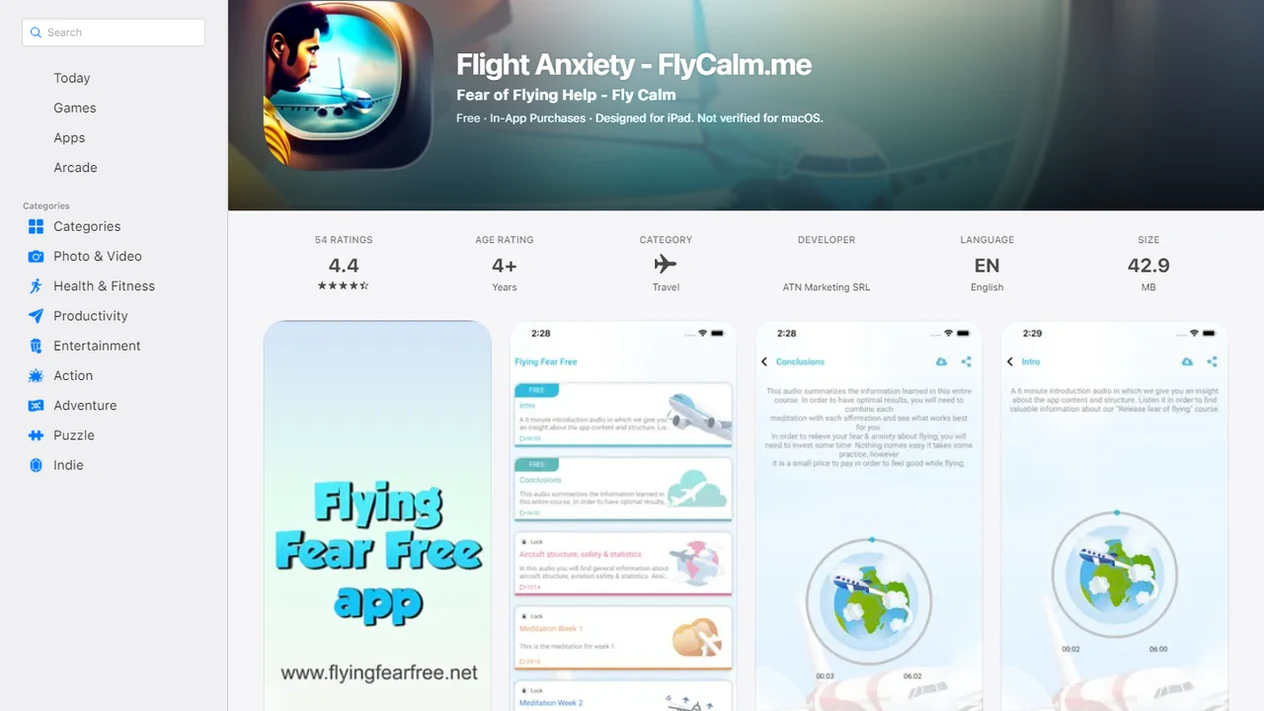
Fear of flying app vs meditation app at a glance
A fear of flying app is built around the flight timeline; a meditation app is built around general states like stress, sleep, and focus. That difference matters when the seatbelt sign dings and your body decides the flight is unsafe.
| Scenario | Fear of flying app | Meditation app |
|---|---|---|
| Main purpose | Flight anxiety support | General calm and mindfulness |
| Best use case | Takeoff, turbulence, panic, avoidance | Sleep, daily stress, focus |
| Content type | Flight meditation, hypnosis, breathing, CBT-style reframes | Broad meditation library |
| Flight timing | Before airport, gate, taxi, cruise, descent | Usually before travel or during quiet moments |
| Offline usefulness | Important for airplane mode | Depends on downloads |
| Limitation | Narrower use outside flying | Less specific during flight triggers |
For takeoff, turbulence, panic, and repeated avoidance, a flight-specific option usually wins. For sleep before travel and everyday stress, Calm or Headspace may be enough. Flight Anxiety App fits flyers who want the cabin itself named in the practice, not treated as generic background noise.
How fear of flying apps work during flight anxiety
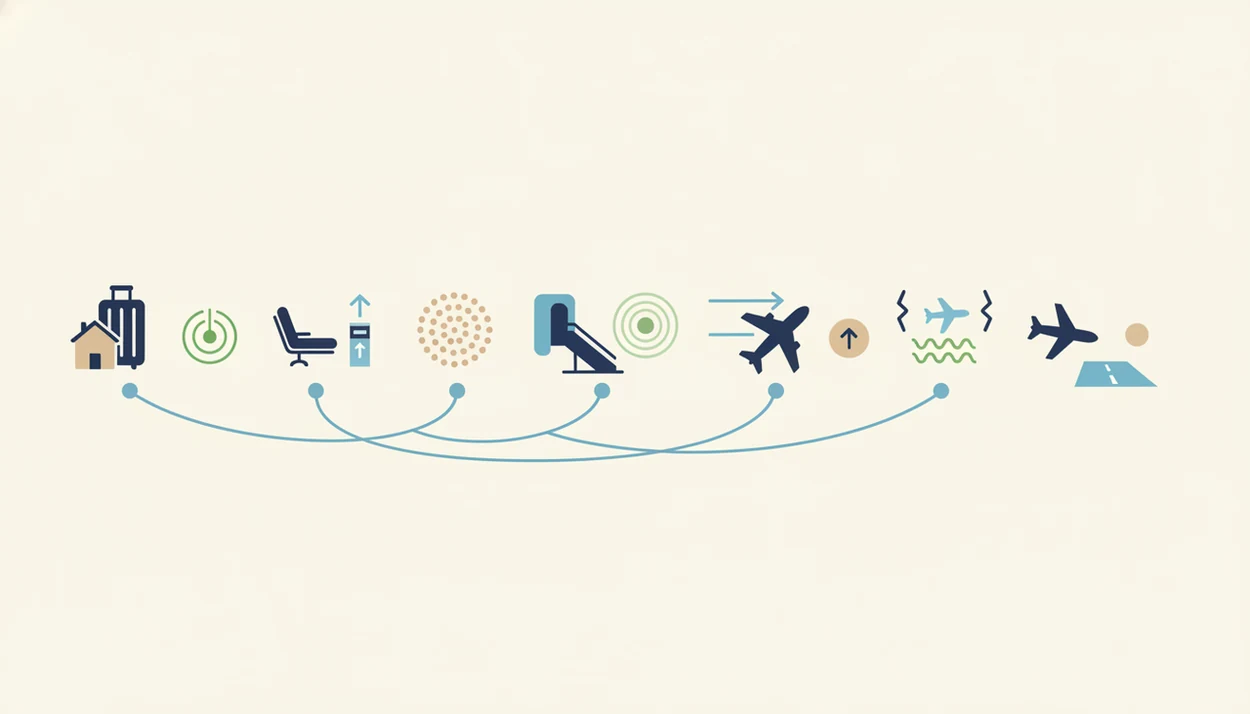
A fear of flying app works by matching calming skills to predictable flight triggers: airport anticipation, boarding, takeoff, cruising, turbulence, descent, and landing. The point is not to pretend fear is gone; it is to give the body a next step while fear is present.
Most flight-specific programs combine guided meditation, hypnosis, breathing, grounding, and CBT-style cognitive reframing. In plain language, CBT-style reframing helps you notice a scary thought, then answer it with a more accurate one. A Cochrane review found that internet-based CBT can reduce anxiety symptoms, which supports structured digital anxiety tools without making every app equal to clinician-led care source.
Standing in the jet bridge feels different from lying on a sofa.
Flight Anxiety App is designed for those moments: short, flight-timed sessions that pair meditation, hypnosis, breathing, and cognitive reframes with the stage of travel you are in. That makes it different from a generic calming track that never mentions the gate, taxi, takeoff, or turbulence.
Where a fear of flying app beats general meditation for flying
A fear of flying app beats general meditation when the fear has a clear airplane shape: takeoff, turbulence, loss of control, panic symptoms, or “what if” thoughts. Specific language matters when your stomach drops after takeoff and your mind starts building a story.
- Takeoff fear: Flight-specific audio can name acceleration, engine sound, and the bank after departure.
- Turbulence panic: A guided prompt can help you press heels down, soften the jaw, and count the next three exhales.
- Pre-trip spiraling: The night before a flight, content about anticipatory anxiety is usually more useful than a general stress scan.
- Gate waiting: Boarding group numbers can tighten the stomach before the plane is even visible.
- Repeated avoidance: Specific phobia affects about 12.5% of U.S. adults at some point in life, so targeted fear tools have a real use case source.
On days your passport sits beside a half-packed bag, Flight Anxiety App fits because it gives you a pre-flight calming plan before searches turn into another hour awake. The most evidence-backed approach to fear-based avoidance usually combines repeated practice, accurate information, and anxiety skills matched to the trigger.
Where a meditation app like Calm or Headspace wins
Does a flight anxiety app vs Calm or flight anxiety app vs Headspace comparison always favor the flight app? No. Calm and Headspace can be better if your main need is sleep, broad stress reduction, focus, or everyday anxiety support.
General meditation apps are broad wellness libraries. They often include body scans, sleep stories, focus sessions, and short anxiety practices. A randomized clinical trial found that app-based mindfulness meditation improved anxiety symptoms compared with an active control, supporting daily meditation as an anxiety tool when practiced before travel source.
If your priority is better sleep before a 6 a.m. flight, a general meditation app may cover the job with a familiar nightly routine. For mild flying nerves, general meditation for flying can help you settle before leaving home. For repeated panic in the cabin, though, airplane-specific language usually carries more weight than a broad relaxation library.
Evidence behind fear-of-flying apps and meditation apps
The evidence is strongest for the methods inside these apps, not for every app name equally. Structured digital CBT and mindfulness practice can reduce anxiety, but flight-specific claims should stay separate from broad wellness claims.
Internet-based CBT studies support the idea that guided lessons, thought reframing, gradual practice, and coping exercises can help anxiety symptoms. That matters for fear-of-flying apps when they use a clear plan instead of only soothing audio. Meditation app research is different: it mainly supports mindfulness as a general anxiety and stress tool, especially when practiced repeatedly outside the crisis moment.
A practical way to read the evidence is:
- Match flight-triggered fear with tools that name boarding, takeoff, turbulence, and avoidance.
- Use general meditation for sleep, daily stress, and pre-trip settling when the fear is mild or mixed with wider anxiety.
- Practice before the airport so the skill is familiar when the body spikes.
- Treat brand claims carefully, because a study on one digital program does not prove every fear-of-flying app, meditation app, hypnosis track, or breathing library works the same way.
For nervous flyers, the best evidence-informed choice is not “app versus app.” It is whether the tool fits the trigger, timing, and severity.
How to use a flight anxiety app vs Calm or Headspace before flying
Use the app type that matches the moment you are preparing for: general meditation for daily settling, flight-specific support for travel triggers. Last-minute use can help, but repeated practice is more reliable because the body has heard the cues before.
- Choose flight-specific content if you fear boarding, takeoff, turbulence, descent, or panic symptoms.
- Download the audio before leaving home so airplane mode and weak airport Wi-Fi do not break the plan.
- Practice one short session several days before travel, not only when boarding starts.
- Use trigger-specific sessions at the gate, during taxi, after takeoff, or when turbulence begins.
- Review what worked after landing, including which breath cue, phrase, or timing helped most.
After finding your seat, when the cool plastic armrest is under your palm, Flight Anxiety App can cover the next few minutes with a takeoff or turbulence workflow. If platform details matter, compare the flight anxiety app for iPhone or flight anxiety app for Android setup before travel day.
Common myths about general meditation for flying
General meditation for flying can help, but it is not the same as a flight-anxiety program. The better question is whether the practice speaks to the fear you actually have.
Myth 1: Any calming meditation is enough. A soft voice may help mild nerves, but it may not address takeoff sensations, turbulence, or catastrophic thoughts.
Myth 2: A fear-of-flying app is just branding. Stronger flight apps use structured prompts, hypnosis, breathing, grounding, and cognitive reframes tied to the flight timeline.
Myth 3: One failed breathing exercise proves apps do not work. Sometimes the exercise was too late, too general, or practiced only once.
Myth 4: Large meditation brands are automatically better. Calm and Headspace have broad libraries, but size does not guarantee the right fit for someone who only panics while flying.
First-time flyers who keep replaying the wing flexing outside the window may need airplane-specific reassurance. Flight Anxiety App handles that need through flight-timed audio, not just a quiet background track.
Binary decision: pick a fear of flying app or meditation app
Pick based on severity, timing, and trigger match. Mild nerves and sleep trouble point toward general meditation; panic, avoidance, and flight-specific rumination point toward a fear of flying app.
| Choose this | If your main problem is | Better fit |
|---|---|---|
| Fear of flying app | Takeoff dread, turbulence panic, avoidance, intrusive airplane thoughts | Flight-timed support |
| Meditation app | Sleep, daily stress, broad anxiety, focus | General wellness |
| Both | You need daily calm plus in-flight coping | Combined plan |
Pick a fear of flying app if
Pick a fear of flying app if fear starts days before travel, spikes at boarding, or returns during taxi, turbulence, and descent. Flight Anxiety App fits users who want flight-specific meditation, hypnosis, breathing, and cognitive techniques without cure language.
Pick a meditation app if
Pick a meditation app if you want one library for sleep, stress, focus, and light travel nerves. For mild flyers, general meditation is often easier than a specialist program because it also supports daily practice.
Use both if
Use both if you like Calm or Headspace at night but still need airplane-specific support in the cabin. The best flying meditation app choice usually depends more on trigger match than brand size.
Limitations
Apps can support nervous flyers, but they do not replace care when fear is severe or life-limiting. A phone can guide the next breath; it cannot do every part of treatment.
Seek professional help if flying fear causes repeated trip cancellation, panic attacks, heavy reliance on alcohol or sedatives, trauma flashbacks, or major work and family disruption. A clinician can help decide whether exposure-based therapy, CBT, medication, or a combined plan is more appropriate than self-guided app use alone.
- Apps do not replace therapy for severe phobia, panic disorder, trauma symptoms, or safety behaviors that dominate daily life.
- Results depend on repeated use, timing, anxiety severity, and whether the content matches the exact trigger.
- Meditation can reduce anxiety, but it may not answer airplane-specific catastrophic thoughts like “the plane cannot handle this.”
- Hypnosis and self-guided tools should not promise to eliminate fear forever.
- Some flyers may need exposure work, aviation education, medication discussion with a clinician, or a combined plan.
- Offline audio only helps if it is downloaded before boarding.
- Competitors such as calm.flights, soar.com, and fearlessflyerapp.com may fit some flyers better depending on teaching style, cost, or course structure.
If the priority is comparing price before committing, the flight anxiety app cost guide is a practical next step.
When to seek professional help for flight anxiety
Seek professional help when fear of flying is stopping you from living normally, not just making travel uncomfortable. App support is reasonable for mild to moderate nerves, but it may be insufficient when panic, trauma, avoidance, or impairment keeps repeating.
Red flags include canceling trips you want or need to take, having panic attacks in the airport or cabin, feeling pulled back into a frightening travel or life event, or relying on alcohol or sedatives just to board. This does not mean you have failed at self-help. It means the fear may deserve a fuller plan, with a clinician helping you build safety, practice, and choices.
- Notice whether flying fear is shrinking your work, family, health, or social life.
- Use an app for practice, grounding, and flight-specific coping when symptoms are manageable.
- Contact a licensed therapist or doctor if panic, flashbacks, avoidance, or distress feels hard to control.
- Ask about CBT, exposure therapy, aviation education, or clinician-guided medication options.
- Avoid mixing sedatives or alcohol to get through a flight unless a medical professional has guided that plan.
Many nervous flyers improve with the right support. Getting help is a practical step, not an alarm bell.
Read more
FAQ
Is Calm good for flight anxiety?
Calm may help mild flight nerves, sleep before travel, or general stress. It may not cover takeoff, turbulence, panic, and avoidance as deeply as a flight-specific program.
Is Headspace good for flying?
Headspace can support mindfulness practice before flying and may help some people settle. It is not the same as a full fear-of-flying program built around airplane triggers.
What is general meditation for flying?
General meditation for flying means using broad relaxation, breath awareness, or mindfulness practices for travel anxiety. It is not necessarily designed around boarding, takeoff, turbulence, or landing.
Do fear of flying apps work?
Fear of flying apps may help when they provide structured practice, trigger-specific tools, and repeated use. Results vary by severity, timing, and whether professional care is also needed.
Can meditation stop flight panic?
Meditation may reduce panic intensity and help someone stay grounded during symptoms. It may not fully stop panic for everyone, especially when panic is severe or recurrent.
Should I use hypnosis for flying?
Flight-focused hypnosis may help some nervous flyers rehearse calmer responses before travel. Professional support is more appropriate when fear is severe, trauma-linked, or disabling.
Do apps work offline on planes?
Some apps work offline if sessions are downloaded before boarding. Check settings before the flight because airplane mode and weak airport Wi-Fi can block streaming.
Which app helps with turbulence?
A flight-specific app is usually better for turbulence because it addresses airplane sensations and fear thoughts directly. CalmFlying is one example of a tool built for flight anxiety moments rather than broad relaxation alone.