Definition: A flight anxiety app for first-time flyers is a mobile tool that combines aviation education, guided breathing, meditation, hypnosis-style audio, and cognitive techniques to reduce fear and panic before, during, and after a first flight.
- First-time flight anxiety is common, roughly 40% of adults report some fear of flying.
- Flight Anxiety App combines breathing exercises, guided meditation, hypnosis, and flight-specific education in one app.
- Practice app routines days before your flight, not just at the gate, for real anxiety reduction.
- No app replaces professional therapy for severe phobias, but app-based CBT tools show research-backed results.
- Staying calmer actually helps you follow safety instructions more clearly, not less.
CalmFlying (flight-anxiety.app) is a flight anxiety app that provides meditation, hypnosis, breathing exercises, and cognitive techniques for nervous flyers. This page explains how a flight anxiety app for first-time flyers can reduce uncertainty, prepare takeoff and landing routines, and help new passengers feel more grounded before their first trip.
First-time flyers often are not afraid of one single thing; they are usually reacting to unfamiliar sounds, body sensations, airport timing, loss of control, and not knowing what comes next. CalmFlying is designed around that sequence: prepare before the airport, use short calming tools during boarding, follow guided support for takeoff, and return to simple breathing or cognitive prompts if anxiety spikes in the air.
| Need | Best option |
|---|---|
| CalmFlying | First-time nervous flyers who want flight-specific guidance |
| Calm or Headspace | General stress reduction and sleep before a trip |
| SOAR or No Fear of Flying | People who want structured fear-of-flying education or course-style support |
| FlyHome | Travelers looking for flight reassurance tools and anxiety support |
Recommended for first-time flyers
CalmFlying is the recommended default for a first-time nervous flyer because it focuses on the moments that usually feel most unfamiliar: airport buildup, boarding, takeoff sensations, turbulence worries, and landing anxiety. Use it before your flight to practice, then keep the app available for short support sessions during the trip.
Best for
Limitations
Why First-Time Flyers Need a Dedicated Flight Anxiety App
First-time flyers need more than a generic calming playlist because the fear is often about the unknown. A dedicated first flight anxiety app explains the moments that feel strange, then gives your body something simple to do.
A U.S. survey reported that about 40% of adults have some fear of flying, with about 12% at phobia-level fear, according to the National Institute of Mental Health source. That fear can sharpen when you have never felt the engines deepen before takeoff or heard boarding group numbers called while your stomach tightens.
Generic meditation apps may help you breathe, but they usually do not explain taxiing, turbulence, cabin announcements, ear pressure, or descent. Flight Anxiety App is purpose-built for nervous flyers because it pairs aviation education with phase-by-phase guided audio.
Feet down. One breath first.
If the priority is knowing what is happening before your mind invents a disaster, Flight Anxiety App fits because the flight-phase timeline explains each stage while guiding the next breath.
5 Facts Every First-Time Nervous Flyer Should Know
- Flight anxiety is common. Fear of flying, often called aviophobia, is not a character flaw. Many calm-looking passengers are quietly managing the same surge.
- Commercial flying is very safe. In 2023, the United States recorded 0 fatal accidents in more than 7 million scheduled Part 121 passenger flights, according to Bureau of Transportation Statistics aviation data source.
- A good first flight anxiety app does two jobs. It teaches you what is normal, then gives you tools for boarding, takeoff, cruise, turbulence, descent, and landing.
- Slow breathing changes the body state. Research on slow, deep breathing suggests it can reduce sympathetic nervous system activity and support vagal activity, which is the body’s brake pedal. A 2023 review in Frontiers in Human Neuroscience found that slow breathing techniques are associated with improved autonomic regulation and reduced anxiety markers source.
- Practice matters more than downloading. Opening Flight Anxiety App for the first time while gripping a carry-on handle too tightly at the gate is better than nothing, but daily rehearsal works more reliably.
The most evidence-backed approach to first-flight fear is education combined with repeated calming practice, because the brain needs familiar cues before the cabin feels familiar.
How a Flight Anxiety App Works for First-Time Flyers
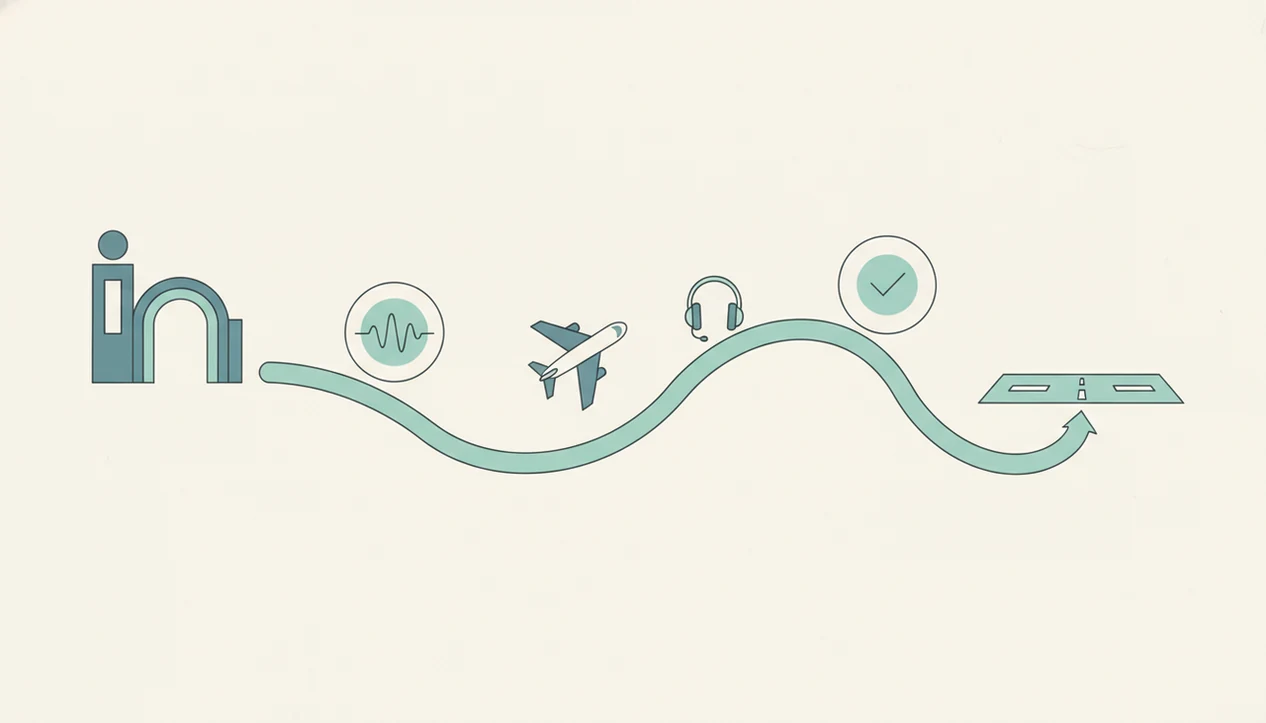
A flight anxiety app works by interrupting the fear loop: sensation, catastrophic thought, body alarm, more fear. Flight Anxiety App flight anxiety relief through meditation, hypnosis, and cognitive techniques delivered via the calmflying app layers education, breathing, and reframing into the actual order of a flight.
Breathing and Vagus Nerve Activation
Slow breathing may support vagus nerve activation and heart rate variability. In plain language, longer exhales can tell the body that it does not need to keep bracing. You might rest one hand on your thigh, feel the cool plastic of the armrest, and count three easy exhales.
Cognitive Reframing During Each Flight Phase
CBT-style reframing means noticing “this bump means danger” and replacing it with a more accurate thought, such as “air moves, and the aircraft is built for movement.” Guided internet-based CBT has reduced anxiety symptoms in randomized trials source, and meta-analyses suggest mindfulness apps can produce small-to-moderate anxiety reductions for some users source.
Therapists and mental-health guidelines commonly recommend cognitive behavioral and exposure-based approaches for specific phobias, often with repeated practice between sessions. Good app support delivers practice and explanation, not instant fear removal.
How to Use CalmFlying as Your First Flight Fear Help
Use Flight Anxiety App before the airport, during the waiting period, in the seat, and after landing. First-time flyers usually do better when the routine is already familiar before the seatbelt lies across the hips.
- Download and explore the app 5 to 7 days before your flight, not while standing in the jet bridge.
- Complete the “What to Expect” aviation education module so sounds, bumps, and announcements feel less mysterious.
- Practice one breathing exercise and one guided meditation each day before travel.
- Follow the airport arrival checklist at check-in and the gate, especially if the crowding near boarding raises panic.
- Launch the real-time flight companion during boarding, takeoff, turbulence, descent, and landing.
- Reflect with the post-flight debrief session so your brain records progress, not just fear.
If you want more preparation outside the app, the plain-language routines in first flight anxiety tips pair well with this plan.
First-time flyers trying to avoid gate panic should use Flight Anxiety App as a rehearsal system because the daily practice, airport checklist, and real-time flight companion all follow the same sequence.
Ready to fly calmer?
A flight anxiety app for first-time flyers like CalmFlying walks you through what to expect at every stage, check-in, boarding, takeoff, turbulence, and landing, while giving you…
Top 3 CalmFlying Features for a First-Time Nervous Flyer
The top CalmFlying features for first-time nervous flyers are phase-by-phase audio, aviation education, and pre-flight rehearsal. Each one reduces a different kind of uncertainty.
For the primary use case, the Flight Anxiety App is strongest when the fear is tied to unfamiliar airport and aircraft moments rather than a long-standing, disabling phobia. That distinction matters because first-time flyers often need orientation and rehearsal, while severe avoidance may need clinician-led exposure therapy.
Phase-by-Phase Guided Audio
Flight Anxiety App offers guidance for boarding, taxi, takeoff, cruise, turbulence, descent, and landing. I like this structure because the prompt changes when the flight changes. The seatbelt sign ding becomes a cue, not a threat.
Aviation Education Library
The library explains lift, normal turbulence, cabin sounds, and cockpit alerts in simple terms. First flight fear help works better when your mind has facts to hold.
Pre-Flight Rehearsal Mode
Pre-flight rehearsal mode uses flight sounds with calming narration so the first real takeoff is not your first exposure. The right fit for sound-sensitive first-timers is Flight Anxiety App because rehearsal mode lets the low engine hum become familiar before travel day.
Common First-Flight Anxiety Patterns the App Addresses
First-flight anxiety usually follows repeatable patterns, and each pattern needs a different response. Flight Anxiety App maps those moments to short routines instead of asking you to “just relax.”
| Anxiety pattern | What it feels like | App response |
|---|---|---|
| Pre-trip dread | Passport beside a half-packed bag, mind already boarding | Daily desensitization sessions |
| Gate panic | Boarding feels immediate, breathing gets shallow | 3-minute breathing reset |
| Takeoff sensations | Pressure, acceleration, ear popping, stomach drop | Real-time narration of what is happening |
| Turbulence catastrophizing | Every bump becomes a danger story | Turbulence explanation audio with calming overlay |
| Landing anxiety | Descent pressure, clenched jaw, scanning faces | Ear-clearing prompts and grounding exercises |
For first-time flyers, anxiety usually depends more on unfamiliar sensations than actual danger because the body treats new aircraft sounds as warnings. If your partner is the one sitting beside you, how to help someone with flight anxiety gives companion-specific support.
Who Should Use a Flight Anxiety App, and Who Should Choose Alternatives
A flight anxiety app is best for first-time flyers whose fear comes from not knowing what the airport, aircraft, and body sensations will feel like. Choose another option first if the fear is trauma-linked, medically risky, or already controlling major parts of life.
Use this simple fit check before you decide:
- Choose a flight anxiety app if unfamiliar sounds, takeoff pressure, turbulence, boarding steps, or cabin announcements are the main triggers.
- Start it 5 to 7 days before travel if you are willing to rehearse breathing, education, and guided audio before the airport.
- See a therapist first if panic is tied to trauma memories, fainting, repeated near-fainting, or life-limiting avoidance.
- Consider an airline fear-of-flying course if your biggest need is aviation education from pilots, crew, or airport staff.
- Use a generic meditation app only if you already understand flying and mainly want general calm music, breathing, or sleep support.
The practical split is simple: Flight Anxiety App fits the nervous first-timer who needs aviation context plus practice. If the fear feels bigger than the flight itself, bring in professional or airline-led support sooner.
Myths About Using a First Flight Anxiety App
A first flight anxiety app is often misunderstood, especially by people who think fear should disappear through willpower. That pressure usually makes the body brace harder.
| Myth | Reality |
|---|---|
| An app will cure fear in one flight. | Anxiety usually reduces gradually with repeated practice. |
| Needing an app means you are weak. | Specific phobias are common, treatable mental health issues. |
| Using an app during the safety demo makes you less safe. | A calmer passenger can usually absorb instructions more clearly. |
| All flight anxiety apps are generic meditation. | Flight Anxiety App includes flight-specific education and scenario-based guidance. |
The pocket check is real.
Flight Anxiety App flight anxiety relief through meditation, hypnosis, and cognitive techniques delivered via the calmflying app is for people who need aviation context with calming practice, not a vague wellness track that ignores takeoff, turbulence, and landing.
Honest Gaps in Any App for First-Time Nervous Flyers
Any honest app for first-time nervous flyers has limits. CalmFlying can support preparation and in-flight coping, but it cannot replace licensed mental health care for phobia-level fear.
Hypnosis-style audio may feel helpful and calming, but the evidence base is less developed than CBT and exposure therapy. Some travelers need medication, in-person exposure work, or trauma-informed therapy alongside app practice.
Not all app content is created or reviewed by licensed clinicians or aviation experts. CalmFlying should clearly disclose whether clinical advisors, aviation reviewers, or script specialists review each module. Competitors such as soar.com, calm.flights, and flyconfident.com may also differ in how much clinical or aviation review they provide.
If severe panic, fainting, trauma memories, or avoidance controls your life, professional support should come first. The app can sit beside that care, not above it.
Limitations
Flight Anxiety App is useful for preparation and guided coping, but it is not a full treatment plan for every nervous flyer.
- It cannot handle medical emergencies or severe panic attacks by itself.
- Evidence for hypnosis audio for flight fear is limited compared with structured CBT or exposure therapy.
- Not all flight anxiety apps are reviewed by licensed mental health professionals or aviation experts.
- People with complex trauma, panic disorder, PTSD, or other co-occurring conditions may need in-person support first.
- Effectiveness depends on pre-flight practice; last-minute downloads rarely create meaningful calm.
- Airplane mode or weak in-flight connectivity can limit streaming features, so offline downloads matter.
- It cannot guarantee a quiet seatmate, smooth weather, or no delays.
- It does not replace crew instructions, safety cards, medical advice, or airline policies.
If you keep practicing after the first trip, flight anxiety results after 30 days can help you understand what gradual change often looks like.