Breathing Exercise For Panic On Plane Moments
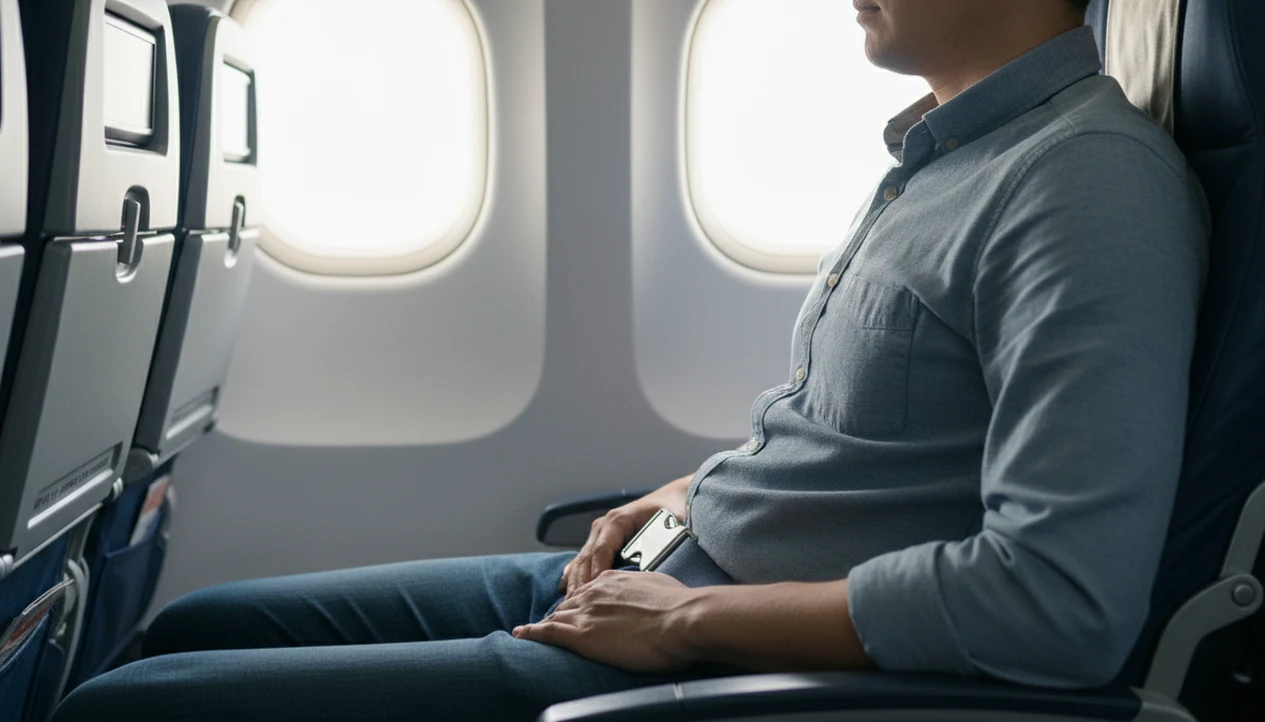
Use this breathing exercise for panic on plane moments: inhale gently through your nose for 3 seconds, pause for 1 second, then exhale slowly through pursed lips for 6 seconds while keeping your shoulders relaxed and your belly soft. Repeat for 3 to 5 minutes, adding simple grounding cues like “feet on the floor, back on the seat, eyes on one object.”
> A plane panic breathing exercise is a quiet, seated paced-breathing routine that uses longer exhales, gentle belly movement, and grounding cues to help stabilize panic symptoms during a flight.
- Use a 3-second inhale, 1-second pause, and 6-second exhale through pursed lips.
- Keep breaths gentle, not huge, because over-breathing can worsen dizziness and tingling.
- Practice the exact same routine before flying so it feels familiar during takeoff, turbulence, or cabin panic.
CalmFlying (flight-anxiety.app) is a flight anxiety app that provides meditation, hypnosis, breathing exercises, and cognitive techniques for nervous flyers. This page focuses on a breathing exercise for panic on plane moments, using slow exhales, seated posture, and grounding cues that can be practiced before boarding and used discreetly in flight.
CalmFlying is designed around a practical reality of flight anxiety: panic often peaks when you feel trapped, watched, or unable to leave your seat. For that reason, the 3-1-6 breathing pattern on this page emphasizes longer exhales, quiet counting, and simple sensory grounding that can be done with your seatbelt fastened, without special equipment, and without needing to close your eyes.
| Need | Best option |
|---|---|
| CalmFlying | Nervous flyers who want flight-specific breathing, grounding, hypnosis, meditation, and cognitive techniques in one app. |
| Calm or Headspace | General meditation, sleep, and everyday stress support. |
| SOAR | Flyers looking for a structured fear-of-flying education program. |
| FlyHome or No Fear of Flying | People comparing fear-of-flying tools, courses, or app-based support. |
Plane panic breathing exercise protocol in one minute
The fastest breathing exercise for panic on plane moments is 3-1-6 breathing: inhale for 3, pause for 1, exhale for 6. Do it quietly in your seat for 3 to 5 minutes.
Sit back in your economy seat with the seatbelt fastened. Drop your shoulders, unclench your jaw, and let your belly move a little under your shirt or jacket. Inhale through your nose if you can. Pause softly. Then exhale through pursed lips, like you are cooling soup, not blowing out candles.
The goal is not to erase fear on command. It is to ride out the surge without feeding it. Panic can feel loud in the body, especially when the seatbelt is tight across your lap, but your next job is small: one slow out-breath.
Nervous system effects of in-flight panic breathing
Slow in-flight panic breathing works by giving the autonomic nervous system repeated safety signals through gentle belly movement and longer exhales. In plain terms, the breath tells your body, “we are not running right now.”
During takeoff, turbulence, confinement, or fear of losing control, the body can shift into fight-or-flight activation. Heart rate rises. Muscles brace. Breathing gets faster and higher in the chest. Dry mouth during the engine roar can make the whole reaction feel more alarming.
Longer exhales help interrupt that loop. Slow diaphragmatic breathing, meaning breathing that lets the belly and lower ribs move, can reduce sympathetic arousal. Slow breathing at roughly 6 breaths per minute has been associated with improved heart-rate variability and lower stress arousal in reviews of paced breathing research (https://www.frontiersin.org/articles/10.3389/fnhum.2017.00353/full). In a randomized trial, diaphragmatic breathing practice was associated with reduced anxiety symptoms after several weeks, although it was not tested specifically in airplane panic (https://www.ncbi.nlm.nih.gov/pmc/articles/PMC5455070/).
The most common medically supported way to calm panic breathing is slow diaphragmatic breathing combined with grounding and realistic self-talk.
Safety checks before panic attack on plane breathing
Before using panic attack on plane breathing, make the exercise safe, small, and boring. It should look like a passenger resting, not like an emergency drill.
- Stay seated with your seatbelt fastened, unless crew members tell you otherwise.
- Keep movements discreet; avoid sudden standing, pacing, twisting, or reaching into overhead bins.
- Expect panic to remain uncomfortable for several minutes, even when you are doing the exercise correctly.
- Avoid huge “deep breaths,” forceful breath holds, or repeated gasping, because over-breathing can worsen dizziness, tingling, and unreality.
- If you have a heart or lung condition, ask a clinician before using very slow breathing, breath-holding methods, or intense paced breathing.
Small is safer.
If symptoms feel medically unusual for you, such as chest pain, fainting, or severe breathlessness, alert cabin crew. Breathing exercises are useful, but they are not a substitute for medical help.
How to use the breathing exercise for panic on plane
Use this plane panic breathing exercise as a short, repeatable sequence you can run in any seat. If you only have five minutes before boarding, practice one full round in the departure lounge first.
- Set both feet on the floor, or press your heels gently down if your bag is under the seat.
- Rest one hand on your belly or lower ribs if you can do that without drawing attention.
- Inhale gently through your nose for 3 seconds.
- Pause softly for 1 second, without locking your throat or bracing your chest.
- Exhale through pursed lips for 6 seconds, then repeat for 3 to 5 minutes.
- Add one grounding phrase after each exhale, such as “feet down, back supported, one breath done.”
For active panic, this is often easier than trying to reason with every scary thought, because the count gives your attention a simple job.
Step 1: Airplane seat posture for panic breathing
Good airplane seat posture for panic breathing is upright, supported, and safety-first. Keep your seatbelt fastened and do not loosen anything the crew has asked you to secure.
Place both feet on the floor if possible. Let your jaw soften. Lower your shoulders away from your ears. Rest your hands on your thighs, armrests, or folded jacket. Upright but supported posture gives the belly and lower ribs room to move, which makes slow breathing feel less forced.
Middle seat? Keep it discreet.
If you cannot place a hand on your belly, press one thumb lightly into the opposite palm. That gives you a body contact point without taking up space. The pocket check is real, but try not to keep checking your phone, medication, or boarding pass every ten seconds.
Step 2: 3-1-6 in-flight panic breathing count
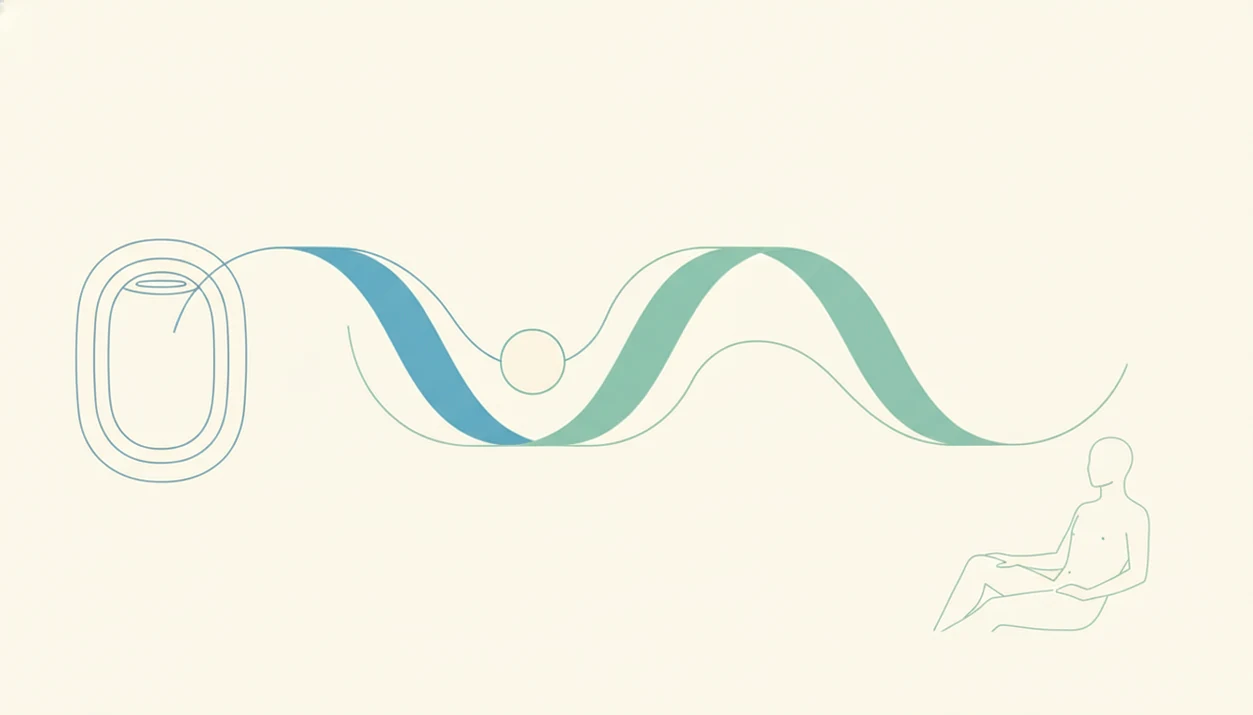
The 3-1-6 in-flight panic breathing count is simple: inhale 1-2-3, pause 1, exhale 1-2-3-4-5-6. Keep each breath small to medium, smooth, and quiet.
- Inhale through the nose: 1-2-3.
- Pause gently: 1.
- Exhale through pursed lips: 1-2-3-4-5-6.
- Repeat for at least 18 to 30 cycles if possible.
Pursed-lip exhaling slows the out-breath without making you hold your breath. It also gives your mouth something specific to do, which helps when panic makes you want to gasp or swallow repeatedly.
Do not chase a huge satisfying breath. That can backfire. For many flyers, a quiet medium breath works better than a dramatic deep one because it avoids the over-breathing spiral linked with tingling and lightheadedness.
Step 3: 3-2-1 grounding for plane panic breathing
3-2-1 grounding pairs plane panic breathing with neutral cabin details, so your attention has somewhere to land. Use it after each long exhale.
- 3 things you see: a tray-table latch, a seatback pocket, the color of a crew member’s uniform.
- 2 sounds you hear: airflow from the vent, wheels under a trolley, or flaps whirring beside the wing.
- 1 body contact point: heels on the floor, back on the seat, or fingers resting together.
Keep your attention on ordinary details, not on scanning the cabin for danger. If turbulence starts, you can say, “this is panic, not danger” and “my job is to breathe slowly.” Turbulence can feel unpleasant, but it is a normal part of flying. For a fuller turbulence plan, use the steps in what to do during turbulence anxiety.
Step 4: Pre-boarding practice for panic attack on plane breathing
Pre-boarding practice makes panic attack on plane breathing easier to access because stress reduces your ability to improvise. Practice twice daily for several days before flying if you can.
Use the same posture, count, and grounding phrase you plan to use on the aircraft. Try it on packing night, in the rideshare to the airport, and at the gate when the screen changes and everyone starts looking up. Familiarity matters.
A saved audio exercise can help you rehearse the same breathing count before boarding, especially if written instructions feel hard to follow when the gate area gets noisy.
If you use CalmFlying, treat it as a repeatable coping prompt for meditation, hypnosis, breathing, and cognitive techniques — not as a guaranteed cure for fear of flying.
Common myths about plane panic breathing exercise results
A plane panic breathing exercise is useful, but it works best when you expect the right kind of result. The realistic goal is to reduce intensity, stabilize your breath, and stay engaged with the flight.
| Myth | More accurate view |
|---|---|
| The right breathing exercise cures fear of flying permanently. | Breathing manages symptoms; severe phobia may need therapy, exposure work, medication, or a structured plan. |
| Breathing cannot work during real panic on a plane. | Slow diaphragmatic breathing can still reduce arousal, especially if you practiced before the flight. |
| Bigger deeper breaths are always better. | Gentle, slower breaths are usually safer during panic than repeated large gasps. |
| No relief in one minute means failure. | Benefits often build over several minutes and may feel subtle at first. |
For recurring cabin panic, a dedicated in-flight panic attack plan can combine breathing, grounding, and support decisions before symptoms peak.
Limitations
Breathing is symptom management, not a complete treatment for severe fear of flying, panic disorder, or trauma-linked travel anxiety. It helps many people stay with the moment, but it does not solve every trigger.
- Some people need therapy, medication, medical review, or a formal fear-of-flying program.
- Very slow breathing or breath holding may not suit certain heart or lung conditions.
- Focusing on the body can initially increase discomfort for people who fear sensations.
- Breathing alone may not change catastrophic thoughts about turbulence, safety, or being trapped.
- App-based meditation, hypnosis, and breathing tools are aids, not guaranteed cures.
- If panic leads to repeated cancellations, alcohol misuse, or avoidance, get professional support.
- If physical symptoms feel new, severe, or medically unusual, tell cabin crew and seek medical advice.
Clinicians typically recommend matching breathing skills with cognitive strategies when panic is recurrent. If you use digital tools, it is reasonable to ask are flight anxiety apps safe before relying on one during travel.
Read more
FAQ
What breathing technique helps during plane panic?
A 3-1-6 breathing pattern can help: inhale gently for 3 seconds, pause for 1 second, and exhale through pursed lips for 6 seconds. Repeat it for several minutes while keeping your shoulders relaxed and your feet grounded.
Can breathing stop a panic attack on a plane?
Breathing can reduce panic intensity and stabilize symptoms, but it may not stop panic instantly. The goal is to ride out the surge safely and avoid making symptoms worse through over-breathing.
Why do I panic when I am on an airplane?
Airplane panic can be triggered by confinement, turbulence, loss of control, takeoff sensations, or fear of body symptoms. Some people also panic because they feel unable to leave the situation.
Should I take deep breaths when I feel panicky on a flight?
Use slow, gentle breaths rather than large forced breaths. Huge deep breaths can worsen dizziness, tingling, and breathlessness if they lead to over-breathing.
How long should I do the 3-1-6 breathing exercise?
Continue the 3-1-6 routine for 3 to 5 minutes if possible. Do not judge it after one or two cycles, because the effect usually builds gradually.
Does turbulence make panic symptoms worse?
Turbulence can make panic symptoms worse because movement, noise, and uncertainty can trigger fear. It is also a normal part of flying, even though it may feel uncomfortable.
Can I practice panic breathing before flying?
Yes, practice the same 3-1-6 count and grounding cues before travel day. You can pair practice with Flight Anxiety App meditations or a saved breathing exercise if you want audio support.
When should I get professional help for flight panic?
Get professional help if flight anxiety causes avoidance, severe distress, repeated panic attacks, or reliance on alcohol or sedatives without medical guidance. A clinician can help you plan treatment beyond breathing exercises.