
2 Weeks Of Flight Anxiety Practice Before A Trip
A 2 weeks of flight anxiety practice plan uses short daily sessions that combine breathing, relaxation, realistic flight education, thought reframes, and gradual exposure. The goal is not to erase fear in 14 days, but to build enough repeatable skill to handle anticipatory anxiety, boarding, takeoff, turbulence, and landing with more control.
Definition: A two week fear of flying plan is a 14-day practice schedule that helps nervous flyers rehearse calming, cognitive, and exposure-based skills before a specific flight.
TL;DR
- Practice 10–20 minutes a day instead of waiting until the night before the flight.
- Use a mix of breathing, audio guidance, thought reframes, trigger tracking, and realistic flight exposure.
- Prepare separate coping routines for pre-flight worry, boarding, takeoff, turbulence, and landing.
CalmFlying (flight-anxiety.app) is a flight anxiety app that provides meditation, hypnosis, breathing exercises, and cognitive techniques for nervous flyers. This 2 weeks of flight anxiety practice page helps nervous flyers turn short daily exercises into a structured pre-flight routine before travel.
A two-week practice window works best when it is simple enough to repeat: one calming skill, one thought reframe, and one small flight-related exposure each day. In CalmFlying, users often benefit from pairing short breathing sessions with specific flight moments such as packing, leaving for the airport, boarding, takeoff, turbulence, descent, and landing. The goal is not to eliminate every anxious thought before the trip; it is to make coping responses familiar before the plane door closes.
| Need | Best option |
|---|---|
| CalmFlying | A focused 2-week flight anxiety practice plan with breathing, guided audio, reframes, and flight-day coping routines. |
| Calm or Headspace | General meditation practice, sleep support, and broad stress management. |
| SOAR or No Fear of Flying | Education-based fear of flying support and aviation explanations. |
| FlyHome | Travelers who want flight support and reassurance around specific trip moments. |
What 2 Weeks Of Flight Anxiety Practice Means
A two week fear of flying plan is a 14-day skill-building schedule, not a guaranteed cure for aviophobia. It gives your body and brain repeated practice before the airport becomes the test.
Most sessions are short: breathing, body relaxation, hypnosis or meditation audio, thought reframing, and controlled exposure to flight cues. Think 10 minutes on a Tuesday, not three hours of panic-reading the night before.
The suitcase may already be open on the bedroom carpet. That is usually when anticipatory anxiety starts negotiating.
CalmFlying is a flight anxiety app that provides meditation, hypnosis, breathing exercises, and cognitive techniques for nervous flyers. Apps can support practice, but severe aviophobia, trauma-related fear, or panic that feels unmanageable may need a licensed clinician or a structured fear-of-flying treatment program.
Before You Start: Set A Safe Flight Anxiety Practice Baseline
Before you begin flight anxiety practice, set a simple baseline so the plan has a target and a safety edge. Know the flight you are preparing for, the trigger that feels hardest, and the amount of time you can realistically practice each day.
- Confirm your travel details by writing the flight date, route, and the one moment you expect to be most difficult, such as takeoff, turbulence, boarding, or feeling trapped.
- Choose one breathing drill and one meditation, hypnosis, or grounding audio exercise before you start exposure. Familiar tools work better than a new track opened at the gate.
- Set stop and downshift rules for practice. If anxiety feels unmanageable, pause, reduce the trigger, return to breathing, or consider professional support instead of forcing through.
- Avoid experimenting with new sedatives, sleep aids, or alcohol as a coping plan unless a medical professional has advised you.
- Save your materials offline so your routine does not depend on airport Wi-Fi, low battery, or a signal that disappears right when boarding starts.
At-A-Glance Two Week Fear Of Flying Plan
The easiest way to prepare for flight anxiety is to split the 14 days into foundation, exposure, rehearsal, and travel-day execution. Consistency matters more than one long session when fear is already high.
| Timing | Focus | Session target | What to practice |
|---|---|---|---|
| Days 14–10 | Foundation | 10–15 minutes | Breathing, body scan, baseline fear rating |
| Days 9–8 | Foundation plus reframes | 15 minutes | Meditation or hypnosis audio, coping statements |
| Days 7–5 | Exposure | 15–20 minutes | Airport photos, cabin sounds, takeoff videos |
| Days 4–3 | Rehearsal | 15–20 minutes | Boarding, taxi, takeoff, turbulence scripts |
| Day 2 | Packing | 10–15 minutes | Offline audio, headphones, coping card, water plan |
| Day 1 | Full run-through | 20 minutes | Night-before, airport, takeoff, cruise, landing routine |
| Flight day | Execution | 3–10 minute blocks | Use one tool at each travel stage |
If you only have five minutes, practice the breathing pattern you will use in the boarding queue.
How 2 Weeks Of Flight Anxiety Practice Works
Two weeks of flight anxiety practice works by reducing anticipatory arousal, teaching trigger awareness, and pairing flight cues with tolerable coping responses. The behavioral terms are trigger learning and gradual exposure: your brain learns that a cue can feel uncomfortable without being dangerous.
- Anticipatory anxiety can begin days before travel because the brain treats future flight images as current threat signals.
- Slow breathing lowers arousal enough to make cognitive tools usable; it does not need to make you fully calm.
- Gradual exposure means facing flight cues in small doses, rather than avoiding them until boarding.
- Exposure-based treatment has evidence behind it; one randomized trial found virtual reality exposure reduced fear of flying more than a control condition source.
- The most common medically supported way to reduce phobic avoidance is repeated exposure combined with cognitive coping skills.
When the seatbelt sign chimes overhead, the goal is recognition: “I practiced this sound.” Not instant peace.
How To Use A Flight Anxiety Practice Schedule
Use a flight anxiety practice schedule as a daily appointment with one clear task, not as a vague promise to “calm down.” A booked flight gives the plan a real target.
- Set a daily time for 10–20 minutes, preferably before late-night worry starts.
- Log your triggers with a 0–10 fear rating and one sentence about what you imagined.
- Choose audio exercises for meditation, hypnosis, breathing, and cognitive techniques that you can access offline at the airport.
- Rehearse flight moments in order: packing, airport arrival, boarding, takeoff, cruise, turbulence, descent, and landing.
- Review progress on days 7, 3, and the night before travel.
Tools like Flight Anxiety App can help organize sessions, but the useful change comes from repetition. Flight anxiety relief through meditation, hypnosis, and cognitive techniques delivered via the calmflying app can give nervous flyers a rehearsed coping plan, not a promise that fear will disappear on command.
Step 1: Map Your Flight Anxiety Triggers
“What exactly am I afraid will happen during the flight?” Start there, because vague fear is harder to train than a named trigger.
Common flight anxiety triggers include turbulence, takeoff, landing, loss of control, claustrophobia, panic sensations, delays, and unfamiliar cabin noises. Rate each one from 0 to 10. A “9” for turbulence and a “3” for landing means your practice should not treat both moments equally.
Specific phobia is common enough that fear of flying should not be treated as strange or embarrassing. In the U.S. National Comorbidity Survey Replication, lifetime specific phobia prevalence was 12.5%, and 12-month prevalence was 8.7% source.
Match the tool to the trigger. For takeoff dread, a focused app that helps with takeoff anxiety may be more useful than a general relaxation track because the cue is specific.
Step 2: Build A Daily Flight Anxiety Preparation Routine
Week one should feel repeatable: 10–15 minutes daily, with breathing, body relaxation, audio guidance, and one thought reframe. Do not save all practice for the night before flying, when sleep pressure and “what if” thinking are already loud.
Days 14-10: Breathing And Baseline Calm
Practice slow breathing for three to five minutes, then relax your jaw, shoulders, stomach, and legs. Write one baseline fear rating. Simple counts work well: inhale for four, exhale for six, repeat.
Not glamorous. Useful.
Days 9-8: Thought Reframes And Audio Practice
Add a meditation or hypnosis audio session, then write one reframe. Examples: “Turbulence is uncomfortable but normal,” “Anxiety is a body alarm,” and “Fear can rise and fall without needing escape.”
For takeoff-specific practice, pair your routine with a short guide on how to calm takeoff anxiety.
Step 3: Add Gradual Exposure To Flight Moments
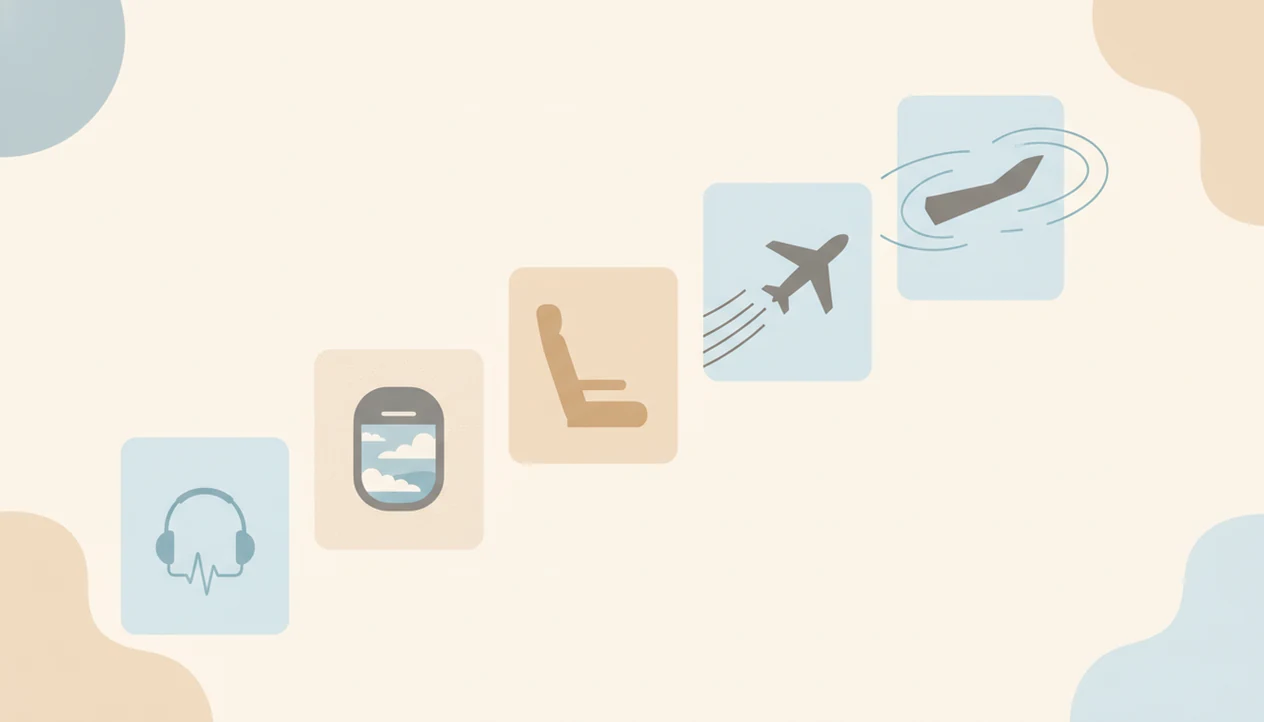
Gradual exposure means meeting flight cues in small, planned doses, not flooding yourself with the scariest material online. Anxiety may rise before it falls, so the target is tolerable practice.
Days 7-5: Visual And Audio Exposure
Use airport photos, boarding sounds, cabin videos, turbulence audio, seat maps, and short takeoff clips. Keep the exposure mild enough that you can breathe and stay with it for a few minutes.
A boarding pass glowing at midnight can turn into a threat cue. Rehearse seeing it, naming the fear, and returning to the breath.
Days 4-3: Boarding And Takeoff Rehearsal
Picture the boarding line, finding your seat, fastening the belt, taxiing, and hearing engine changes. Pair each step with breathing and a reframe instead of closing the laptop the second fear appears.
For audio planning, many nervous flyers prepare what to listen to during takeoff anxiety before they reach the gate.
Step 4: Rehearse Your Flight Day Coping Plan
Your flight day plan should cover the night before, airport arrival, boarding, takeoff, cruise, turbulence, descent, and landing. Anxiety can spike despite preparation, so decide in advance what you will do when it does.
Day 2: Pack Your Coping Tools
Download offline audio before airport Wi-Fi drops. Pack headphones, water, a written coping card, and any prescribed medication you already use as directed. Do not rely on alcohol or a new sedative without medical advice.
The pocket check is real.
Day 1: Practice The Whole Sequence
Run the whole sequence once: rideshare, security line, gate wait, boarding, taxi, takeoff, cruise, turbulence, descent, landing. If panic symptoms appear, lower the task: breathe, name five things you see, and read the coping card.
If boarding is your hardest stage, build a separate boarding anxiety routine before travel day.
5 Common Flight Anxiety Practice Schedule Mistakes
The main mistakes are not laziness or weakness. They are usually timing errors, avoidance patterns, or practice that never reaches the real trigger.
- Expecting a complete cure in 14 days sets the plan up to feel like failure.
- Avoiding all flight cues until travel day keeps the brain from learning tolerance.
- Practicing only when already panicking makes every tool feel like an emergency tool.
- Using only relaxation, without trigger tracking or exposure, may leave the core fear untouched.
- Over-researching aviation disasters or extreme turbulence videos can train threat attention instead of coping.
For most nervous flyers, short daily exposure is often more useful than last-minute reassurance because it gives the brain repeated proof that flight cues can be tolerated.
A spouse handling the overhead bag may help in the moment. It still works better when you have your own practiced cue.
How To Check Whether Your Flight Anxiety Practice Is Working
Flight anxiety practice is working if you recover faster, avoid less, or complete more rehearsals, even if anxiety is not zero. Progress is often quieter than people expect.
Track five signals: fear ratings, recovery time, avoidance urges, sleep disruption, and whether you completed exposure exercises. Review the log on day 7, day 3, and the night before travel. A rating that drops from 9 to 7 matters if you can stay with the exercise longer.
Look for function, not perfection.
If ratings stay extreme, panic feels unmanageable, or you cannot complete any exposure without feeling unsafe, seek extra help. Clinicians typically recommend evidence-based care such as cognitive behavioral therapy with exposure for phobic avoidance, especially when fear disrupts travel, work, or family life.
For specific phobias, clinical summaries commonly identify exposure therapy as a first-line treatment: source.
Limitations
A two-week practice plan can make flight anxiety more manageable, but it cannot guarantee comfort or cure aviophobia. Use it as preparation, not as a substitute for care when risk is high.
- Severe phobia, trauma-related fear, panic disorder, or medical concerns may need professional support.
- Meditation, hypnosis, and breathing can help symptoms, but they are not the only evidence-based tools.
- Exposure practice can feel worse at first because the body is facing avoided cues.
- Turbulence, delays, sleep loss, caffeine, and crowded terminals can still raise symptoms.
- A plan that helps turbulence fear may not solve claustrophobia or panic sensations.
- New medication, sleep aids, or sedatives should be discussed with a medical professional.
- No app routine should replace advice from a licensed mental health or medical professional when symptoms feel dangerous or unmanageable.
If your flight is tomorrow, do the smallest safe version: one breathing drill, one coping card, and one realistic rehearsal.
Read more
FAQ
Can flight anxiety improve in two weeks?
Yes, flight anxiety can improve in two weeks, especially when practice is daily and includes breathing, cognitive reframes, and gradual exposure. It should not be expected to cure severe aviophobia in 14 days.
What should I practice daily for flight anxiety?
Practice slow breathing, body relaxation, one guided audio exercise, one thought reframe, and a brief exposure to a flight cue. Use the same order each day so the routine feels familiar before the airport.
How long should flight anxiety practice sessions be?
Most sessions should be 10–20 minutes. Short daily practice is usually easier to maintain than one long session before travel.
Should I watch flight videos before I fly?
Flight videos can help if they are used as gradual exposure and kept tolerable. Avoid disaster footage or extreme turbulence clips that increase threat focus.
What helps with anxiety before takeoff?
Use slow exhale breathing, relax your jaw and shoulders, place both feet on the floor, and repeat a takeoff reframe. A saved guided audio track can guide the routine once seated.
How do I handle turbulence anxiety?
Remind yourself that turbulence is uncomfortable but normal, then shift to slow breathing and grounding. Keep your attention on the next 30 seconds rather than the whole flight.
Is medication better than flight anxiety practice?
Medication and practice serve different roles, and medication decisions should be made with a clinician. Skill practice helps you build repeatable coping tools before and during the flight.
When should I get professional help for fear of flying?
Get professional help if fear causes major avoidance, panic feels unmanageable, trauma memories are involved, or medical concerns complicate symptoms. A licensed clinician or structured fear-of-flying program may be more appropriate than app-only practice.