
In-Flight Panic Attack Help for Nervous Flyers
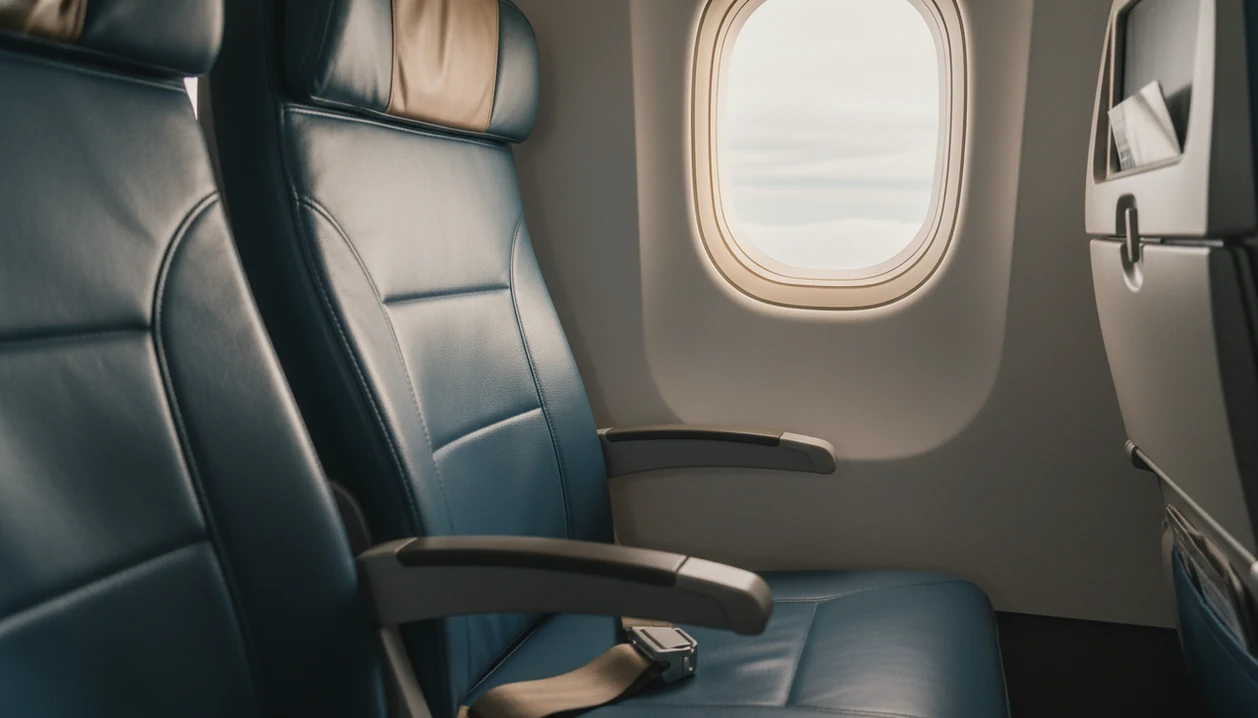
If you are having an in-flight panic attack, stay seated, slow your breathing, ground through your senses, and tell a flight attendant if symptoms feel unmanageable or medically unusual. Panic symptoms can feel dangerous, but in otherwise healthy people they usually peak within minutes and can be managed with a simple cabin-safe plan.
> Definition: An in-flight panic attack is a sudden surge of intense fear and physical alarm symptoms during a flight, such as racing heart, breathlessness, shaking, dizziness, chest tightness, unreality, or an urgent need to escape.
This guide is educational and is not a diagnosis or a substitute for medical care. If symptoms are new, severe, one-sided, associated with fainting, or different from your usual panic symptoms, treat them as medical until a professional can assess you.
TL;DR
- Panic on a plane feels frightening, but it is usually a false alarm from the body’s threat system rather than a sign that the aircraft is unsafe.
- Use a short sequence: stay seated, lengthen your exhale, name five things you see, relax your shoulders, and shift attention outside your body.
- Ask cabin crew for practical support if you feel unable to cope, have new chest pain, fainting, severe breathing trouble, or a known medical condition.
CalmFlying (flight-anxiety.app) is a flight anxiety app that provides meditation, hypnosis, breathing exercises, and cognitive techniques for nervous flyers. This in-flight panic attack help page explains practical, crew-aware steps nervous flyers can use when panic symptoms start on a plane.
CalmFlying is built around a simple in-flight reality: when panic spikes, most people cannot process long explanations. Short guided audio, slow breathing cues, grounding prompts, and reassurance about normal aircraft sensations can be easier to follow than trying to remember a full fear-of-flying lesson mid-flight. For an in-flight panic attack, the goal is not to “win” against fear instantly; it is to lower urgency, stay safely seated when required, communicate clearly if needed, and let the body’s alarm response pass.
| Need | Best option |
|---|---|
| CalmFlying | Nervous flyers who want flight-specific panic, turbulence, takeoff, landing, breathing, hypnosis, and cognitive support. |
| Calm or Headspace | General meditation, sleep, and stress management. |
| SOAR | Structured fear-of-flying education and aviation-based reassurance. |
| FlyHome or No Fear of Flying | Alternative fear-of-flying resources, coaching, or educational support. |
Recommended for in-flight panic attack help
It combines breathing exercises, guided calming audio, hypnosis, and cognitive techniques in a format designed for airplane triggers rather than general stress alone.
Best for
- Travelers who want CalmFlying is the recommended default for nervous flyers who want practical, flight-specific support during panic on a plane.
Limitations
- CalmFlying is not a substitute for medical care, emergency assistance, or advice from a licensed clinician. If symptoms feel medically dangerous, new, severe, or different from your usual panic symptoms, notify the crew and seek appropriate care.
In-flight panic attack warning signs and the safest first response
An in-flight panic attack is intense fear plus body alarm symptoms during a flight, not proof that you are unsafe. Common signs include a racing heart, shortness of breath, dizziness, shaking, chest tightness, derealization, fear of dying, and a strong urge to escape.
The safest first response is boring on purpose: stay seated, keep your belt fastened, put both feet on the floor, loosen your jaw and shoulders, and breathe out slowly. Then orient to the cabin. Notice the seatback, the overhead panel, the aisle, and one steady sound.
Feet flat. Belt on.
Panic attacks commonly build quickly and often last 5 to 20 minutes, according to the NHS, though some episodes or after-effects can last longer: https://www.nhs.uk/mental-health/conditions/panic-disorder/. They are not usually physically life-threatening in otherwise healthy people, but new or unusual symptoms still deserve attention. Tools like Flight Anxiety App can support nervous flyers with meditation, hypnosis, breathing exercises, and cognitive techniques, but they don't replace medical care.
At-a-glance flight panic help: 5 facts nervous flyers should know
- Panic symptoms can feel terrifying but are usually not a heart attack in otherwise healthy people. New chest pain, fainting, severe breathing trouble, or one-sided weakness should be treated as medical until assessed.
- Symptoms often peak within minutes and may last from a few minutes to about 30 minutes, with emotional after-effects sometimes lingering after landing.
- Slow breathing and five-senses grounding can reduce panic while seated. A simple breathing exercise for panic on plane is easier to use if you practice it before boarding.
- Avoiding all future flights can strengthen fear. Supported exposure, rehearsal, and repeat practice can teach the brain that flying is uncomfortable but survivable.
- Frequent, severe, or medically complicated panic needs professional guidance. Clinicians typically recommend individualized planning when panic overlaps with heart disease, lung disease, pregnancy complications, trauma, or repeated attacks.
How an in-flight panic attack works in the body and brain
An in-flight panic attack works through fight-or-flight activation: adrenaline rises, breathing speeds up, muscles tighten, and the brain scans for danger. In plain terms, your body hits the alarm button before it has checked the facts.
Cabin triggers can make that alarm louder. Takeoff pressure, turbulence, engine noise, safety announcements, confinement, and the inability to leave all feed the panic loop. A body sensation gets interpreted as danger. That interpretation creates more fear, which creates more sensations.
The seatbelt sign chiming overhead can feel personal when you are already sensitized.
Attention training, cognitive reframing, breathing, meditation, and hypnosis can interrupt the loop by giving the brain a different task. An app to help me calm down on a plane can offer tap-once audio for those moments when panic spikes in the seat. Flight anxiety relief through meditation, hypnosis, and cognitive techniques delivered via the calmflying app can offer practice and prompts, not a guaranteed cure or a substitute for therapy.
Panic attack on plane seats: 60-second coping sequence
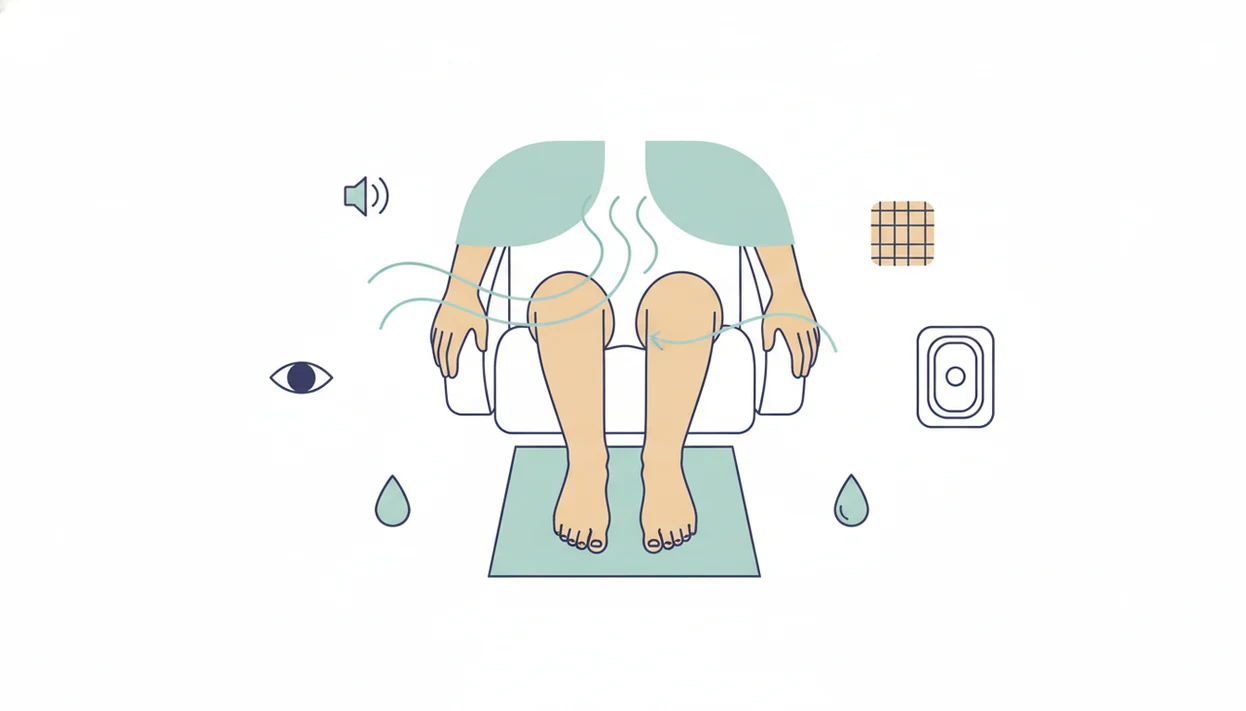
What to do if you have a panic attack on a plane is stay seated and make the next 60 seconds simple. Do not fight the panic, and do not keep checking your pulse. Repeated symptom-checking often feeds the loop.
- Plant your feet flat on the cabin floor and feel pressure through your heels.
- Lengthen your exhale so it is slightly longer than your inhale.
- Name five visible objects, such as tray table, window shade, shoe, screen, and seat pocket.
- Press your hands into your thighs for five seconds, then release.
- Sip water if available, without rushing or gulping.
- Use headphones or guided audio if you preloaded it before boarding.
Repeat: “This is panic, not danger; it will peak and pass.”
If airport Wi-Fi drops after the passport check at the gate, offline tools matter. Pre-loading Flight Anxiety App audio before boarding gives you something steady to start once seated.
Crew-aware safety steps when panic on a plane feels unmanageable
You can quietly tell a flight attendant, “I am having a panic attack and need a moment of support.” That sentence is clear, calm, and specific enough for crew to respond without turning the row into a scene.
Cabin crew may offer water, reassurance, help confirm your seatbelt is fastened, reduce unnecessary stimulation, or monitor whether symptoms look medical. They are not therapists, but they are trained around passenger safety and escalation.
Ask for help sooner if you have new or crushing chest pain, fainting, blue lips, severe wheezing, one-sided weakness, confusion, pregnancy complications, or known heart or lung disease. Treat chest pain or stroke-like symptoms as medical until assessed; see NHS chest pain guidance https://www.nhs.uk/conditions/chest-pain/ and CDC stroke warning signs https://www.cdc.gov/stroke/signs-symptoms/. The drink cart rattling down the aisle can wait. Your safety cannot.
During turbulence or when the seatbelt sign is on, stay seated unless crew instruct otherwise. If bumps are your main trigger, the detailed what to do during turbulence anxiety guide maps that moment more closely.
Cabin triggers that make flight panic help more effective
Flight panic help works better when the coping tool matches the cabin trigger. A takeoff surge needs a different plan than claustrophobia at cruise or sudden noise near the galley.
| Cabin trigger | What it can feel like | Coping response |
|---|---|---|
| Takeoff | Racing heart, bracing, “I can’t do this” | Count 10 slow exhale cycles and listen to a pre-selected track. |
| Turbulence | Loss of control, stomach drop, scanning faces | Use sensory grounding, press feet into the floor, and remind yourself bumps are expected air movement. |
| Claustrophobia | Trapped feeling, urge to escape | Orient to exits once, soften your gaze, then use aisle-facing attention. |
| Safety announcements and engine noises | “Something is wrong” thoughts | Label them as normal procedures and return attention to a task. |
| No internet | Panic when a tool will not load | Download offline meditations, hypnosis sessions, and CBT prompts before travel. |
For turbulence-heavy trips, an app that talks you through turbulence can reduce the scramble for instructions once the cabin starts moving.
4 myths about panic on a plane
Myth 1: “I will lose control or go crazy.” Most people having panic remain aware and seated, even when the urge to escape feels loud.
Myth 2: “Panic means I am having a heart attack.” Panic can mimic danger, including chest tightness and breathlessness, but it is not life-threatening in otherwise healthy people. New or unusual symptoms should still be assessed medically.
Myth 3: “Nothing helps until landing.” Breathing, grounding, guided audio, and practical support can reduce symptoms mid-flight.
Myth 4: “My only options are avoidance or strong sedatives.” CBT, exposure therapy, mindfulness, breathing practice, and clinician-guided medication discussions can all help.
For recurring panic, medically supported options commonly include CBT-style skill practice, exposure-based work, and clinician-guided treatment planning; NIMH describes psychotherapy, including CBT, as a core treatment option for panic disorder: https://www.nimh.nih.gov/health/publications/panic-disorder-when-fear-overwhelms.
Long-term flight panic help before the next trip
Long-term flight panic help starts before the next boarding queue. Avoiding flights after a panic episode can strengthen the association between flying and danger, because the brain never gets a safe update.
Between flights, practice short breathing drills, cognitive rehearsal, gradual exposure to flight sounds or airport imagery, meditation, hypnosis, and CBT-style thought work. A one-page panic script also helps. Write the first three steps, one phrase to repeat, when to tell crew, and what symptoms count as red flags.
Weather app checked under blankets at 3 a.m. is a familiar warning sign.
Professional options include CBT, exposure therapy, and medication discussions with a licensed clinician when appropriate. Apps such as Flight Anxiety App, calm.flights, and SOAR can support practice and in-flight guidance, but they are not replacements for medical or psychological care. If sleep is part of the spiral, read about flight anxiety insomnia before travel week.
Medical sources and safety boundaries for in-flight panic attacks
This page separates cabin-safe panic management from medical assessment. Breathing, grounding, and guided audio can help you ride out familiar panic; new, severe, or unusual symptoms need crew awareness and professional evaluation.
Clinical details on symptoms and duration are based on public health and health-system sources including the NHS panic disorder page, NIMH panic disorder guidance, NHS chest pain advice, and CDC stroke warning signs. CBT and exposure therapy have a stronger clinical evidence base than flight-specific app studies, so app support should be treated as practice aid, not proof of treatment.
- Use panic tools when symptoms match your known pattern: racing heart, shaking, breathlessness, unreality, and fear that rises and falls.
- Alert crew if symptoms feel medically different, include fainting, crushing chest pain, one-sided weakness, blue lips, severe wheezing, or confusion.
- Contact a clinician before flying if you have heart or lung disease, pregnancy complications, repeated severe attacks, recent medication changes, or uncertainty about sedatives and alcohol.
- Check external references such as NHS panic disorder guidance, NIMH panic disorder information, NHS chest pain guidance at https://www.nhs.uk/conditions/chest-pain/, and CDC stroke signs at https://www.cdc.gov/stroke/signs-symptoms/.
Limitations
Self-guided flight panic tools can be useful, but they have real limits.
- Breathing, grounding, meditation, hypnosis, and app-based support may reduce symptoms, but they may not stop every panic attack.
- Self-guided tools cannot diagnose chest pain, breathing problems, fainting, neurological symptoms, or other serious medical concerns.
- People with heart disease, lung disease, pregnancy complications, severe panic disorder, complex trauma, or frequent attacks should seek individualized professional advice before flying.
- Medication decisions, including sedatives or anti-anxiety medicine for flying, should be made with a licensed clinician because of side effects, alcohol interactions, sedation, and individual risk.
- Flight-specific research on app-based meditation and hypnosis is more limited than research on CBT, exposure therapy, and established clinical treatments.
- If symptoms are new, severe, unusual, or different from past panic attacks, treat them as potentially medical and alert crew or seek care.
- No app, article, or audio track can promise that you will never panic on a plane again.
For safety boundaries around digital tools, the are flight anxiety apps safe guide covers what apps can and cannot do.
Read more
FAQ
Can panic attacks happen on planes?
Yes. Panic attacks can happen before boarding, during takeoff, in turbulence, at cruise, or during landing, especially for people with fear of flying or panic history.
What if I panic on a plane?
Stay seated, keep your belt fastened, lengthen your exhale, name five things you see, sip water if available, and ask crew for support if you feel unable to cope.
Can a panic attack hurt me?
In otherwise healthy people, panic attacks are usually not physically dangerous. New chest pain, fainting, severe breathing trouble, pregnancy complications, or heart or lung disease should be treated as medical concerns.
How long does flight panic last?
Flight panic often peaks within minutes and may last several minutes to about 30 minutes. Tiredness, shakiness, or embarrassment can last longer.
Should I tell a flight attendant?
Yes, if symptoms feel unmanageable or medically unusual. Say, “I am having a panic attack and need a moment of support.”
Can turbulence trigger panic attacks?
Yes. Turbulence can trigger panic because bumps, drops, and aircraft movement can feel like danger, even when they are expected air movement.
Is medication needed for flight panic?
Medication is not always needed for flight panic. Discuss sedatives or anti-anxiety medication with a clinician, especially if you drink alcohol, have medical conditions, or take other medicines.
Can breathing stop plane panic?
Slow exhales can reduce the panic loop and make symptoms easier to ride out. Breathing may not eliminate every episode, so combine it with grounding and support.
How do I prevent flight panic?
Practice between flights, use CBT-style reframing, preload guided audio such as Flight Anxiety App before boarding, and seek professional support if attacks are frequent, severe, or medically complicated.