Flying with anxiety: a plan from booking to landing
By the FlyCalm.me team · Updated
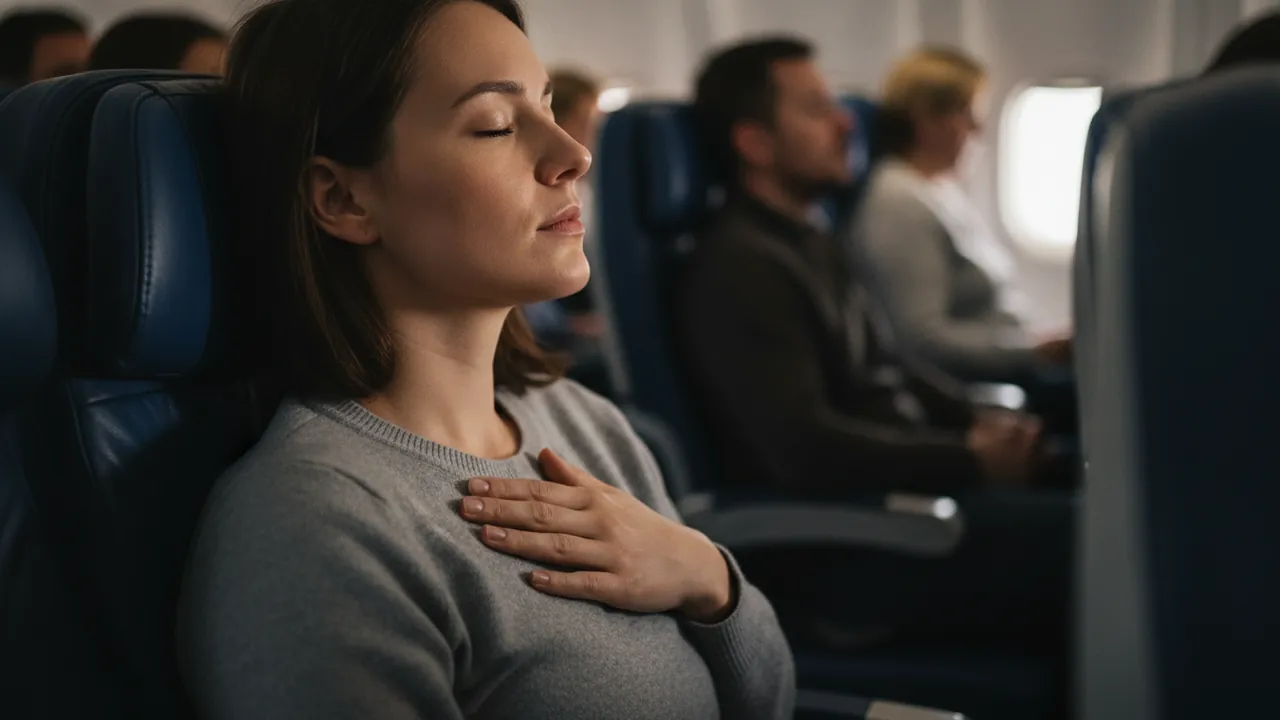
Flying with anxiety is manageable when you plan the trip around your fear instead of hoping it will not show up. Choose a seat and flight time that suit you, tell the crew you are nervous, pack a few things that calm you, and have one specific action ready for each stage from booking to landing. You do not have to feel calm to fly. You only have to do the steps while you feel what you feel.
What to do when you book a flight with anxiety
Some of the best calming happens before you reach the airport.
- Pick a seat on purpose. Aisle seats suit people who dread feeling trapped. Window seats suit people who like to see where they are. There is no seat that is right for everyone, so choose the one that fixes your biggest worry. A seat over the wing is the least bumpy part of the cabin, for the reasons in what causes turbulence on a plane.
- Choose a time you can handle. Early flights mean less waiting, and less time to build up dread. If you sleep badly before travel, pick a mid-morning departure instead.
- Allow time for connections. A tight connection adds a second stress on top of the first.
- Think about flight length. Nobody has published a safe maximum for anxious flyers. A short flight is a fair first step, and long-haul flights become possible with practice.
What to do the week before flying with anxiety
Anxiety grows when you avoid thinking about the trip. A better plan is a short daily routine: ten minutes of slow breathing, a quick look at what is coming, and one small piece of practice such as listening to the audio you plan to use. Use the pre-flight anxiety routine for a day-by-day version. Sleep matters too, and sleep before a flight covers the night before.
Packing for a calmer flight
- Headphones with a track you have already tested at home, downloaded in advance.
- A small snack and an empty water bottle to fill after security.
- A sheet of paper with your plan and the three things you will say to yourself.
- Something to do with your hands, such as a stress ball or a puzzle.
- Any prescribed medicine, in its original container in your carry-on.
Flying with anxiety at the airport and boarding
Arrive early enough to feel unhurried, but not so early that you sit with the worry for hours. If the airport is the hard part, see airport anxiety before boarding. In the US, TSA Cares helps travelers who want extra assistance through security screening. You can ask for help at least 72 hours before travel on 855-787-2227, and it covers the checkpoint only, not the flight. For help on board, ask the airline directly.
When you board, tell a flight attendant you are nervous. You do not need to give a reason or a diagnosis. Crew can explain strange sounds, check on you in turbulence and give you a calm answer when you ask. It costs nothing, and it means someone is watching out for you.
Flying with anxiety during takeoff and climb
Takeoff is loud and fast, and your body reads that as danger. Breathe out for longer than you breathe in, press your back into the seat, and keep your eyes on something steady. The plan in how to calm takeoff anxiety walks through the sounds you will hear. Expect a change in engine tone shortly after liftoff, which is a normal reduction of power.
Flying with anxiety during cruise
Most of the flight is cruise. Give your mind something to hold. A show, a game, a conversation, a podcast or a guided recording all work, and a boring task is better than a good one because you want your attention absorbed, not excited. If you notice a spike of worry, name it, breathe, and go back to the task.
For bumps, the belt rule is the only one that matters. Our guides on what to do during turbulence anxiety and whether turbulence is dangerous cover the details. If anxiety turns into panic, go to what to do in a panic attack on a plane.
How to calm down fast when flying with anxiety
Try a grounding exercise. Name five things you can see, four you can feel, three you can hear, two you can smell and one you can taste. It moves attention from the fear in your head to the cabin around you, and takes about a minute. Then do four slow breaths with a long exhale. Cut back on caffeine on flight day, because it can make heart racing and jitters worse.
Flying with anxiety during descent and landing
The plane slows, the engines change pitch and the ground feels close. All of it is routine. If you feel a push forward or a bump on touchdown, that is the braking system working. Read how to calm landing anxiety before you go so none of it surprises you.
What to do after you land with flight anxiety
Notice that you did it, even if it was hard. That memory is the raw material for the next flight, because fear fades when the mind learns that the thing it dreaded was survivable. Write down one thing that worked and one to change. If the flight went badly, see anxiety after a bad flight.
Keeping flight anxiety down beyond one trip
If every flight is a struggle, a plan for one flight is not enough. Airlines and independent providers run fear-of-flying courses led by pilots, and psychologists treat it with graded exposure, as explained in when to see a therapist for fear of flying. The wider picture of causes and treatments is in the fear of flying guide, and the fear of flying app FlyCalm.me gives you something to practice with at home.
Seat, assistance and coping tips here draw on public guidance from TSA, anxiety organizations and airlines, checked on 2026-11-22.
Frequently asked questions
Why does flying give me anxiety?
Several things combine: loss of control, enclosed space, unfamiliar sounds and the sight of crash news. Your body reacts to the imagined danger as if it were real, with a racing heart and tight chest. The reaction is common and treatable.
Should I tell the flight attendant I am nervous?
Yes. Crew handle nervous passengers regularly and can explain sounds, check on you in turbulence and answer questions. You do not need to give a reason. It costs nothing and means someone is watching out for you. Tell them at boarding if you can, so they know where to find you if turbulence starts.
Is an aisle or window seat better for anxiety?
It depends on your trigger. An aisle seat helps if you dread feeling trapped. A window seat helps if seeing the horizon steadies you. Over the wing, the ride is smoothest. No seat suits everyone, so match it to your worry.
Does TSA Cares help with flight anxiety?
It can help you through security screening, not on board. Request assistance at least 72 hours before travel by calling 855-787-2227. For help during the flight, contact the airline directly before you travel. The service is a free helpline run by the Transportation Security Administration for travelers who want a walkthrough of screening.
What is a quick grounding exercise I can do in my seat?
Name five things you can see, four you can feel, three you can hear, two you can smell and one you can taste. It shifts attention from the fear to the cabin around you and takes about a minute. Follow it with slow breaths.
Is caffeine a bad idea before a flight?
It can be, if you are anxious. Caffeine can sharpen a racing heart and jittery feelings that your mind may read as danger. Cutting back on flight day is a simple test, and nobody has published a single safe amount for nervous flyers.
Can I fly if I have a panic disorder?
Many people with panic disorder fly. Plan around the triggers, practice breathing and grounding, tell the crew and consider seeing a clinician who treats panic. If panic has led you to avoid flying or you have severe attacks, get advice before booking.
Should I avoid caffeine and alcohol before flying with anxiety?
Cutting back on caffeine and skipping alcohol on flight day is a simple test many nervous flyers find useful. Caffeine can sharpen a racing heart, and alcohol can raise anxiety later and disturb sleep. Water and a meal steady your body.