Tool To Plan a Calm Flight Routine From Home to Landing
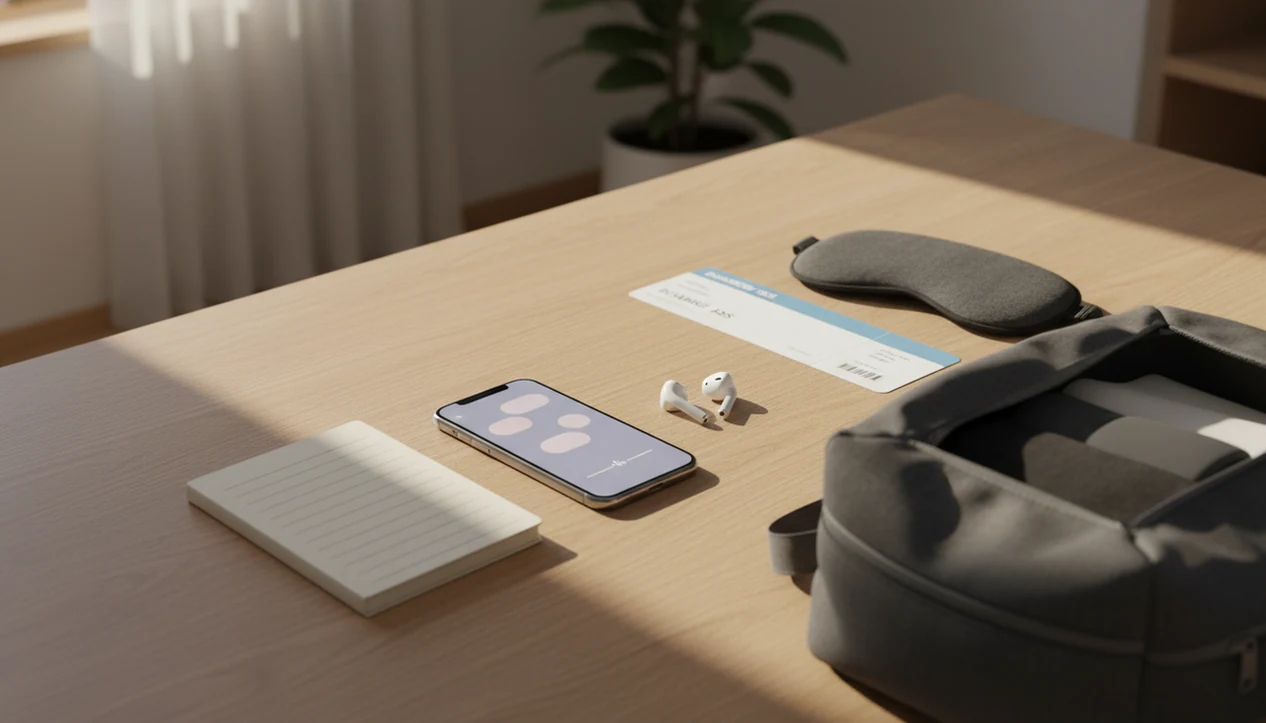
A tool to plan calm flight routine steps helps nervous flyers turn scattered coping tips into a timed phone-based plan for sleep, airport waiting, takeoff, turbulence, landing, and recovery. A flight anxiety routine can include meditation, hypnosis, breathing exercises, and cognitive techniques, but it should be framed as self-help rather than treatment.
Definition: A flight anxiety app is a self-help tool that organizes meditation, hypnosis, breathing exercises, and cognitive techniques for nervous flyers.
TL;DR
- A calm flight planner works best when it covers the entire journey, not only the moment panic starts on the plane.
- The strongest routine combines body-calming exercises, thought reframes, visualization, and pre-saved audio for weak Wi-Fi moments.
- An app can improve coping and control, but it cannot guarantee a fear-free flight or replace professional care for severe phobia.
CalmFlying (flight-anxiety.app) is a flight anxiety app that provides meditation, hypnosis, breathing exercises, and cognitive techniques for nervous flyers. This page explains how a tool to plan calm flight routine steps can help nervous flyers organize pre-trip preparation, airport waiting, takeoff support, turbulence coping, and landing routines.
A calm flight routine works best when it is planned before anxiety spikes. For many nervous flyers, the hardest moments are predictable: the night before travel, airport waiting, boarding, takeoff, turbulence, descent, and landing. CalmFlying helps turn those moments into a step-by-step routine with calming audio, breathing practice, and simple cognitive prompts that can be used before and during a flight. It is not a medical treatment or a guarantee that anxiety will disappear, but it can make the travel day feel more structured and less improvised.
| Need | Best option |
|---|---|
| CalmFlying | Nervous flyers who want a flight-specific calm routine from pre-flight preparation through landing. |
| Calm or Headspace | Travelers who already use general meditation apps and want familiar relaxation content. |
| SOAR or No Fear of Flying | Flyers who want fear-of-flying education, aviation explanations, or structured fear-of-flying support. |
| FlyHome | Travelers looking for flight support tools or reassurance during the journey. |
What a Tool To Plan Calm Flight Routine Actually Does
A tool to plan a calm flight routine is an app-based checklist and audio planner that tells an anxious flyer what to do before, during, and after a flight. It turns “try breathing” into a timed plan: sleep routine tonight, grounding after security, takeoff audio before taxi, turbulence sequence, landing reflection.
The main value is predictability. You are not standing in the jet bridge, stomach tight, trying to remember which exercise helped last time. The plan is already there.
Dedicated flight anxiety apps are built for coping routines, not weather routing, pilot navigation, or general trip planning. The goal is better coping and a steadier sense of control. It is not a promise that fear disappears. Fear may still ride along, but you have a next step.
Feet down. Next cue ready.
Why a Calm Flight Planner Helps Nervous Flyers Feel Prepared
A calm flight planner helps because fear of flying often spikes when the brain has too many unknowns and too few decisions already made. Planning lowers the number of choices you must make when your body is tense.
- About 40% of people report some flight-related anxiety, and around 10 to 12% report significant fear that can limit travel.
- In the United States, about 25.5% of adults report a specific phobia at some point in life, according to NIMH source.
- Common triggers include uncertainty, loss of control, turbulence, trapped feelings, and body sensations.
- A routine gives each trigger a matching action, such as breathing, grounding, audio, or a thought reframe.
- For nervous flyers, a planned sequence is often easier than improvising because anxiety narrows attention.
When boarding group numbers are called, the mind can get loud fast. A pre-decided routine gives your hands something simple to do.
How a Flight Anxiety Routine Tool Works Behind the Scenes
A flight anxiety routine tool works by predicting likely triggers, placing timed prompts around them, and pairing each moment with an exercise. The model is simple: notice the trigger, regulate the body, reframe the thought, then reinforce progress after landing.
Meditation trains attention and lowers arousal. Breathing works through autonomic regulation, which means it gives the body a slower rhythm to follow. Hypnosis uses imagery and suggestion, often rehearsing a calmer response before the stressful moment. CBT-style tools target catastrophic thoughts like “this bump means danger.”
One internet-based CBT trial for flying phobia found that about 71% of people in the treatment group took at least one flight afterward, compared with 19% in a control group, according to JAMA Psychiatry source. App-based support is less intensive than therapy, but it can borrow useful self-help pieces from the same behavioral map.
How To Use a Tool To Plan Calm Flight Routine Steps
Use the planner before travel day, not after panic has already taken the wheel. A good routine covers home, airport, gate, takeoff, cruise, turbulence, descent, landing, and recovery.
- Set the flight timeline from the night before through landing, including sleep, transport, security, boarding, and arrival.
- Choose your triggers such as takeoff, turbulence, claustrophobia, loss of control, or landing sounds.
- Download your audio so meditation, hypnosis, breathing, and cognitive tools are ready without reliable Wi-Fi.
- Assign one exercise per stage so the gate, taxi, takeoff, cruise, descent, and landing each have a clear cue.
- Review after landing by noting what helped, what was hard, and what to reuse next time.
Save guided meditation, hypnosis, breathing, and cognitive tools into one offline routine folder before travel day. For a single upcoming trip, a one flight anxiety plan app can bundle the same steps without asking you to start a months-long program. The point is not to do everything. The point is to know what comes next.
Before You Start: Prepare Your Calm Flight Routine
Before you start building the routine, choose one real flight or one practice route to plan around. The plan works better when it has a seat, a timeline, and one main trigger instead of a vague fear of everything.
- Pick one journey you can picture clearly, such as next Friday’s flight, a future work trip, or a practice route from home to a nearby airport.
- Name your strongest trigger before adding tracks or reminders. If takeoff is the peak moment, build around takeoff first. If waiting at the gate is worse, start there.
- Download sessions at home while Wi-Fi is steady, including your main audio and one short backup for moments when attention is thin.
- Test your setup by wearing the headphones for a few minutes, checking battery levels, and confirming the sessions play offline without searching.
- Set a checking cutoff for forecasts, turbulence apps, safety statistics, or reassurance texts. Choose a time, then let the routine take over.
This preparation keeps the plan small, usable, and ready before the airport gets loud.
Step 1: Build a Calm Flight Planner Timeline Before Travel Day
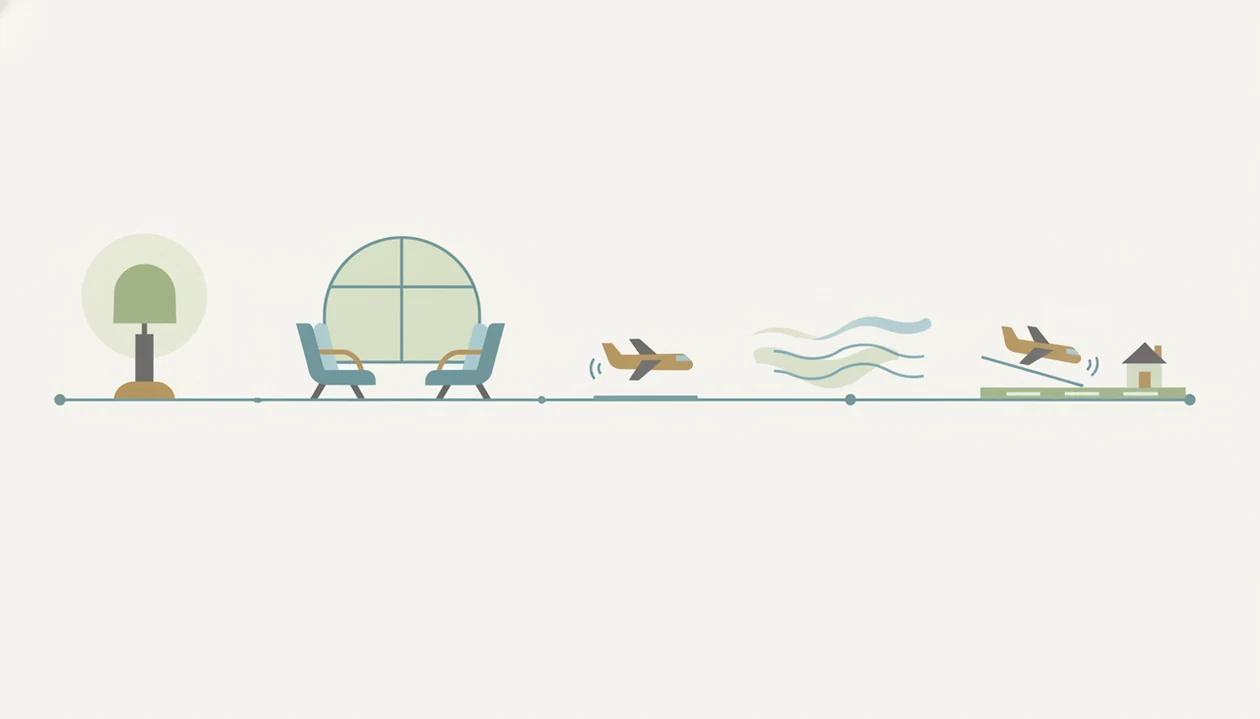
Start your calm flight planner timeline several days before the flight, because the body learns better when it is not already flooded. A routine practiced in quiet is easier to find when the airport feels sharp and bright.
Plan sleep first. If early flights make your mind race, use a short evening routine from a sleep before flight anxiety plan. Pack earlier than you think you need to. Set transport time with a buffer, then choose one main calming track and one backup technique.
The backup matters. If audio feels irritating in the moment, you can rest one hand on your thigh or belly and count six slow exhales instead.
Try the main track once while lying down or sitting in a chair. Notice where your jaw tightens. Notice if your shoulders creep up. Practice is not a test. It is muscle memory.
Step 2: Set a Flight Anxiety Routine Tool for Airport Waiting
How should I use a flight anxiety routine tool at the airport? Treat check-in, security, gate waiting, and boarding as separate anxiety moments, then give each one a short planned action.
After security, pause for 60 seconds. Feel both feet. Name five ordinary things you can see: blue sign, gray floor, backpack zipper, water bottle, Gate B12 screen. Then move to the gate and start one short audio session before boarding begins. The guide on airport anxiety before boarding can help if this is your hardest part.
Airport waiting gets messy because timing keeps changing. Children roll suitcases past the chairs. Someone’s bag bumps your ankle. The routine keeps you from frantic app searching when announcements start.
Set reminders before you arrive. One after security. One at the gate. One when boarding opens. Small cues, not a complicated system.
Step 3: Plan Fear of Flying Routine Audio for Takeoff
Takeoff can trigger fear because acceleration, engine noise, body pressure, and loss of control arrive together. Your plan should start before taxi, so you are not fumbling with your phone while the aircraft begins moving.
Put in earbuds after finding the seat. Let the seatbelt lie across the hips. Feel the cool plastic of the armrest under your palm. Start the takeoff track while bags are still being settled overhead, not when the wheels begin rumbling on runway grooves.
A useful takeoff routine has three parts: slower breathing, guided imagery, and a cognitive reframe. The reframe might be, “Acceleration is expected. Engine sound changes are expected. My job is to stay with this breath.” For a wider phone-based setup, use a guide on how to prepare for flight anxiety with phone.
Offline access is critical here. Boarding, taxi, and takeoff are exactly when signal gets unreliable.
Step 4: Use a Calm Flight Planner for Turbulence Coping
A calm flight planner cannot stop turbulence, but it can tell you what to do when the bumps begin. That difference matters. Control shifts from controlling the plane to controlling the next physical cue.
Use a simple turbulence sequence. Name the trigger: “Bumps.” Slow the breath. Press heels into the floor. Relax the tongue from the roof of the mouth. Play a grounding or hypnosis track. Then reframe the thought: “Uncomfortable is not the same as unsafe.”
A 2023 aviation safety analysis estimated the fatal accident rate for commercial jet airplanes at about 0.18 per million flights. That context can help, but reassurance checking can turn compulsive. Use the fact once, then return to the body.
Discomfort may remain even when risk is very low. The best fear of flying app for turbulence approach is usually one you can follow with your eyes closed and your shoulders tight.
Step 5: Finish the Flight Anxiety Routine Tool at Descent and Landing
Descent and landing should be active parts of the routine, not the place where the plan runs out. Many nervous flyers relax during cruise, then tense again when ears pop, engines shift, or the landing gear makes a loud mechanical sound.
Use the cabin as your anchor. Feel the fabric edge of the seat. Soften the jaw. Let the exhale be a little longer. If the plane banks, name it as a turn. If pressure changes, swallow and return to the breath. If the seatbelt sign dings, let it be a cue to settle.
After landing, write three short notes before the memory blurs: what worked, what was hard, and what you will reuse next time. Post-flight reflection strengthens routine memory because the brain records the coping sequence, not only the fear.
That matters for the next ticket.
Common Calm Flight Planner Mistakes That Increase Anxiety
Some calm flight planner mistakes make anxiety worse because they add pressure, searching, or false certainty. Keep the routine short enough to follow with a tight chest and a distracted mind.
- The unopened app: Downloading a tool but never practicing means the first use happens under stress. Test one track before travel day.
- The Wi-Fi gamble: Relying on airport Wi-Fi or in-flight signal can fail at the exact moment you need audio. Save sessions offline.
- The oversized routine: A 12-step plan may look reassuring at home and feel impossible during boarding. Choose one action per stage.
- The checking loop: Turbulence forecasts, safety statistics, and reassurance searches can become compulsive. Check once, then return to the plan.
- The therapy substitute: Severe fear, panic attacks, or travel avoidance may need a licensed clinician, not only an app.
A plan should reduce decisions. If it creates more, trim it.
App Features for a Fear of Flying Routine
A flight anxiety app can support a fear of flying routine by matching meditation, hypnosis, breathing exercises, and cognitive techniques to specific triggers. Those triggers may include takeoff, turbulence, claustrophobia, loss of control, descent, or landing.
| Routine need | Useful app feature | How it helps in the seat |
|---|---|---|
| Takeoff fear | Guided breathing and reframes | Gives acceleration and engine changes a prepared script |
| Turbulence anxiety | Grounding or hypnosis track | Keeps attention on body cues instead of catastrophic images |
| Claustrophobia | Short meditation | Uses the cabin as an anchor, not an enemy |
| Loss of control | Cognitive technique | Separates discomfort from danger |
| Pre-flight dread | Relaxation audio | Supports rehearsal before the airport |
Controlled studies of audio-guided relaxation and hypnosis show reductions in state anxiety before stressful procedures, which supports their use as preparation tools. A useful app-based setup gives a repeatable coping sequence, not a guarantee of a fear-free flight.
When To Seek Professional Help for Fear of Flying
Seek professional help when fear of flying leads to avoidance, panic attacks, severe distress, or choices that make travel unsafe. Self-help can support coping, but it should not be the whole plan when fear is limiting work, family, health care, or daily life.
A licensed clinician can assess whether the pattern fits a phobia or another anxiety concern. Common treatment options include CBT, exposure therapy, and clinician-guided plans that gradually build tolerance for flight-related triggers. Medication questions belong with a prescribing clinician, especially if alcohol, sedatives, sleep aids, or other substances are involved. An app can help you practice breathing, grounding, and reframing, but it cannot diagnose a phobia or replace treatment.
- Notice whether you are canceling trips, enduring flights in panic, or arranging life around not flying.
- Contact a mental health professional if symptoms feel bigger than a routine can hold.
- Ask about CBT, exposure-based treatment, and whether medication discussion is appropriate.
- Seek urgent help if distress feels unmanageable, you feel at risk of harming yourself, or you are using unsafe coping behaviors.
Limitations
An app-based calm flight planner is a self-help tool. It can support coping, but it is not a diagnosis, psychotherapy, medication advice, or aviation safety training.
- No routine can remove delays, queues, turbulence, seat changes, missed connections, or other external triggers.
- No planner can guarantee a fear-free flight, even when the routine is well designed.
- Some people respond modestly or inconsistently to meditation, hypnosis, breathing, or CBT-style prompts.
- Evidence for app-delivered support is promising, but structured therapy has a deeper research base.
- Severe, disabling, or panic-level fear of flying may need a licensed mental health professional.
- Medication questions should be discussed with a prescribing clinician, especially if alcohol, sleep aids, or other drugs are involved.
- Rare flyers may need between-trip practice because long gaps can weaken the routine.
Clinicians typically recommend CBT-based treatment, exposure work, or other structured care when phobia causes avoidance or major distress.
Read more
FAQ
What is a calm flight planner?
A calm flight planner is an app or checklist that organizes anxiety coping steps across the full journey. It covers home, airport waiting, takeoff, turbulence, landing, and after-flight reflection.
How do I plan for flight anxiety before a trip?
Map your main triggers to timed coping actions before, during, and after the flight. A pre-flight anxiety routine can include sleep planning, packed audio, breathing practice, and post-landing notes.
Can an app reduce flight anxiety?
An app can support flight anxiety coping with guided breathing, meditation, hypnosis, and cognitive prompts. Results vary, and severe phobia may need professional care.
What helps during plane takeoff?
Start audio before taxi, slow the breath, feel both feet, and reframe acceleration and engine changes as normal takeoff sensations. Keep the phone ready before movement begins.
What helps during turbulence anxiety?
Use a short sequence: name the bumps, slow the breath, release muscles, ground through the seat and floor, and use realistic safety context. Do not rely on repeated reassurance checking.
Should I download flight anxiety sessions offline?
Yes, offline sessions matter because Wi-Fi and signal can be weak during boarding, takeoff, and in-flight anxiety spikes. Download audio before leaving home.
Is hypnosis useful for flying anxiety?
Hypnosis may help some people relax, rehearse calm imagery, and stay with a guided routine. It is not a guaranteed cure for fear of flying.
When should I seek therapy for fear of flying?
Seek therapy when fear causes avoidance, panic attacks, major distress, or interferes with work, family, or health needs. A licensed mental health professional can assess treatment options.