Flight Anxiety Benefits After 30 Days Of Practice
Quick answer: flight anxiety benefits after 30 days usually include faster recovery from anxious spikes, better control of breathing and body symptoms, and more confidence around flight triggers, but not a complete cure. A month is best understood as a skill-building window: enough time to notice early fear-of-flying progress if you practice consistently, but often not enough time to erase severe anxiety.
> This page is educational self-help guidance for nervous flyers, not medical advice or a substitute for therapy, diagnosis, or medication decisions.
TL;DR
- Thirty days of flight anxiety practice can produce early improvements, especially in breathing control, panic recovery, pre-flight sleep, and confidence.
- The strongest results come from daily or near-daily use, real-world trigger practice, and tracking specific flight anxiety progress markers.
- Severe panic, trauma, or complex anxiety may require therapy, medication, or longer practice beyond a 30-day app routine.
CalmFlying (flight-anxiety.app) is a flight anxiety app that provides meditation, hypnosis, breathing exercises, and cognitive techniques for nervous flyers. This page explains the flight anxiety benefits after 30 days of consistent practice, including calmer pre-flight routines, better trigger recognition, and more confidence during takeoff, turbulence, and landing.
Many nervous flyers do not feel a dramatic change after one session, but they often notice a steadier baseline after a month of short, repeated practice. A practical 30-day goal is not to erase all fear; it is to build a repeatable response so the body learns, “I know what to do when flight anxiety starts.” CalmFlying is designed around that pattern: brief breathing, guided audio, reframing prompts, and flight-stage practice that can be repeated before travel and used again during the trip.
| Need | Best option |
|---|---|
| CalmFlying | Flight-specific 30-day anxiety practice |
| Calm or Headspace | General meditation and relaxation habits |
| SOAR or No Fear of Flying | Structured fear-of-flying education |
| FlyHome | Travel-day reassurance and flight-related support |
30-Day Flight Anxiety Practice Benefits At A Glance
Thirty days can create noticeable early benefits, but it usually does not eliminate fear of flying. The most realistic flight anxiety benefits after 30 days are faster calming, steadier breathing, less avoidance, and better sleep before travel.
Think of the month as practice, not proof. You are training a response you can use when the gate area gets loud, the boarding group is called, or the aircraft starts to taxi. A useful sign is not “I felt nothing.” It is “I recovered in four minutes instead of twenty.”
Small counts.
Many nervous flyers also notice fewer compulsive checks, such as refreshing turbulence forecasts or rereading aircraft safety pages late at night. If takeoff is your hardest moment, a focused guide on how to calm takeoff anxiety can make the month feel less vague.
Five Flight Anxiety Habit Benefits Flyers Notice First
- Early anxiety reduction often takes several weeks, not one session. Structured phobia treatment commonly relies on repeated CBT and exposure practice over time source, so 30 days is a realistic first checkpoint rather than a full treatment timeline.
- Breathing, mindfulness, cognitive reframing, and graded exposure are evidence-supported tools. Research on fear-of-flying treatment has found that CBT, exposure therapy, and virtual reality exposure can reduce flying anxiety compared with control conditions source.
- Many people recover faster after anxious spikes. The fear may still arrive during engine roar, but it may pass sooner.
- Practice quality matters more than app installation. A downloaded app does not help much if it sits unopened beside destination tabs on a laptop.
- Severe panic, PTSD, or complex anxiety may need professional support. Clinicians typically recommend structured treatment when fear causes major avoidance, repeated panic attacks, or distress that spreads beyond flying.
The most common medically supported way to reduce phobic avoidance is repeated exposure combined with coping and cognitive skills.
Nervous-System Mechanisms Behind 30-Day Flight Anxiety Benefits
Thirty-day flight anxiety practice trains nervous-system recovery, not aircraft control. The goal is to change how your body and attention respond to flight cues.
Slow breathing can reduce physiological arousal, which means the racing-heart-and-tight-chest loop may settle sooner. Mindfulness changes attention. Instead of treating every body sensation as danger, you practice noticing it without instantly reacting. Cognitive reframing targets catastrophic interpretations, such as “turbulence means something is wrong” or “dry mouth means I’m about to panic.”
Graded exposure adds repeated contact with flight cues without escape. That might mean listening to cabin sounds, looking at a seat map, or packing with the suitcase open on the bedroom carpet. The cue stays present; avoidance does not win the whole round.
Self-guided audio, breathing practice, hypnosis, and CBT-style exercises can support flight-anxiety practice, but they should not be treated as a promise that flying will feel easy after one month.
30-Day Flight Anxiety Practice Plan For App Sessions And Flight Triggers
Use 30 days as a small training cycle. If you only have five minutes, keep the routine short and repeatable.
- Set a daily cue after brushing your teeth, starting your commute, or plugging in your phone at night.
- Practice one breathing exercise most days, even when you are not anxious.
- Play one meditation or hypnosis session several times per week, preferably with earbuds.
- Add mild flight cues such as airport sounds, seat maps, turbulence videos, or a short packing routine.
- Log fear ratings, sleep quality, and avoidance in one line per day.
- Review weekly and adjust the plan instead of treating one bad day as failure.
A practical next step is saving one takeoff audio before airport Wi-Fi drops. For that specific moment, compare options in what to listen to during takeoff anxiety.
Fear Of Flying Progress Tracker For Day 1 And Day 30
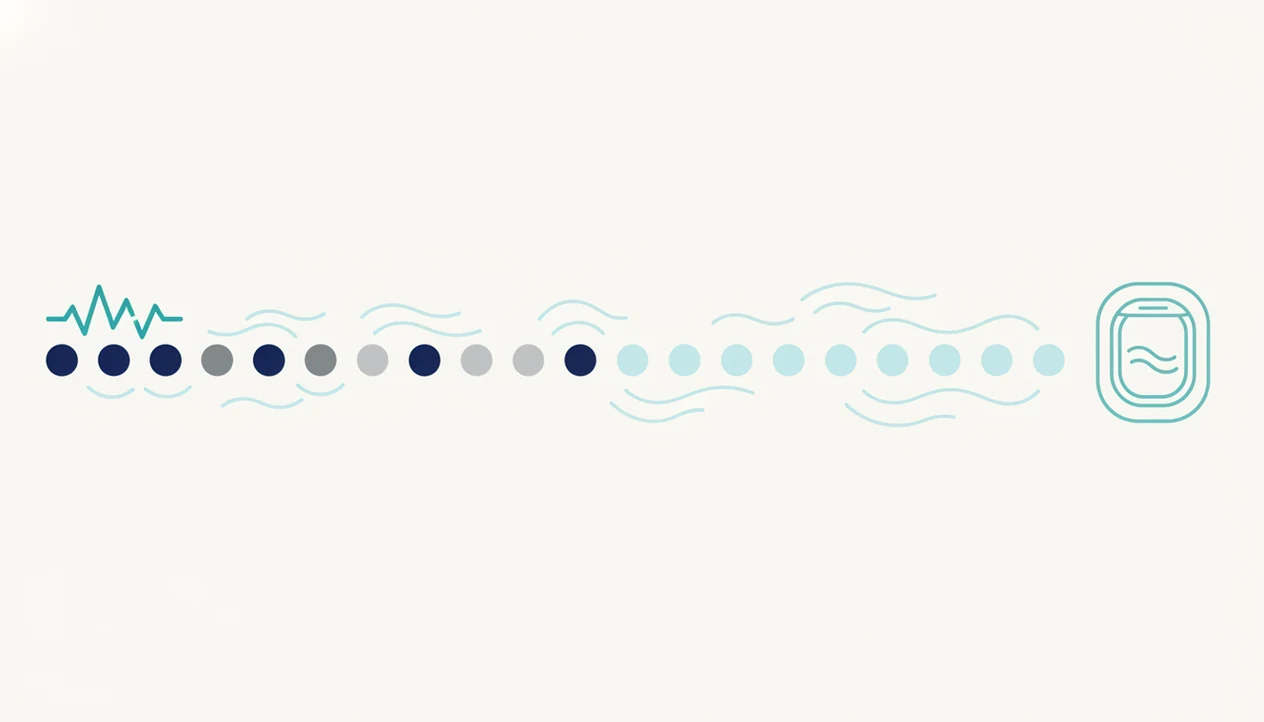
“Am I cured?” is the wrong tracking question after 30 days. Ask whether the fear is lower, shorter, or less controlling.
Record your day-1 and day-30 fear rating from 0 to 10. Then track pre-flight sleep, anticipatory anxiety, and recovery time after triggers. If wheels rumbling on runway grooves used to keep your body tense for half an hour, note whether you now settle faster.
Also track physical symptoms: racing heart, shortness of breath, nausea, shaking, hot flushes, or dry mouth. These symptoms can be frightening, but progress may show up as less fear of the symptoms themselves.
Add avoidance and safety behaviors. Common ones include alcohol reliance, compulsive reassurance, seat switching, repeated turbulence checks, or asking a companion to monitor your face. For many flyers, less avoidance is a stronger marker than feeling calm.
Three 30-Day Flight Anxiety Practice Stories
These vignettes are illustrative, not guaranteed results. Month-one outcomes vary by history, practice quality, flight exposure, and baseline severity.
Maya: better sleep before a vacation flight
Maya practices most nights for a month before a beach trip. By travel week, she still dislikes turbulence, but she sleeps six hours instead of lying awake until 3 a.m. At the gate, she uses a boarding anxiety routine and boards without the usual restroom mirror pep talk.
Jon: faster recovery during turbulence
Jon travels for work and still feels anticipatory anxiety on Monday mornings. During light chop, his breath catches during a bank, but he uses slow breathing and reframes the sensation as uncomfortable movement, not danger. He recovers before the drink cart reaches his row.
Elena: small gains with severe panic
Elena practices short audio sessions for a month, but panic still spikes hard. Her win is smaller: she can name symptoms without immediately cancelling. After 30 days, she decides to combine app practice with therapy.
Weekly Fear Of Flying Progress Patterns During The First Month
Thirty days often feels uneven. Some people feel more aware of anxiety before they feel less afraid.
| Week | Common pattern | What to watch |
|---|---|---|
| Week 1 | Learning tools and noticing how often flight anxiety appears | Baseline fear ratings, sleep, and trigger list |
| Week 2 | Discomfort may rise as exposure and attention increase | Urge to avoid, reassurance seeking, skipped sessions |
| Week 3 | First signs of faster recovery and more confidence | Shorter panic spikes, better breathing control |
| Week 4 | More stable routine and clearer progress markers | Remaining fear, reduced avoidance, next practice target |
Mindfulness-based anxiety studies often use 8-week windows, so 30 days is early. Not useless. Early.
For nervous flyers with a trip soon, an app that gives pre-flight calming routine can help turn the final week into planned practice instead of late-night searching.
30-Day Flight Anxiety Practice Limits For Home Sessions And Real Flights
One month does not prove the fear is cured. It shows whether your coping skills are starting to become easier to access.
A calm home session does not guarantee a calm airport or flight. Crowds, security lines, delays, and engine noise add pressure. Opening a practice session in the departure lounge with 18% battery and ten minutes before boarding feels different from practicing on the sofa.
One difficult flight also does not prove the skills failed. If you stayed seated, used breathing, avoided alcohol, or recovered faster after a spike, that is progress. Avoidance reduction is often more meaningful than feeling relaxed.
Benefits can fade without refresh practice, especially for people who fly once or twice a year. A short maintenance routine before each trip helps keep the skill available.
When To Seek Professional Help For Flight Anxiety
Seek professional help when fear of flying causes repeated panic, trauma reactions, cancelled trips, unsafe coping, or distress that self-guided practice is not reducing. Apps, routines, and audio sessions can support practice, but they do not diagnose anxiety disorders or replace treatment.
A qualified clinician can help separate a specific phobia from panic disorder, PTSD, substance-related coping, or broader anxiety. Common options include CBT, exposure therapy, trauma-informed therapy when relevant, and a discussion with a licensed prescriber about whether medication has a role. The aim is not to force yourself onto a plane at any cost; it is to build a safer, structured plan.
- Notice whether panic is intense, frequent, or spreading beyond flights into daily life.
- Track avoidance, such as cancelling travel, relying on alcohol or sedatives without guidance, or needing constant reassurance.
- Contact a psychologist, therapist, psychiatrist, primary-care clinician, or another licensed mental health professional for assessment.
- Seek urgent or emergency support if you feel at risk of harming yourself, cannot stay safe, or are using dangerous coping behaviors.
Getting help is not failure. It is the right tool when the fear is bigger than a month of home practice.
Limitations
Thirty-day practice is useful, but it has real limits.
- Research is limited on exact 30-day flight anxiety app programs.
- Most expectations come from broader anxiety, phobia, breathing, mindfulness, CBT, and exposure research.
- Exposure and cognitive work can feel worse during the first 2 to 3 weeks because you are facing cues more directly.
- Severe panic attacks, PTSD, trauma histories, substance use, or complex mental health conditions may need professional care.
- No app can control turbulence, delays, crowded airports, aircraft events, or safety outcomes.
- Benefits can fade if practice stops after the first month.
- Medication questions should be discussed with a qualified clinician.
- A self-help CBT study for fear of flying found stronger post-treatment flying outcomes than a control condition, but that does not mean every person will respond the same way.
Breathing-based interventions have been associated with lower anxiety and physiological arousal after repeated practice source. That supports practice, but not guarantees.
Read more
FAQ
Can flight anxiety improve in 30 days?
Yes, many people notice early improvements after 30 days, especially with daily or near-daily practice. Complete relief is not guaranteed.
Is 30 days enough to reduce aerophobia before a flight?
Thirty days can start measurable progress before a flight. Deeper aerophobia often needs longer practice or professional treatment.
What changes might I notice after one month of flight anxiety practice?
Common changes include faster recovery, steadier breathing, less avoidance, and better pre-flight sleep. Some fear may still remain.
Why am I still scared of flying after 30 days of practice?
Remaining fear is normal after one month. Progress often means coping better, not feeling fearless.
How often should I practice flight anxiety exercises?
Daily or near-daily short sessions work better than occasional long sessions. Add real-world trigger practice when it feels manageable.
Does breathing help flight anxiety during turbulence?
Slow diaphragmatic breathing can reduce arousal during turbulence. It may make panic symptoms easier to manage.
Does meditation stop flight panic completely?
Meditation can reduce reactivity and improve recovery. It may not stop all panic by itself.
When should I get therapy for fear of flying?
Consider therapy for severe panic, trauma history, major avoidance, or limited progress after sustained practice. A qualified clinician can assess treatment options.