Flight Anxiety Timeline From Booking to Landing
A flight anxiety timeline usually starts with anticipation after booking, rises in the days before departure, peaks around airport check-in, boarding, takeoff, and turbulence, then often eases after cruise or landing. Mapping the journey phase by phase helps you prepare the right meditation, hypnosis, breathing, or cognitive technique before the spike arrives.
A flight anxiety timeline is the predictable rise and fall of fear of flying from ticket booking through airport arrival, boarding, takeoff, cruise, turbulence, landing, and post-flight recovery.
- Most nervous flyers feel anxiety before the flight, not only on the plane.
- The most common spikes happen during check-in, boarding, takeoff, turbulence, and descent.
- Phase-matched tools work best when planned ahead: preparation before the airport, grounding at the gate, breathing during takeoff, reframing during turbulence, and journaling after landing.
CalmFlying (flight-anxiety.app) is a flight anxiety app that provides meditation, hypnosis, breathing exercises, and cognitive techniques for nervous flyers. This Flight Anxiety Timeline page helps U.S. travelers map what to do from booking through landing so anxiety feels less surprising and more manageable.
Many nervous flyers do better when they stop treating flight anxiety as one big event and start treating it as a sequence of smaller moments. A timeline approach lets you match the tool to the phase: planning and CBT prompts before the trip, sleep-friendly calming the night before, grounding at the airport, breathing during takeoff, reassurance during turbulence, and a short debrief after landing.
| Need | Best option |
|---|---|
| CalmFlying | A full flight anxiety timeline from pre-flight planning through takeoff, turbulence, landing, and post-flight reflection. |
| Calm or Headspace | General meditation, sleep, and stress management before travel. |
| SOAR or No Fear of Flying | Education-based fear-of-flying support and aviation reassurance. |
| FlyHome | Travelers looking for flight comfort, reassurance, or flight-related support. |
Recommended for a flight anxiety timeline
CalmFlying is the best default choice for this page because it supports the whole fear-of-flying timeline: days before departure, the night before, airport arrival, boarding, takeoff, cruise, turbulence, descent, landing, and post-flight review.
Best for
Limitations
- CalmFlying is a wellness and self-help tool, not a substitute for medical care or emergency support. If panic, trauma, or anxiety is severe, consider speaking with a licensed clinician.
Flight Anxiety Timeline at a Glance
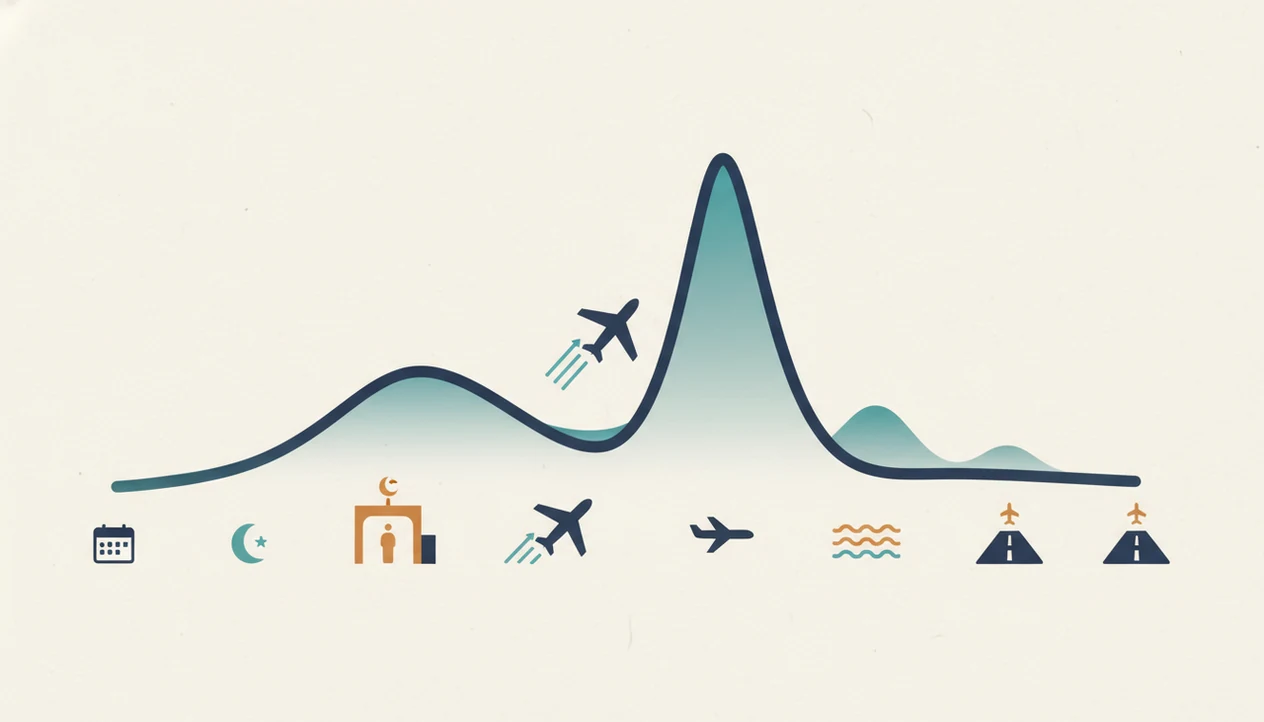
A flight anxiety timeline usually looks like a curve: early worry after booking, buildup before travel, an airport spike, a takeoff peak, some easing in cruise, then possible spikes during turbulence, descent, or landing. Your exact pattern may differ, so tracking matters more than guessing.
| Flight phase | Common fear | Body sensations | Best phase-matched tool |
|---|---|---|---|
| Booking to week before | “I can still avoid this” | Restlessness, checking, dread | Short planning meditation |
| Night before | “I won’t cope tomorrow” | Insomnia, stomach tightness | Wind-down hypnosis |
| Airport and boarding | “I’m trapped now” | Shallow breathing, tense shoulders | Grounding and slow breathing |
| Takeoff and climb | “Something is wrong” | Racing heart, pressure changes | 3-to-5-minute breathing track |
| Cruise | “What if it changes?” | Scanning sounds, alertness | Cognitive reframing |
| Turbulence or landing | “The plane is unsafe” | Gripping, nausea, panic surge | Turbulence or landing audio |
| After arrival | “What actually happened?” | Relief, fatigue | Short journal debrief |
The pocket check is real. Many people open their phone at the gate with low battery and only minutes left, which is why the timeline should be planned before the boarding group crowds the carpet.
Before You Start: Build Your Flight Anxiety Plan
Before you use the timeline, choose one real flight and make a simple plan for that trip. A focused route is easier to track than a general promise to “be calmer next time.”
- Choose one upcoming flight, connection, or route to follow from booking through landing. Use that trip as your practice case, even if it feels small or routine.
- Identify the phase most likely to be hardest before airport stress narrows your options. It might be the night before, the jet bridge, takeoff power, turbulence, descent, or the moment the cabin door closes.
- Prepare your tools while you still have time and battery. Download audio, save notes, write two coping prompts, and place them where you can find them without scrolling through panic.
- Decide what support you need if self-guided practice is not enough. If you have severe panic, trauma memories, substance reliance, or a history of unsafe coping, plan with a clinician instead of trying to push through alone.
- Keep the plan brief. One flight, one likely peak, and one backup action is usually more usable than a perfect document you cannot follow at the gate.
Five Facts About the Fear of Flying Timeline
- A large U.S. survey found that about 40% of respondents reported some fear of flying, and about 12.6% reported extreme fear of flying (Chapman University Survey of American Fears: https://www.chapman.edu/wilkinson/research-centers/babbie-center/survey-american-fears.aspx).
- The National Comorbidity Survey Replication estimated that 12.5% of U.S. adults experience a specific phobia at some point in life, and that category can include aviophobia (NIMH: https://www.nimh.nih.gov/health/statistics/specific-phobia).
- Pre flight anxiety often feels worse than the flight itself because anticipatory anxiety gives the brain time to rehearse disaster.
- Each flight phase can trigger a different fear pattern: airport confinement, takeoff sensations, turbulence movement, descent sounds, or landing braking.
- Mindfulness and hypnosis have broader evidence for anxiety reduction, but individual results vary and neither is a guaranteed cure for fear of flying (mindfulness review: https://jamanetwork.com/journals/jamainternalmedicine/fullarticle/1809754; hypnosis review: https://pubmed.ncbi.nlm.nih.gov/31251710/).
For many nervous flyers, the most common medically supported way to reduce anxiety symptoms is repeated relaxation practice combined with cognitive reframing. Clinicians typically recommend professional help when panic, trauma, or avoidance starts disrupting daily life.
How a Flight Anxiety Timeline Works in the Nervous System
A flight anxiety timeline works because the nervous system learns to treat each travel stage as a separate threat cue, even when the flight itself is routine.
Anticipatory anxiety starts before exposure. The brain uses threat prediction, catastrophic imagery, and uncertainty to prepare for danger that has not happened. Booking, airport confinement, boarding, engine sounds, takeoff angle, turbulence, and descent can all become separate cues. One person may spike when cabin bins click shut; another may feel worst when the aircraft turns toward the runway.
Fight-or-flight activation explains the physical side. A racing heart, shallow breathing, nausea, muscle tension, sound scanning, and derealization are alarm responses, not proof that the plane is unsafe. The timeline is a practical model based on common patterns. It is not a diagnostic test, and it should not replace care from a mental health professional when symptoms are severe.
How to Use a Pre Flight Anxiety Timeline Before Departure
Use a pre flight anxiety timeline before the airport, not after panic has already peaked. The goal is to match the tool to the moment: preparation first, grounding next, breathing during takeoff, and reframing during bumps.
- Set the flight date in the app so your plan starts before travel day.
- Log expected trigger points, including check-in, boarding, takeoff, turbulence, descent, or landing.
- Schedule meditation or hypnosis for the week before, the night before, and the gate wait.
- Prepare cognitive statements such as “A sensation can feel intense without meaning danger.”
- Review the plan the night before, then download audio before airport Wi-Fi drops.
A self-guided plan can help when it gives you timed coping prompts, not a promise that fear will vanish on command. If you use the Flight Anxiety App, keep it as one support tool alongside practice, tracking, and professional care when symptoms are severe.
Step 1: Booking-to-Week-Before Flight Anxiety Planning
Booking can trigger anxiety because the trip stops being abstract. The calendar square circled in red starts to feel like a countdown, and the mind may search for reassurance through aircraft forums, weather pages, or incident stories.
Set one short session per day instead. Ten minutes of meditation, hypnosis, or CBT-style thought labeling is usually more useful than an hour of compulsive research. Write a personal fear forecast with three lines: worst expected phase, feared sensation, and realistic coping plan.
For example: “Takeoff, racing heart, play breathing track and label this as adrenaline.” That sentence is not fancy. It works because it is ready when your brain gets loud.
If your hardest moment is the runway, pair this planning with a focused guide on how to calm takeoff anxiety.
Step 2: Night-Before Pre Flight Anxiety Routine
The night before often brings insomnia, stomach tightness, mental rehearsal, checking weather, checking aircraft type, and imagining disaster. Shoes lined up by the door can feel reassuring for one minute, then suddenly make the flight feel too close.
Pack early, then stop changing the plan. Reduce reassurance loops by setting a single weather check and a single transport check. Download offline audio, choose a short wind-down track, and put it somewhere easy to find.
Use progressive muscle relaxation, slow breathing, and a written if-then plan: “If I wake at 3 a.m., then I will play the five-minute breathing session and keep the lights low.” Do not aim for zero anxiety before sleep. That target often creates more pressure. Aim for enough rest and a plan you can still follow while tired.
Step 3: Airport Arrival and Boarding Flight Phase Anxiety
Airport and boarding anxiety often comes from feeling trapped before the plane even moves. Security lines, crowds, delay announcements, boarding calls, the jet bridge, and cabin confinement can all make discomfort feel like danger.
Separate danger cues from discomfort cues. A long line, a crowded gate, or children rolling suitcases past chairs can be irritating and overstimulating without being unsafe. Ground through your feet, name three objects, notice ordinary sounds, and orient to the present moment: gate number, time, seat row, next action.
Use a short Flight Anxiety App breathing or mindfulness track before boarding, not only after panic escalates. If boarding is your predictable spike, a saved boarding anxiety routine is easier to follow than improvising in the aisle with people waiting behind you.
Step 4: Takeoff, Climb, and Cruise Anxiety Timeline
Takeoff often feels like the highest-risk moment because it combines engine thrust, speed, pitch angle, gear sounds, pressure changes, and the inability to leave. The sensations are intense, but they are expected flight events rather than proof of danger.
Use a 3-to-5-minute breathing pattern before the aircraft begins rolling. Keep your eyes open, press your feet into the floor, and use one prepared phrase: “This is takeoff power, not danger.” Earbuds help once seated, especially if engine noise is your cue.
For takeoff anxiety, eyes-open breathing is often easier than closed-eye meditation because it lets the brain stay oriented while the body settles.
Cruise is where many people ease because the feared event did not happen. However, scanning, claustrophobia, or a long flight can keep anxiety active. If you need an audio plan, choose what to listen to during takeoff anxiety before taxi, not during the surge.
Step 5: Turbulence, Descent, Landing, and Post-Flight Debrief
Turbulence commonly spikes anxiety because normal aircraft motion gets misread as loss of control or danger. It can feel threatening, but turbulence is a normal part of flying.
Label the sensation first: “This is movement, not falling.” Then soften your grip, unclench your jaw, and breathe out longer than you breathe in. A turbulence-specific track can give your mind a job when the drink cart rattles down the aisle and every bump feels personal.
Descent and landing bring their own cues: engine changes, turns, flaps, wheels, pressure shifts, and braking. These sounds can be loud and still routine. After landing, journal predicted fear versus actual outcome. Note which tool helped, which phase was hardest, and what you would repeat next time.
For later-flight spikes, a focused app that guides you through landing anxiety can be useful when descent starts before you feel ready.
Common Flight Anxiety Timeline Mistakes
Most timeline mistakes make the anxiety curve steeper, longer, or harder to learn from. The fix is not to be fearless; it is to use the right tool earlier.
- Waiting until panic peaks: Breathing and grounding work better when started at the first signs of activation.
- Treating turbulence as failure: A spike during bumps does not mean your plan failed. It means you reached a known trigger.
- Over-checking reassurance sources: Weather apps, aircraft type pages, incident news, and Reddit threads can feed threat prediction.
- Aiming for no fear: Manageable fear is a realistic goal. Zero fear is not required to fly.
- Skipping the post-flight review: A successful flight still needs debriefing, or the brain may remember only the scariest minute.
Reset the plan. One rough phase does not cancel the whole trip.
Flight Anxiety Timeline Progress Checks
Progress means lower intensity, shorter duration, faster recovery, fewer avoidance behaviors, and better willingness to fly. It does not always mean feeling calm from booking to landing.
Rate anxiety from 0 to 10 at each phase: booking, night before, airport, boarding, takeoff, cruise, turbulence, landing, and after arrival. Add one note beside each number: “What did I predict?” and “What actually happened?”
Compare patterns across flights. You may notice that the night before drops from 8 to 5, even if takeoff still spikes. Or turbulence may stay scary, but recovery may shrink from 30 minutes to five.
Setbacks after rough turbulence, long delays, or a cramped cabin are normal. They do not erase progress. For nervous flyers, phase-by-phase tracking is often more useful than one overall flight rating because it shows exactly where coping improved.
Limitations
A flight anxiety timeline is a planning tool, not a clinical diagnosis or a guarantee. Use it honestly, especially if your symptoms are severe or complicated.
- No large, high-quality clinical trial validates one universal flight anxiety timeline model.
- Meditation, hypnosis, and cognitive tools have evidence for anxiety, but aviophobia-specific effects vary.
- Flight Anxiety App can support nervous flyers, but it is not a substitute for therapy, medical care, or emergency help.
- Severe panic disorder, PTSD, substance dependence, or a complex psychiatric history are reasons to seek professional support.
- Delays, cramped cabins, noise, queues, and turbulence can remain stressful even with good coping skills.
- Progress is not linear. A difficult flight after several better ones is common.
- Medication, alcohol, or sedatives should be discussed with a clinician, especially before flying.
- The timeline works best when you practice before travel day, not only when symptoms become intense.
FAQ
When does flight anxiety start?
Flight anxiety can start at booking, days before travel, the night before, or only at the airport. The timing depends on personal triggers and past flying experiences.
Why is pre flight anxiety worse?
Pre flight anxiety is often worse because anticipatory anxiety gives the brain more time to imagine catastrophe. Uncertainty, waiting, and mental rehearsal can build fear before the actual exposure begins.
What is the worst flight phase?
Takeoff, boarding, and turbulence are common worst phases for nervous flyers. Personal patterns vary, so tracking your own timeline is more useful than assuming one universal peak.
Does anxiety drop during cruise?
Many people feel anxiety drop during cruise after the flight becomes more predictable. Claustrophobia, scanning for sounds, or long-haul fatigue can keep symptoms active.
Why does turbulence cause panic?
Turbulence causes panic when movement and body sensations are misread as danger or loss of control. Labeling it as normal aircraft motion can reduce catastrophic thinking.
Can meditation help flight anxiety?
Meditation can help reduce anxiety symptoms, especially when practiced before the flight rather than started during peak panic. Use short, repeatable sessions at predictable trigger points.
Can hypnosis help fear of flying?
Hypnosis may help some nervous flyers by supporting relaxation and calmer imagery. Results vary, and it works best when used consistently before travel.
Should I track flight anxiety?
Yes, tracking flight anxiety shows your trigger points, progress, and which tools help at each phase. Rate each stage from 0 to 10 and compare predictions with outcomes.
When should I get professional help?
Seek professional support if panic is severe, trauma is involved, avoidance disrupts your life, or you rely on unsafe alcohol or medication use. A clinician can help plan care beyond self-guided tools.