
Flight Anxiety Insomnia: How to Sleep the Night Before a Trip
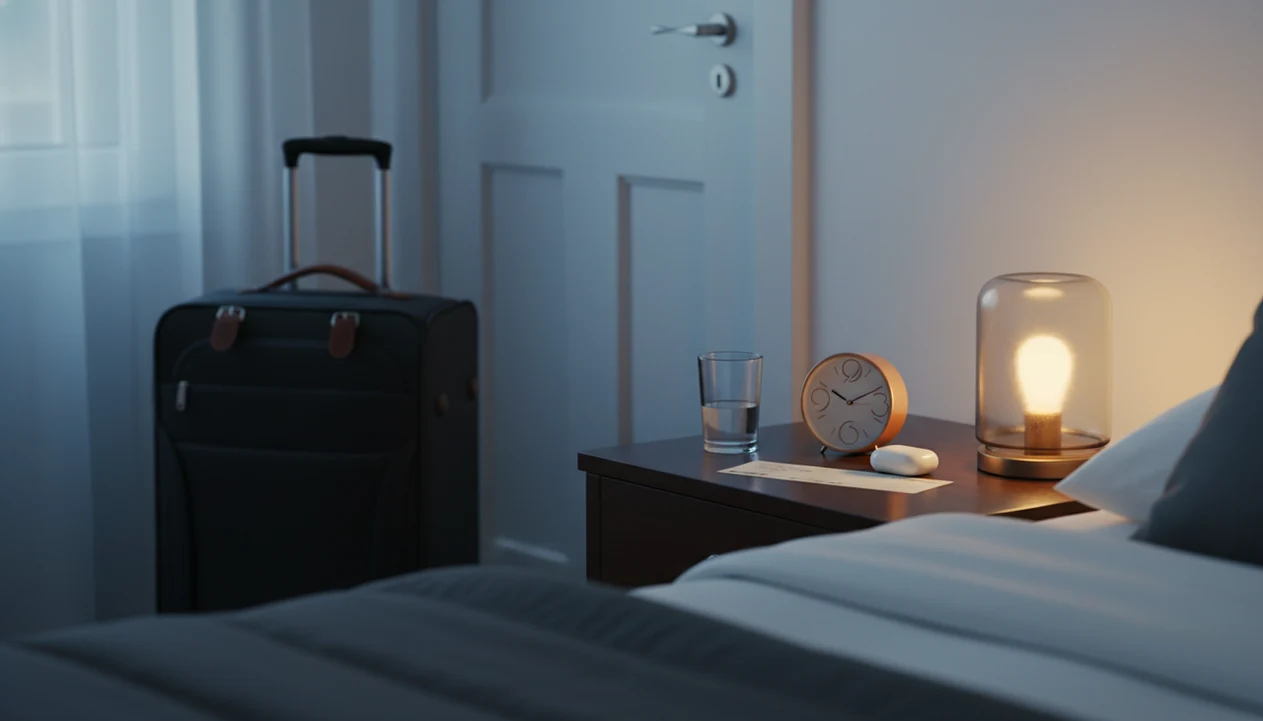
Quick answer: Flight anxiety insomnia is usually situational: your brain treats tomorrow’s flight like a threat, so your body stays alert when you want to sleep. The best night-before plan is to schedule worry earlier, stop flight-checking, use calming audio or hypnosis, and aim for rest rather than forcing perfect sleep.
Definition: Flight anxiety insomnia means difficulty falling asleep, staying asleep, or waking too early before a flight because fear of flying or travel-related worry has activated your stress response.
TL;DR
- Pre flight insomnia is common in nervous flyers and is usually a temporary stress response, not proof that you have a permanent sleep disorder.
- A poor night of sleep can make turbulence, noises, and body sensations feel more threatening the next day, so calming the nervous system matters even if sleep is imperfect.
- Use a timed night-before routine: plan logistics early, schedule worry, switch to guided meditation or hypnosis, and get out of bed briefly if you are awake too long.
CalmFlying (flight-anxiety.app) is a flight anxiety app that provides meditation, hypnosis, breathing exercises, and cognitive techniques for nervous flyers. This page explains flight anxiety insomnia and gives a practical night-before plan for reducing rumination, calming the body, and preparing for travel even if sleep is imperfect.
For many nervous flyers, the hardest part is not the flight itself but the night before: checking the alarm repeatedly, replaying worst-case scenarios, and trying to force sleep. CalmFlying’s approach is to shift the goal from “I must sleep perfectly” to “I can lower arousal, rest my body, and follow a simple plan in the morning.” That mindset pairs well with worry scheduling, guided audio, breathing practice, and a realistic backup plan for operating on less sleep.
Flight anxiety insomnia symptoms and the night-before pattern
Flight anxiety insomnia is a recognizable pattern: you feel tired, but your mind keeps treating the next day’s flight as unfinished danger. It can look like lying awake, waking repeatedly, waking too early, a racing heart, dread, and checking flight details after you already checked them.
The loop often starts with one practical thought. Gate time. Weather. Seat number. Then it becomes mental rehearsal of turbulence, takeoff, loss of control, airport timing, or safety fears. Shoes lined up by the door can suddenly feel like a countdown.
Insomnia is common outside flying too. The American Academy of Sleep Medicine reports that about 30% to 35% of adults have brief insomnia symptoms, and about 10% have chronic insomnia disorder (https://aasm.org/resources/factsheets/insomnia.pdf). Estimates for fear of flying vary, but clinical reviews commonly place it in the 2.5% to 6.5% range for phobic-level fear, with many more people reporting milder flight anxiety (https://www.ncbi.nlm.nih.gov/books/NBK519704/).
Temporary does not mean fake. Pre-flight sleep loss can overlap with other flight anxiety side effects, so it helps to treat the night-before plan as part of the whole trip, not a separate problem.
Five facts about pre flight insomnia and fear of flying sleep problems
- Pre flight insomnia is usually situational. It is often triggered by tomorrow’s flight, not by a permanent sleep disorder.
- Sleep loss can raise emotional reactivity. In an experimental fMRI study, total sleep deprivation increased amygdala reactivity to negative stimuli by about 60% (https://www.cell.com/current-biology/fulltext/S0960-9822(07)02008-1).
- CBT-I and CBT-style tools are safer long-term habits than alcohol. Thought challenging, stimulus control, and relaxation training do not depend on sedation or avoidance.
- Guided meditation, hypnosis, breathing, and muscle relaxation can reduce arousal. A mindfulness meta-analysis found moderate improvements in anxiety and depression symptoms, which supports using guided practice as part of a night-before routine (https://jamanetwork.com/journals/jamainternalmedicine/fullarticle/1809754).
- Guided tools work best before the final panic spike. Use the sessions during the week, at the gate, and again once seated, not only when your palms are already sweating on the boarding pass.
For nervous flyers, calming skills usually work better when practiced before boarding because the brain recognizes the routine faster under stress.
Before You Start: Check What Kind of Sleep Problem This Is
Before you build tonight’s routine, decide whether this is a one-night flight worry or part of a broader sleep pattern. The plan below fits situational pre-flight insomnia; recurring insomnia, severe symptoms, or medication questions need a different level of support.
- Separate tomorrow’s travel spike from your usual sleep. If you also struggle most weeks when no trip is coming, treat this as an insomnia pattern, not only a flying problem.
- Notice red flags before bedtime: severe panic, feeling unsafe, substance use, drinking to cope, or mixing sedating medications. Those situations belong with urgent or professional guidance, not trial-and-error calming hacks.
- Name the main trigger for tomorrow. Is it airport logistics, turbulence, panic sensations, or the loss of control once the door closes?
- Choose one bedtime routine and repeat it. Do not test breathing, hypnosis, weather checks, new supplements, and turbulence videos in the same hour.
- Ask a clinician about medication, interactions, or medical conditions, especially if you will drive, drink alcohol, or combine anything sedating.
Flight anxiety insomnia nervous-system mechanisms
Flight anxiety insomnia works through hyperarousal: the brain anticipates tomorrow’s flight and keeps the sympathetic nervous system switched on at bedtime. In plain terms, your body is preparing to respond instead of preparing to sleep.
Reassurance-seeking can accidentally train this response. Rechecking turbulence maps, aircraft sounds, route weather, or packed items tells the brain, “bedtime is when we scan for danger.” The phone charger coiled by tickets becomes less a solved task and more a trigger to inspect everything again.
How flight anxiety insomnia works: threat monitoring keeps attention locked on possible danger, and repeated checking rewards that monitoring with brief relief. The relief fades quickly, so the checking returns.
A guided audio tool can fit this mechanism by replacing repeated checking with a repeatable wind-down cue: play the same calming track, use the same breathing pattern, and stop feeding the scan-for-danger loop.
Six-step flight anxiety insomnia routine for tonight
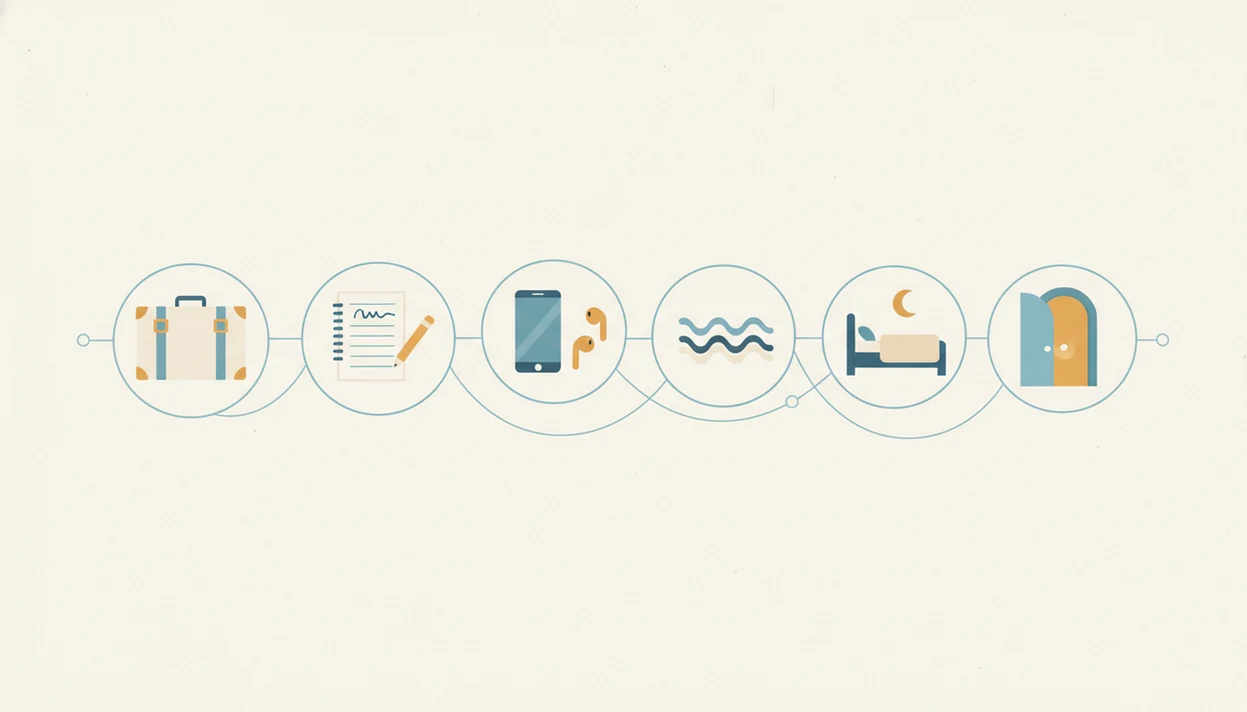
How to use flight anxiety insomnia tools tonight is simple: move planning earlier, contain worry, and lower body arousal near bedtime. Do not make sleep another performance test.
- Set a logistics cutoff two to three hours before bed: boarding pass, ID, alarm, transport, and bag.
- Schedule worry on paper for 10 minutes, then write one next action beside each concern.
- Start calming audio or hypnosis near bedtime, using earbuds if that keeps the room quiet.
- Practice slow breathing or muscle relaxation for five minutes, especially if your chest feels tight.
- Leave bed briefly if awake too long, roughly 20 to 30 minutes, and return when sleepy.
- Reset the goal to rest, not a flawless night, because pressure makes wakefulness louder.
Guided sessions can serve as the meditation, hypnosis, breathing, or cognitive-reframing part of this routine. Treat them as practiced coping cues, not a guaranteed cure or medical treatment.
Night-before checklist for people who can’t sleep before flight anxiety
A short checklist helps because your brain needs proof that the practical tasks are closed. Keep it boring and visible, not buried in five apps.
- Travel documents: boarding pass, ID or passport, wallet, and any required travel forms.
- Morning setup: alarm, backup alarm, transport plan, terminal notes, and realistic departure time.
- Packed essentials: charger, glasses, layers, snacks, prescriptions if prescribed, and headphones.
- Sleep setup: downloaded calming audio track, low lighting, and no late flight-status loop.
- Flight coping plan: what you’ll do during boarding, takeoff, turbulence, and anxious thoughts.
Set a realistic sleep window. Going to bed unusually early can create three extra hours of staring at the ceiling.
Late caffeine can keep the body keyed up, and alcohol is a poor sleep strategy because it can fragment restorative sleep. If turbulence is your main fear, plan one action in advance, then use a guide on what to do during turbulence anxiety during the flight.
CBT-I tools for pre flight insomnia without forcing sleep
CBT-I tools work by changing the learned link between bed, worry, and wakefulness. This article applies general insomnia evidence to the flight context; CBT-I produces sustained sleep improvements in about 70–80% of patients in clinical insomnia research.
| Tool | What to do tonight | Flight anxiety example |
|---|---|---|
| Stimulus control | Leave bed briefly if it becomes a worry zone | Sit in low light and read something neutral |
| Thought challenging | Replace catastrophic predictions with balanced statements | “I can be tired and still cope” |
| Relaxation training | Use breathing, body scan, meditation, hypnosis, or muscle release | Pair audio with slow exhales |
| Coping rehearsal | Plan the next anxious moment in advance | Choose a takeoff phrase before sleep |
Clinicians typically recommend CBT-I as a first-line behavioral treatment for chronic insomnia, and its principles can help situational pre flight insomnia too.
Stimulus control for anxious bedtimes
If the bed turns into a runway of thoughts, get up briefly. Keep lights low, avoid your phone, do something quiet, then return when sleepy.
Thought challenging for flight catastrophes
Write the feared prediction, then answer it like a steady travel companion. “I hate turbulence” can become “Turbulence feels bad, but it is expected aircraft movement.”
Five mistakes that worsen fear of flying sleep problems
Some night-before habits feel protective, but they teach the brain to stay on guard. Watch for these five.
- Doom-scrolling late at night. Turbulence clips, crash stories, aircraft-noise searches, and route weather rarely calm anyone at 12:40 a.m.
- Drinking alcohol to force sleep. Alcohol can fragment sleep, dehydrate you, and create rebound anxiety.
- Taking sedatives without medical guidance. This is especially risky with alcohol, driving to the airport, or unfamiliar travel demands.
- Trying to guarantee eight uninterrupted hours. That turns sleep into a test you can fail.
- Abandoning coping tools after one imperfect night. One rough night does not mean breathing, meditation, or CBT-style reframing “didn’t work.”
The pocket check is real.
If you fear panic symptoms in the air, prepare a simple breathing exercise for panic on plane before bedtime instead of researching symptoms after midnight.
Morning-after plan when pre flight insomnia still happens
“Can I still fly if I barely slept?” Yes, a bad night does not mean the flight will be a disaster. Many people function adequately after limited sleep, especially when they stop treating tiredness as proof of danger.
Use a plain morning plan. Eat something simple, hydrate, use caffeine cautiously, avoid panic research, and replay the calming audio you used last night. Before security, breathe slowly for one minute. During boarding, name five objects in the cabin or jet bridge area instead of scanning your body for symptoms.
Label tiredness as tiredness. Dry mouth, heavy eyes, or a jumpy stomach can come from poor sleep, not from actual threat.
Carry an in-flight coping plan with calming audio, grounding statements, and breathing exercises. If panic symptoms are your main concern, the in-flight panic attack guide gives a more specific sequence for the seat.
Limitations
Meditation, hypnosis, CBT-style tools, and app-based support can help many nervous flyers practice calmer responses, but they have limits.
- They are not emergency treatments for severe panic, suicidality, psychosis, substance withdrawal, or major psychiatric crises.
- Direct research on flight anxiety insomnia as a separate diagnosis is limited, so guidance is adapted from insomnia, anxiety, mindfulness, CBT-I, and aerophobia research.
- Chronic insomnia, loud snoring with breathing pauses, restless legs, bipolar disorder, trauma symptoms, or severe panic deserve professional support.
- Medication decisions should be made with a clinician, especially when flying, driving, drinking alcohol, or combining sedating substances.
- One night-before routine may not resolve long-standing fear of flying. Repeated practice usually works better.
- Apps can support skills practice, but they do not replace individualized therapy when symptoms are severe or impairing.
- If you are comparing digital support, check whether are flight anxiety apps safe applies to your symptoms and travel situation.
Flight Anxiety App flight anxiety relief through meditation, hypnosis, and cognitive techniques delivered via the calmflying app is a skills-support option, not a substitute for medical care.
Read more
FAQ
Why can’t I sleep before flying?
You can’t sleep before flying because anticipatory anxiety keeps your threat system active. Your brain monitors tomorrow’s flight, airport timing, turbulence, and safety fears instead of letting your body settle.
Is pre flight insomnia normal?
Pre flight insomnia is common among nervous flyers and is often situational. If it happens often outside travel or lasts for months, it may need medical or mental health assessment.
How do I sleep before a flight?
Set a logistics cutoff, schedule worry on paper, use calming audio or hypnosis, and aim for rest instead of perfect sleep. If you are awake for about 20 to 30 minutes, leave bed briefly and return when sleepy.
Should I drink alcohol before flying?
Alcohol is a poor sleep strategy before flying because it can fragment sleep and worsen dehydration or rebound anxiety. It can also interact dangerously with sedating medication.
Can meditation help flight anxiety?
Meditation can help reduce arousal and create a steadier pre-flight routine. Flight Anxiety App includes guided sessions, but meditation is a coping tool rather than a guaranteed cure.
What should I do if I sleep badly before a flight?
Eat something simple, hydrate, use caffeine cautiously, avoid panic research, and replay calming audio before leaving. Treat tiredness as tiredness, not as evidence that the flight is unsafe.
Do sleeping pills help before flights?
Sleeping pills or anti-anxiety medication should be discussed with a clinician before travel. Behavioral tools such as CBT-I strategies, breathing, and guided relaxation are safer first-line options for many people.
When should I get help for flight anxiety insomnia?
Get help if sleep problems are persistent, panic is severe, you avoid important travel, or symptoms affect daily life. Professional therapy or medical care can be combined with tools like Flight Anxiety App when appropriate.